
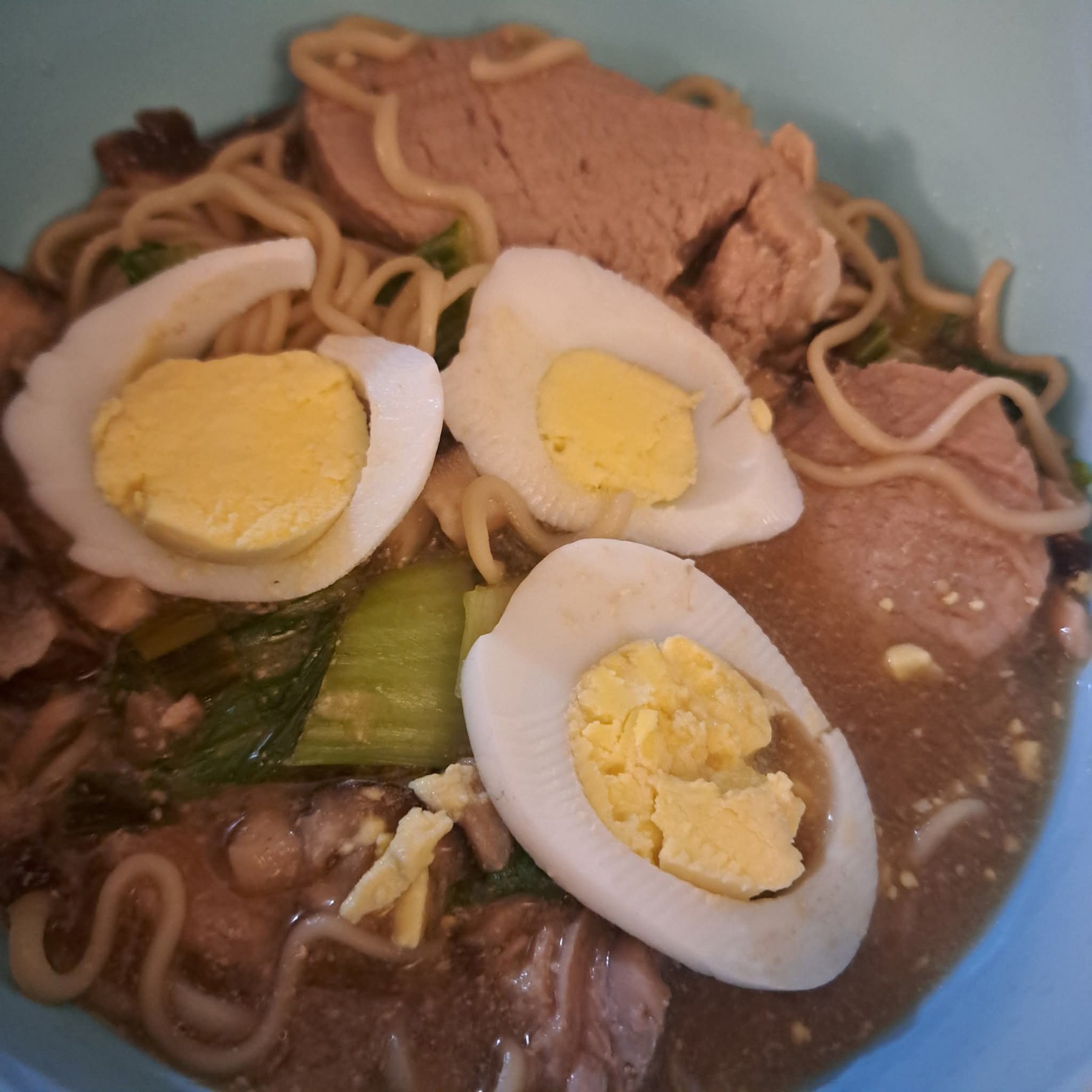
Pork Miso Ramen with Hard-Boiled Egg is a comforting and flavorful noodle soup that brings together tender pork, rich miso broth, and perfectly cooked ramen noodles. This dish is ideal for anyone craving a satisfying bowl of ramen that balances savory depth with fresh vegetables and protein. Whether you’re a ramen enthusiast or a home cook looking to explore Japanese-inspired flavors, this recipe offers a delicious and approachable way to enjoy authentic tastes without the fuss.
The recipe serves four and can be prepared in just about 35 minutes, making it perfect for a weeknight dinner or a cozy weekend meal. The combination of white and red miso pastes creates a complex broth, while the addition of hard-boiled eggs adds creamy texture and extra nourishment. With fresh bok choy and optional garnishes like nori and chili oil, this Pork Miso Ramen with Hard-Boiled Egg recipe is both vibrant and satisfying.
Why you’ll love this Pork Miso Ramen with Hard-Boiled Egg
- This ramen offers a rich, savory broth made from a blend of white and red miso pastes for deep umami flavor.
- The recipe is quick to prepare, taking just about 35 minutes from start to finish.
- Including hard-boiled eggs adds protein and a creamy texture that complements the pork perfectly.
- Fresh bok choy provides a crisp, healthy contrast to the hearty broth and noodles.
- Customizable garnishes like chili oil and nori let you adjust the flavor and heat to your preference.
Ingredients
- 4 portions fresh or dried ramen noodles
- 8 cups chicken or pork stock
- 3 tbsp white miso paste
- 2 tbsp red miso paste
- 2 tbsp soy sauce
- 1 tbsp mirin
- 1 tbsp sake
- 2 cloves garlic, minced
- 1 tbsp grated ginger
- 1 tbsp sesame oil
- 12 oz cooked pork shoulder or sliced roast pork
- 4 hard-boiled eggs, peeled and halved or quartered
- 2 small heads bok choy, halved or chopped
- 2 green onions, sliced
- 1 sheet nori, cut into strips (optional)
- 1 tsp chili oil or sesame seeds, optional
- Salt to taste
This recipe includes classic ramen ingredients like miso pastes for that authentic savory depth and soy sauce for saltiness. Fresh or dried ramen noodles provide the ideal texture, and the pork adds hearty protein. Bok choy is a traditional vegetable that offers crispness and color, balancing the richness of the broth. Choose good quality stock—homemade or store-bought—to create a flavorful base, and select fresh ginger and garlic to enhance the aroma and taste.
Instructions
- Simmer the stock: In a large pot, bring 8 cups of chicken or pork stock to a gentle simmer. Add the minced garlic, grated ginger, soy sauce, mirin, and sake. Let these ingredients infuse the broth for a few minutes over medium heat.
- Incorporate the miso paste: In a small bowl, whisk together the white and red miso pastes with a little hot broth until smooth. Stir this miso mixture back into the pot. Add the sesame oil and keep the broth at a gentle simmer without boiling hard to preserve the delicate flavors of the miso.
- Cook the bok choy: Add the halved or chopped bok choy to the simmering broth. Cook for 1 to 2 minutes until just tender, then use a slotted spoon to remove the bok choy and set it aside to prevent overcooking.
- Prepare the noodles: Cook the fresh or dried ramen noodles separately according to the package instructions. Once cooked, drain them well to avoid sogginess.
- Assemble the bowls: Divide the cooked noodles evenly among four bowls. Ladle the hot miso broth over the noodles to warm them through.
- Add toppings: Top each bowl with slices of cooked pork, the reserved bok choy, and pieces of hard-boiled egg, either halved or quartered.
- Finish with garnishes: Sprinkle sliced green onions on top. Add optional strips of nori, a drizzle of chili oil, or a sprinkle of sesame seeds if desired. Serve immediately while hot.
Tips for the best results
- Use fresh or dried ramen noodles for authentic texture; avoid overcooking to keep them slightly chewy.
- Do not boil the broth aggressively after adding miso paste to preserve its delicate flavors and nutrients.
- Prepare the hard-boiled eggs ahead of time and peel them carefully to keep the whites smooth.
- Simmer garlic and ginger gently to infuse the broth without overpowering it.
- Slice the cooked pork thinly for easy eating and even flavor distribution.
- Adjust the seasoning with salt or soy sauce at the end to suit your taste.
Variations and substitutions
- Protein swap: Use chicken, tofu, or shrimp instead of pork for a different twist.
- Noodle choice: Substitute ramen noodles with udon or soba noodles if preferred.
- Vegetables: Add mushrooms, corn, or spinach for extra variety and nutrition.
- Spice level: Increase chili oil or add fresh sliced chili peppers for more heat.
- Miso types: Experiment with red or yellow miso alone to vary the broth’s flavor intensity.
Serving suggestions
This Pork Miso Ramen with Hard-Boiled Egg pairs wonderfully with a simple side of pickled vegetables or a crisp cucumber salad to cut through the richness. A light green tea or cold sake complements the flavors in the bowl. Serve the ramen hot and fresh to enjoy the full depth of the miso broth and tender pork. Adding optional garnishes like nori strips or sesame seeds enhances the presentation and adds subtle texture contrast.
Storage and reheating
Store leftover broth and toppings separately from the noodles to prevent sogginess. Keep them in airtight containers in the refrigerator for up to 2 days. Reheat the broth gently on the stove until hot but not boiling, then add the pork and vegetables to warm through. Cook fresh noodles or reheat them briefly in hot water before assembling the bowl. Avoid reheating assembled ramen as noodles can become mushy.
Frequently asked questions
Can I use instant ramen noodles for this recipe?
Instant ramen noodles can be used in a pinch, but fresh or dried ramen noodles provide better texture and flavor. If using instant noodles, cook them according to package instructions and drain well before adding to the broth.
How do I make hard-boiled eggs with a creamy yolk?
Boil eggs for about 7 minutes, then transfer them to an ice bath to stop cooking. This timing yields a slightly soft, creamy yolk that complements ramen perfectly. Peel carefully to avoid tearing the whites.
Is it necessary to use both white and red miso paste?
Using both white and red miso pastes balances sweetness and umami for a richer broth. However, you can use only one type based on your preference—white miso offers a milder flavor, while red miso is more robust.
Can I prepare the broth in advance?
Yes, the broth can be made a day ahead and stored in the refrigerator. Reheat gently before serving and add fresh noodles and toppings just before eating for the best texture.
What if I don’t have mirin or sake?
If mirin or sake isn’t available, you can substitute mirin with a mixture of rice vinegar and a little sugar, and omit sake or replace it with a splash of white wine or water. These adjustments will slightly alter the flavor but still produce a tasty broth.
Final thoughts
This Pork Miso Ramen with Hard-Boiled Egg recipe is a wonderful way to enjoy a hearty, flavorful noodle soup at home. Its balance of savory miso broth, tender pork, fresh bok choy, and creamy egg creates a satisfying meal perfect for any day. Give this recipe a try and experience the comforting taste of homemade ramen that’s both approachable and delicious.