
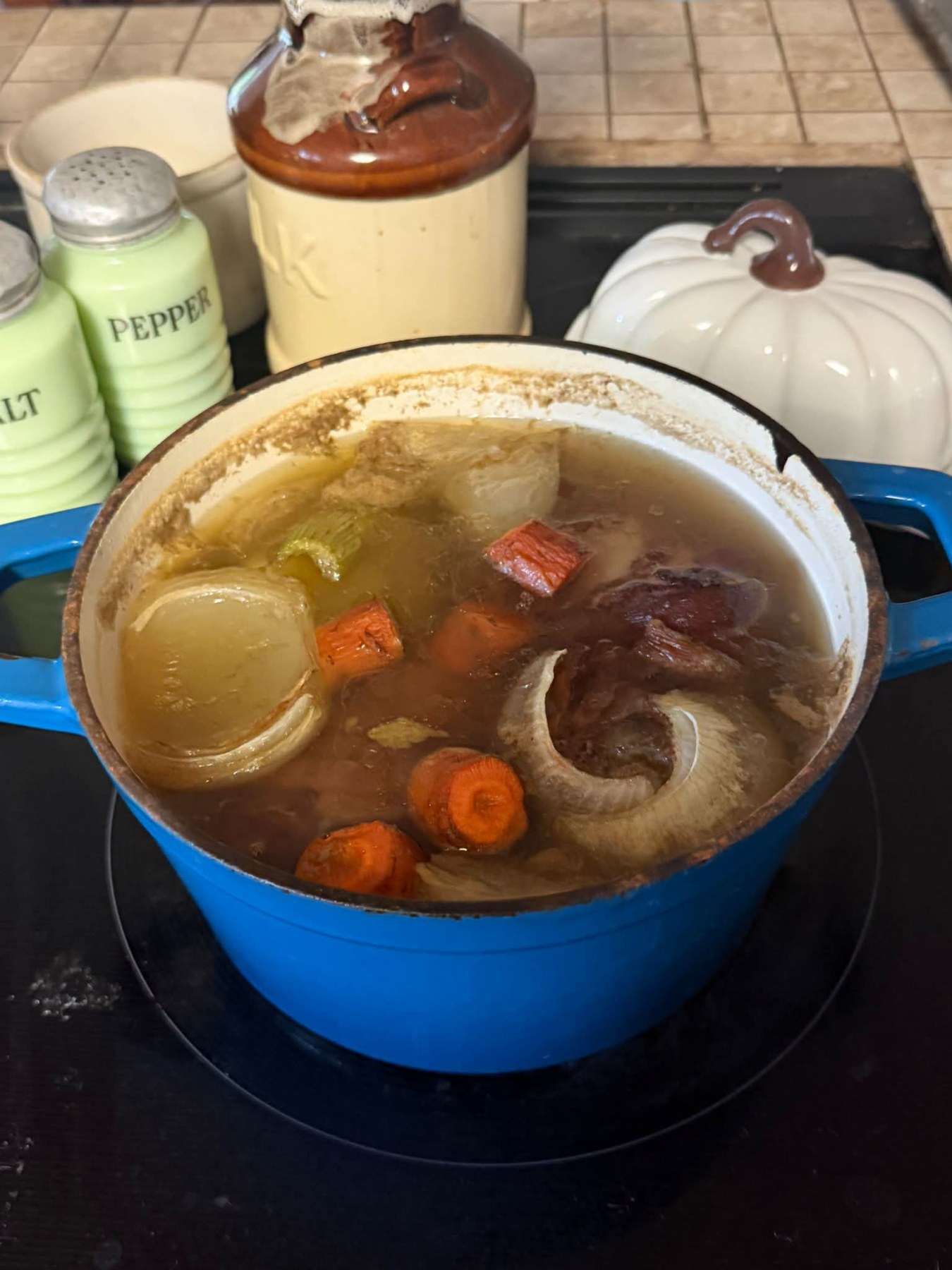
Beef Bone Broth is a deeply flavorful and nourishing liquid made by simmering beef bones and meat with vegetables for several hours. This recipe is ideal for home cooks seeking a comforting, versatile broth to use in soups, stews, or simply as a warm drink. It works beautifully because slow simmering extracts the rich collagen, minerals, and essence from the bones, creating a broth that is both tasty and satisfying.
Whether you’re new to making bone broth or an experienced cook wanting a reliable method, this recipe delivers a rich, clear broth with minimal effort. The long simmer time unlocks maximum flavor and nutrients, while simple ingredients keep it authentic and wholesome.
Why you’ll love this Beef Bone Broth recipe
- It yields a rich, full-bodied broth with deep beef flavor thanks to slow simmering and optional roasting of bones.
- The recipe uses simple, whole ingredients that are easy to find and budget-friendly.
- It’s versatile: enjoy as a warm drink, use as a base for soups, or cook grains and vegetables in it.
- Long cooking time extracts natural gelatin from bones, giving a satisfying texture and body.
- Easy to customize with your favorite herbs or vegetables for different flavor profiles.
Ingredients
- 4 lb beef marrow and knuckle bones
- 1 lb beef shank or stew meat
- 2 medium onions, halved
- 3 carrots, cut into large chunks
- 3 celery stalks, cut into large pieces
- 2 cloves garlic
- 2 bay leaves
- 1 tsp whole black peppercorns
- 2 tbsp apple cider vinegar
- 12 cups cold water, or enough to cover
- 1 tbsp kosher salt, plus more to taste
Servings: 8 | Prep time: 15 minutes | Cook time: 6 to 12 hours
The key ingredients for this beef bone broth include marrow and knuckle bones, which provide the gelatin and rich flavor. Choose fresh, high-quality bones with some meat attached for extra taste. Beef shank or stew meat adds more depth and body. Fresh vegetables like onions, carrots, and celery contribute natural sweetness and aroma. Apple cider vinegar is essential as it helps break down the bones to release minerals and collagen.
Instructions
- Optional roast bones and meat: Preheat your oven to 425°F (220°C). Arrange the beef bones and shank on a roasting pan and roast for 35 to 45 minutes until well browned. This step enhances flavor but can be skipped for a lighter broth.
- Combine ingredients in pot: Place the bones, beef shank, onions, carrots, celery, garlic, bay leaves, peppercorns, vinegar, and cold water in a large stockpot. The water should cover the ingredients completely.
- Bring to a gentle simmer: Heat over medium until the liquid just begins to simmer gently. Avoid boiling hard as it can cloud the broth.
- Skim impurities: During the first 30 minutes, skim off any foam or scum that rises to the surface with a spoon to keep the broth clear and clean-tasting.
- Simmer slowly: Partially cover the pot and let it simmer very gently for 6 to 12 hours. Add more water if needed to keep the bones submerged throughout cooking.
- Strain broth: After simmering, strain the liquid through a fine sieve or cheesecloth into a clean pot or large bowl, discarding solids.
- Season or store: Lightly season with kosher salt if serving as broth. If using as a cooking stock, you may prefer to leave it unsalted and add salt later.
- Cool and refrigerate: Let the broth cool to room temperature, then refrigerate. Remove any solidified fat from the top before reheating if desired.
Tips for the best results
- Use cold water to start so the collagen and minerals release gradually and clearly.
- Maintain a very gentle simmer to avoid cloudy broth and bitter flavors.
- Skim foam frequently during the first half hour for a clear broth.
- Don’t rush the cooking time; longer simmering gives richer flavor and more nutrients.
- Use a large pot with enough space to avoid boiling over during simmering.
- Cool broth quickly before refrigerating to keep it fresh longer and prevent bacterial growth.
Variations and substitutions
- Roast the bones with herbs like rosemary or thyme for an herbal twist.
- Add a piece of ginger or turmeric for a warming, aromatic note.
- Use chicken bones or mixed bones for a lighter or different flavored broth.
- Include dried mushrooms or seaweed for umami and mineral complexity.
- Substitute apple cider vinegar with white wine vinegar or lemon juice if unavailable.
Serving suggestions
Beef bone broth is delicious served warm on its own as a comforting drink, especially in cooler weather. It also serves as a rich base for soups, stews, and sauces, adding depth and nourishment. Use it to cook grains like rice or barley for extra flavor. You can enrich savory dishes by adding fresh herbs or a splash of soy sauce or miso to the broth before serving.
Storage and reheating
Store beef bone broth in airtight containers in the refrigerator for up to 5 days. For longer storage, freeze in portions using freezer-safe containers or ice cube trays for convenient use. When reheating, warm gently on the stove over low heat to preserve flavor and avoid boiling. Remove any hardened fat from the surface after refrigeration if you prefer a leaner broth.
Frequently asked questions
What is the difference between bone broth and beef stock?
Bone broth is typically simmered longer to extract more collagen and minerals from the bones, resulting in a richer, gelatinous texture. Beef stock is usually cooked for a shorter time and focuses more on flavor. Both are versatile, but bone broth often has more body and nutritional benefits.
Do I need to roast the bones before making beef bone broth?
Roasting bones is optional but recommended for deeper flavor and a darker color. It caramelizes the marrow and meat, adding complexity. If you prefer a lighter broth or want to save time, you can skip this step, and the broth will still be delicious.
How long should I simmer beef bone broth?
Simmer the broth gently for at least 6 hours to extract gelatin and flavor, but up to 12 hours is ideal for maximum richness. Longer cooking also helps break down the connective tissues for a silky texture without clouding the broth.
Can I use leftover beef bone broth in other recipes?
Absolutely. Use leftover beef bone broth as a base for soups, stews, sauces, or to cook grains and vegetables. It adds depth and nutrition to many dishes and can be frozen in portions for convenience.
How do I store beef bone broth safely?
Cool the broth to room temperature before refrigerating in airtight containers. It keeps well in the fridge for up to 5 days and can be frozen for several months. Always reheat gently and discard if it develops off odors or mold.
Final thoughts
Making your own Beef Bone Broth is a rewarding way to create a delicious, nutritious base for countless meals. With simple ingredients and slow simmering, you’ll have a rich, flavorful broth ready to enhance your cooking or enjoy on its own. Try this recipe today and discover the satisfying depth of homemade bone broth.