
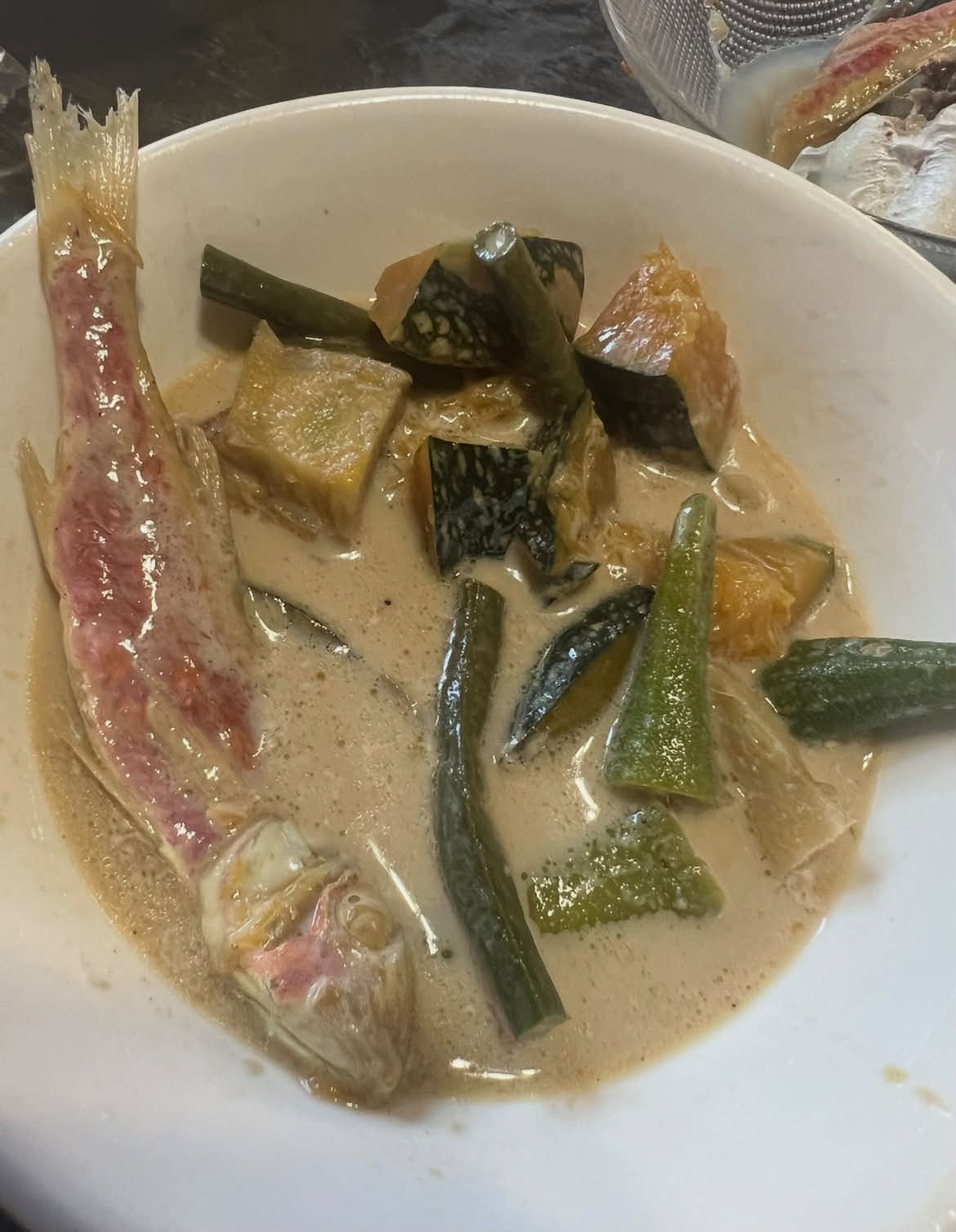
Ginataang Isda is a classic Filipino fish stew cooked gently in rich coconut milk, infused with fresh vegetables and aromatic spices. This comforting dish highlights the delicate flavors of whole fish simmered to perfection, making it a beloved family meal in the Philippines. Whether you’re new to Filipino cuisine or looking to recreate an authentic taste at home, this recipe delivers both simplicity and depth.
Designed for 3 to 4 servings, this dish takes about 15 minutes to prepare and 20 minutes to cook, making it an ideal weeknight dinner. The combination of creamy coconut milk, tender squash, and fresh okra creates a harmonious balance of textures and flavors that will satisfy seafood lovers and vegetable enthusiasts alike.
Why you’ll love this Ginataang Isda
- This stew combines the richness of coconut milk with the freshness of fish and vegetables, creating a well-rounded flavor profile.
- The recipe is straightforward and quick, perfect for busy home cooks wanting a wholesome, homemade meal.
- Using a whole fish ensures the broth is naturally flavorful, making every bite deeply satisfying.
- The inclusion of nutritious vegetables like kalabasa, okra, and string beans adds texture and health benefits.
- This dish is versatile and can be adjusted easily to suit different tastes and ingredient availability.
Ingredients
- 1 whole small fish (about 1 to 1 1/4 lb / 500 to 600 g), cleaned
- 2 cups coconut milk
- 1 cup thin coconut milk or water
- 2 cups kalabasa or kabocha squash, cut into chunks
- 8 pieces okra, trimmed and halved if large
- 10 to 12 long beans or string beans, cut into 2-inch lengths
- 1 small onion, sliced
- 4 cloves garlic, minced
- 1 thumb-size piece ginger, sliced
- 2 tablespoons fish sauce
- 1 to 2 mild green chilies or 1 long chili, optional
- 1 tablespoon cooking oil
- Salt to taste
- Ground black pepper to taste
This recipe uses key ingredients like fresh whole fish and creamy coconut milk to create its signature flavor. Choosing a fresh fish such as tilapia or pomfret with firm flesh is essential to hold up well during cooking. For coconut milk, opt for canned or freshly squeezed varieties, ensuring the thicker milk is used for richness and the thin milk or water for simmering. Kalabasa squash provides a sweet, soft contrast, while okra and string beans add crunch and subtle earthiness.
Instructions
- Prepare the fish: Rinse the whole fish thoroughly and pat dry with paper towels. Lightly season with salt to enhance flavor.
- Sauté aromatics: Heat cooking oil in a pot over medium heat. Add sliced onion, minced garlic, and sliced ginger. Cook until softened and fragrant, about 3 to 4 minutes.
- Add fish sauce: Stir in 2 tablespoons of fish sauce to the sautéed aromatics, mixing briefly to combine the flavors.
- Simmer with thin coconut milk: Pour in 1 cup of thin coconut milk or water. Bring the mixture to a gentle simmer to start building the stew base.
- Cook squash: Add the kalabasa chunks first. Allow them to cook for 5 to 7 minutes until they begin to soften but still hold shape.
- Add the fish: Carefully slide the whole fish into the pot. Simmer gently for 6 to 8 minutes, avoiding stirring to prevent breaking the fish apart.
- Incorporate remaining ingredients: Pour in the thicker coconut milk, then add okra, string beans, and optional chilies. Continue simmering gently for another 5 to 7 minutes until vegetables are tender and fish is fully cooked.
- Season and finish: Taste and adjust with salt, fish sauce, and ground black pepper as needed. Avoid boiling rapidly to keep the coconut milk smooth and creamy.
- Serve: Serve the Ginataang Isda hot, accompanied by steamed white rice for a complete meal.
Tips for the best results
- Choose a firm-fleshed whole fish to prevent it from falling apart during cooking.
- Simmer gently and avoid stirring too much to keep the fish intact and the coconut milk from curdling.
- Use fresh coconut milk or a good-quality canned variety for the richest flavor.
- Cut vegetables into uniform sizes for even cooking and texture balance.
- Adjust the level of chilies to suit your spice preference or omit entirely for a milder stew.
- Serve immediately after cooking to enjoy the creamy sauce at its best.
Variations and substitutions
- Swap the fish for shrimp or chunks of firm white fish for a different seafood twist.
- Replace kalabasa squash with sweet potatoes or taro for a varied texture and sweetness.
- Use spinach or other leafy greens instead of string beans for added color and nutrients.
- For a spicier version, add sliced red chilies or a dash of chili flakes.
- Use vegetable broth instead of water for the thin coconut milk to deepen the stew’s flavor.
Serving suggestions
Ginataang Isda pairs beautifully with steamed jasmine or white rice, which soaks up the creamy coconut sauce. For a refreshing contrast, serve alongside a simple cucumber salad or pickled vegetables. This stew also goes well with a side of sautéed greens or a light tomato and onion salad, balancing the richness of the coconut milk. Garnish with fresh herbs like chopped cilantro or green onions for added freshness.
Storage and reheating
Store leftover Ginataang Isda in an airtight container in the refrigerator for up to 2 days. Coconut milk dishes may thicken or separate when chilled; stir gently before reheating. Reheat on low heat in a saucepan to avoid curdling, adding a splash of water or thin coconut milk if the sauce is too thick. Avoid microwaving at high heat to maintain the creamy texture and flavor.
Frequently asked questions
What type of fish is best for Ginataang Isda?
Firm-fleshed fish such as tilapia, pomfret, or milkfish are ideal because they hold together well during simmering. Smaller whole fish around 1 to 1 1/4 pounds work best to ensure even cooking and easy handling.
Can I use canned coconut milk for this recipe?
Yes, canned coconut milk is convenient and widely used. Use the thicker cream for richness and the thinner milk or water to dilute during cooking. Fresh coconut milk can enhance flavor but isn’t necessary.
Is Ginataang Isda spicy?
The recipe can be mild or spicy depending on your choice to include green or long chilies. You can omit the chilies for a non-spicy version or add more for heat.
How do I prevent the coconut milk from curdling?
Cook the stew gently at a low simmer and avoid boiling rapidly. Adding coconut milk after initial simmering and stirring carefully helps maintain a smooth, creamy sauce.
Can I prepare Ginataang Isda ahead of time?
While it’s best served fresh, you can prepare it a few hours ahead and refrigerate. Reheat gently before serving, but note that the texture of the fish and vegetables may soften further.
Final thoughts
Ginataang Isda is a delightful Filipino fish stew that brings together the creamy richness of coconut milk and the fresh flavors of fish and garden vegetables in one pot. Its simplicity and comforting taste make it a wonderful dish to try for any occasion. Give this recipe a try and enjoy a true taste of the Philippines right in your own kitchen.