
Introduction
Every kitchen has its own collection of useful tools that make cooking easier and more enjoyable. From spoons and spatulas to scoops and serving utensils, these everyday items help us prepare meals with less effort. However, even a simple kitchen tool can break after repeated use. A broken orange plastic utensil is a perfect example of how an ordinary household item can remind us of the importance of quality, durability, and proper care.
The Importance of Everyday Kitchen Tools
Kitchen utensils play an essential role in preparing homemade meals. They help us stir ingredients, serve food, transfer ingredients between containers, and keep our cooking process organized. A lightweight plastic utensil can be especially convenient because it is easy to handle, simple to clean, and generally affordable.
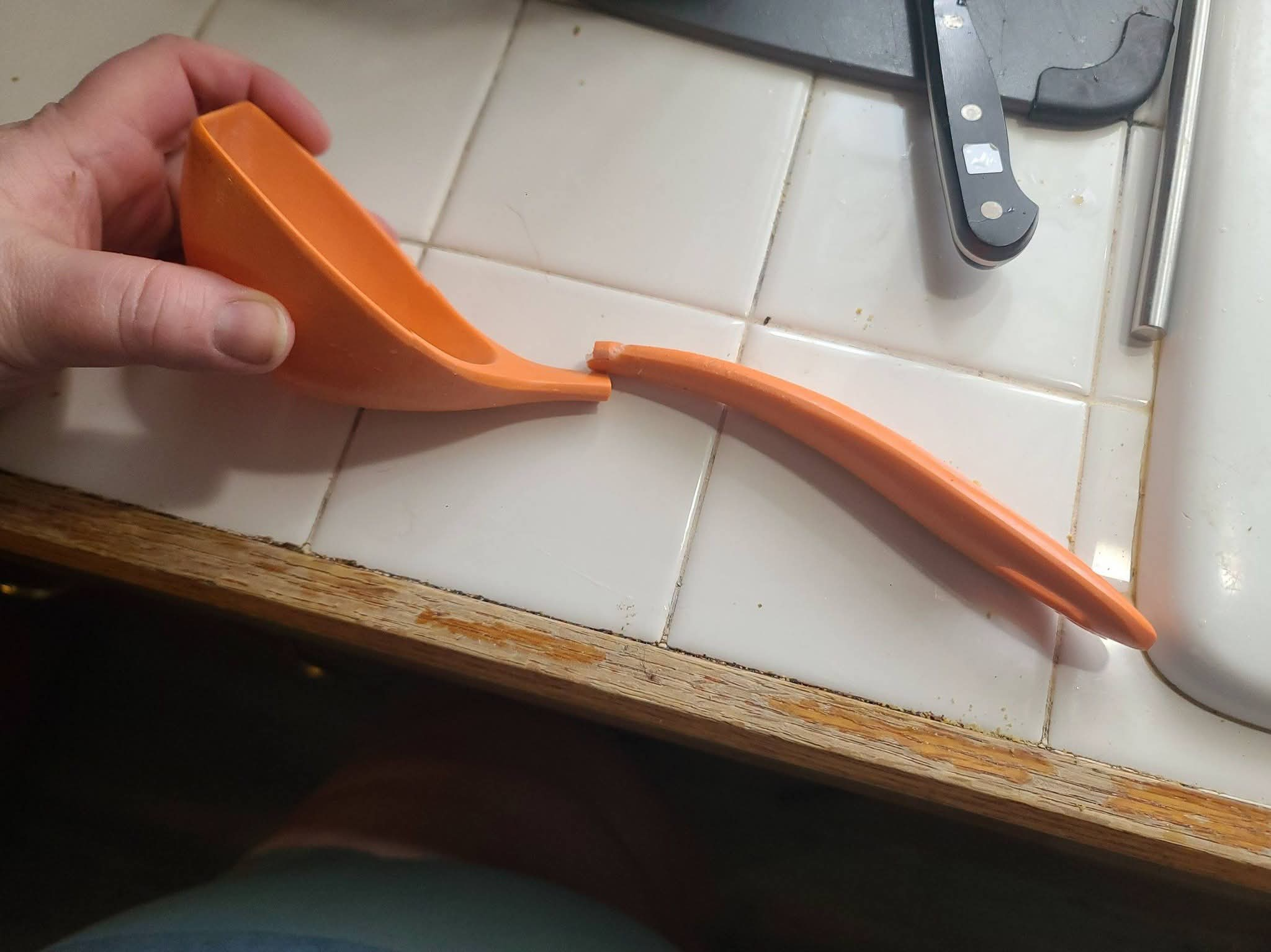
The orange utensil shown in the picture has a broad, curved end and a long handle. Its practical shape makes it look suitable for everyday kitchen tasks. Like many household tools, it may have been used regularly until the handle eventually separated from the main part.
Why Do Plastic Kitchen Utensils Break?
Plastic kitchen utensils can break for several reasons. Repeated pressure, frequent use, exposure to excessive heat, and the natural aging of the material can weaken the connection between the handle and the working end.
The point where the handle meets the scoop or spoon is particularly important because it often experiences the greatest pressure during use. If the plastic becomes brittle or the connection is too thin, the utensil may eventually snap.
Choosing kitchen tools made from durable, heat-resistant materials can help reduce the risk of breakage. It is also important to follow the manufacturer’s instructions and avoid using plastic utensils with hot cookware unless they are specifically designed for that purpose.
How to Choose Better Kitchen Utensils
When buying new kitchen utensils, consider more than just their appearance or price. A good utensil should be comfortable to hold, strong enough for its intended purpose, and easy to clean.
Look for the following features:
- Durable construction: Choose utensils with a sturdy handle and a strong connection between the handle and the working end.
- Heat resistance: Make sure the material is suitable for the temperatures involved in your cooking.
- Comfortable design: A well-shaped handle makes everyday kitchen tasks easier.
- Easy maintenance: Smooth surfaces and simple designs are generally easier to clean.
- Good value: A reliable utensil that lasts longer may be more economical than repeatedly replacing cheaper alternatives.
Depending on the task, stainless steel, food-grade silicone, or high-quality heat-resistant plastic may be appropriate choices.
Tips for Making Kitchen Tools Last Longer
Taking care of kitchen utensils can help extend their useful life. Avoid bending plastic handles unnecessarily, using utensils to pry open containers, or applying excessive force when stirring thick mixtures.
After cooking, clean each utensil according to its care instructions and store it somewhere safe. Keep plastic utensils away from direct heat and replace any item that becomes cracked, brittle, or damaged.
A broken utensil should not be used to prepare or serve food, especially if the damaged area could leave sharp edges or small plastic fragments. Replacing it is generally the safest option.
Conclusion
The broken orange kitchen utensil may seem like an insignificant household item, but it illustrates an important lesson: even the simplest tools deserve attention when it comes to quality and care. Reliable kitchen utensils make meal preparation more convenient, help reduce unnecessary waste, and can save money over time.
By choosing suitable materials, using utensils correctly, and replacing damaged items when necessary, we can create a safer and more efficient kitchen. Sometimes, a small broken object is all it takes to remind us that durability matters in everyday life.