
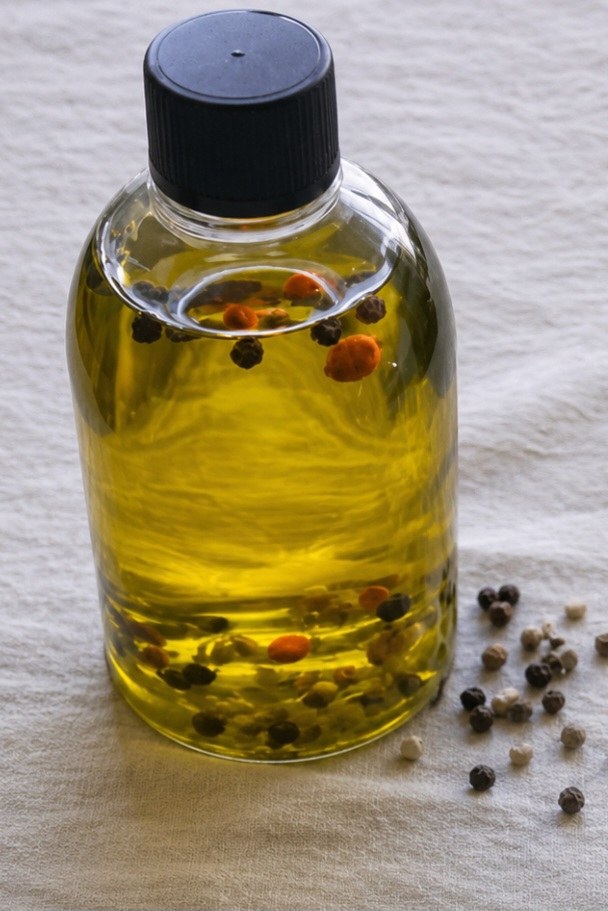
Peppercorn-infused olive oil is one of the easiest pantry projects you can make, and it transforms everyday cooking with a warm, aromatic bite. Gently heated olive oil picks up the floral heat of black, white, pink and green peppercorns, producing a golden oil that tastes far more complex than anything you would find on a shelf. It is ideal for home cooks who want a special finishing oil without spending a lot of money or time.
This recipe makes about 2 cups (32 tablespoons) of oil and takes roughly 10 minutes of preparation and 10 minutes of cooking, plus a short infusion period. The method is gentle and forgiving: you toast the peppercorns briefly, warm the oil at a low temperature, and let the flavors develop in a cool, dark place. The result is a versatile condiment that works in salads, marinades, pasta and pizza.
Why you’ll love this peppercorn-infused olive oil
- It takes only about 20 minutes of active work, making it one of the quickest gourmet additions to your kitchen.
- Using several peppercorn varieties gives the oil a layered flavor that is more interesting than black pepper alone.
- It makes a thoughtful homemade gift wrapped in a clean glass bottle with a simple label.
- You control the strength of the flavor, the freshness of the ingredients and the exact pepper blend you prefer.
- A single batch lasts for weeks, so you can use it across many dishes instead of buying specialty oils.
Ingredients
- 2 cups extra virgin olive oil
- 1 tablespoon whole black peppercorns
- 1 tablespoon whole white peppercorns
- 1 tablespoon pink peppercorns
- 1 teaspoon green peppercorns (optional)
Choose a good-quality extra virgin olive oil with a fresh, fruity aroma, because the oil is the main flavor base and it will be the only thing carrying the peppercorns into your food. Whole peppercorns are preferable to pre-ground pepper, which can turn bitter and cloudy the oil. Look for peppercorns that are firm, uniform and aromatic, and store the spare seeds in an airtight jar away from light. Pink peppercorns are technically a different plant, so they add a fruity, slightly sweet note; if you cannot find them, simply leave them out.
Instructions
- Toast the peppercorns. Lightly crack or leave the peppercorns whole, then toast them in a dry skillet over medium-low heat for 1-2 minutes, stirring often, until they become fragrant.
- Warm the oil gently. Add the olive oil to the skillet and warm it over low heat for 5-10 minutes, keeping it well below smoking, at about 140-160°F (60-70°C).
- Let it cool completely. Remove the skillet from the heat and allow the oil to cool fully so the pepper flavor keeps infusing as it settles.
- Bottle the oil. Sterilize a clean glass bottle, then use a funnel to pour in the toasted peppercorns and the cooled oil.
- Infuse in a cool, dark place. Seal the bottle with its cap and leave it to infuse for 1-2 weeks in a cool, dark cupboard, gently shaking it every couple of days.
- Store and use. Keep the oil in the refrigerator and use it within 2-3 weeks, drizzling it over salads, grilled meats, pasta, pizza or roasted vegetables.
Tips for the best results
- Never let the oil smoke or bubble during heating, because overheating turns the peppercorns bitter and dulls the olive oil’s fresh character.
- Use dry, clean bottles and utensils; any trace of water can encourage spoilage in homemade infused oils.
- Crack the peppercorns slightly if you want a stronger flavor, but keep them whole for a cleaner, more refined oil.
- Taste the oil after one week and decide whether it needs more time before the flavor is ready.
- Strain the oil through a fine sieve or cheesecloth if you prefer a clear result, though leaving the peppercorns in the bottle looks attractive.
- Label each bottle with the date so you know when to use it within the recommended window.
Variations and substitutions
- Add garlic: a couple of lightly smashed garlic cloves warmed with the oil give a savory depth that suits roasted meats.
- Use fresh herbs: a sprig of rosemary or thyme adds an earthy, Mediterranean note; dry the herbs well first to prevent moisture.
- Try citrus: a few strips of lemon peel, added during warming and removed before bottling, brighten the oil for fish and salads.
- Swap the oil: a mild light olive oil or avocado oil can replace extra virgin olive oil when you want a neutral base.
- Change the spice: a few coriander seeds or a dried chili add warmth or a citrusy twist, depending on your taste.
Serving suggestions
Peppercorn-infused olive oil shines as a finishing drizzle rather than a cooking oil, so pour it over dishes just before serving to preserve its aroma. Try it over fresh tomato and mozzarella, a bowl of white bean soup, or a simple plate of grilled steak or chicken. It is also excellent with crusty bread for dipping, and a spoonful stirred into mashed potatoes or roasted carrots adds surprising depth. For pasta, toss freshly cooked noodles with a little of the oil and grated Parmesan for a quick, satisfying dinner.
Storage and reheating
Keep the infused oil in the refrigerator in a sealed, sterilized bottle, and bring it to room temperature for about 10 minutes before drizzling so it pours easily. Olive oil can thicken when chilled, which is normal and does not affect quality. Use the oil within 2-3 weeks, and discard it if it smells sour, musty or off. There is no need to reheat the oil for serving; simply let it come to room temperature or warm it very gently in a spoon held over a cup of hot water if you prefer a warmer drizzle.
Frequently asked questions
Can I use ground pepper instead of whole peppercorns?
Ground pepper is not recommended because it makes the oil cloudy and can turn bitter during warming. Whole peppercorns release their flavor slowly and cleanly, and they are easy to strain out if you prefer a clear oil. If you only have ground pepper, use a small amount and strain the oil through a fine sieve before bottling.
How long does peppercorn-infused olive oil last?
Because it contains fresh ingredients and no preservatives, homemade infused oil should be stored in the refrigerator and used within 2-3 weeks. Keep the bottle sealed, clean and away from direct light. If the oil ever smells rancid, looks cloudy in an unusual way or shows any sign of mold, throw it away immediately.
Can I make this oil without heating it?
You can cold-infuse the peppercorns in olive oil at room temperature, but the flavor develops more slowly and the infusion is less intense. Warming the peppercorns briefly helps release their aroma quickly. If you prefer not to heat the oil, leave the peppercorns in the oil for two to three weeks and taste it regularly until the flavor is strong enough for you.
Is it safe to store infused oil at room temperature?
Homemade infused oils containing fresh ingredients should always be refrigerated, as moisture and air can encourage bacterial growth over time. Keeping the oil cold and using it within a few weeks is the safest approach. Commercially produced infused oils are prepared under controlled conditions, so do not assume that a homemade version can be stored the same way.
What is the difference between black, white, pink and green peppercorns?
Black peppercorns are the most pungent, with a sharp, woody bite, while white peppercorns are milder and more earthy because the outer skin is removed. Pink peppercorns are a different plant with a fruity, slightly sweet flavor, and green peppercorns are unripe berries that taste fresh and tangy. Combining them creates a balanced oil with both heat and brightness.
Final thoughts
Peppercorn-infused olive oil is a simple, rewarding project that adds real character to everyday meals with very little effort. Once you have a bottle in your refrigerator, you will find yourself reaching for it on salads, grilled meats, pasta and roasted vegetables. Gather your peppercorns, warm the oil gently and give this recipe a try, then adjust the blend to suit the flavors you love most.