
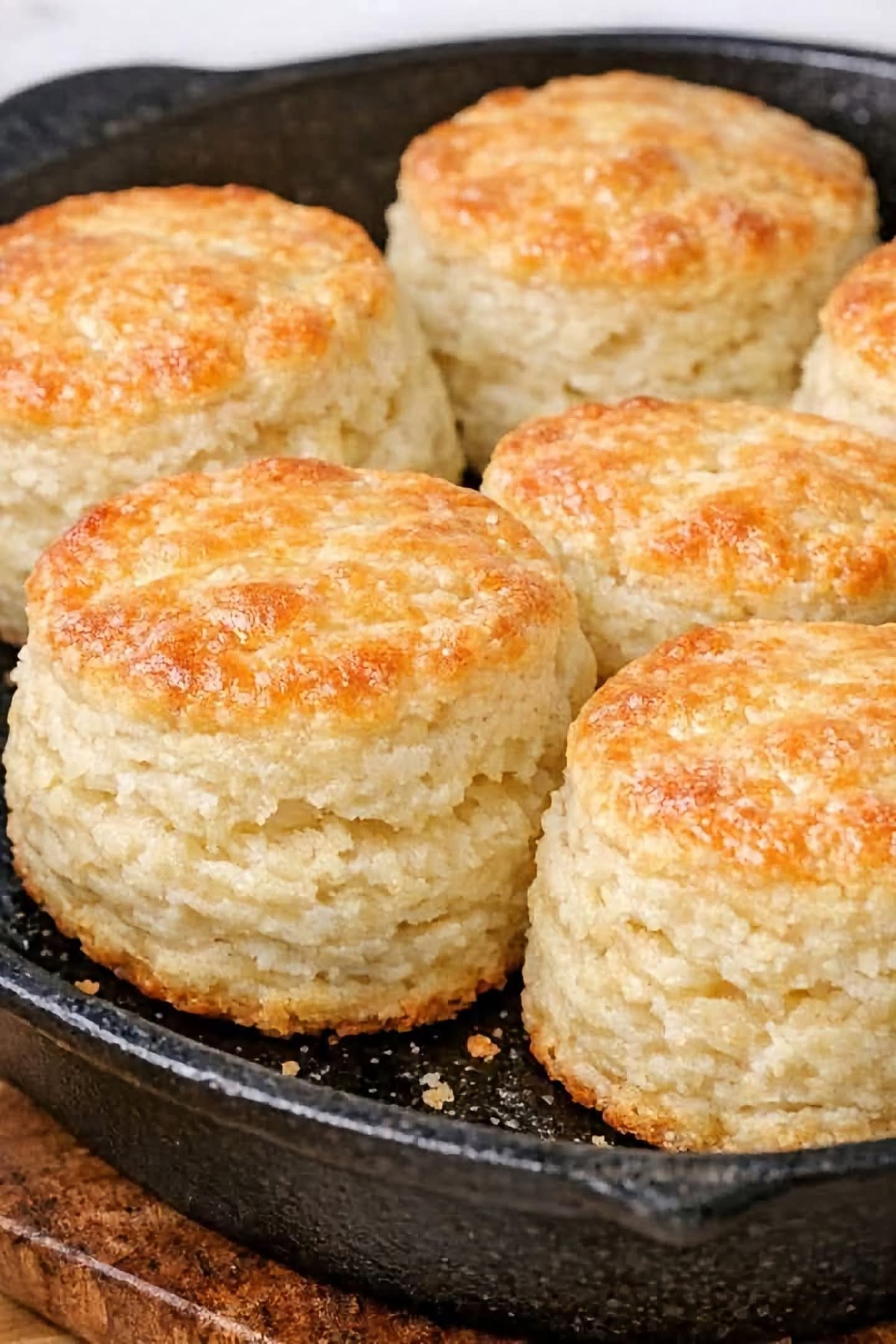
Flaky buttermilk biscuits baked in a cast iron skillet are one of the most rewarding things you can make from a few pantry staples. Tender on the inside, crisp and golden on the outside, they pull apart in buttery layers that make an ordinary breakfast feel special. This recipe is designed for home cooks who want a dependable, straightforward method for flaky buttermilk biscuits without any special equipment beyond a skillet and a round cutter.
The secret lies in two simple ideas: keep the butter and buttermilk very cold, and handle the dough as little as possible. Cold butter melts in the oven and releases steam, which lifts the layers apart, while the gentle folding builds dozens of thin sheets of flavor. Baking the biscuits snugly together in a preheated cast iron skillet gives them a tall, even rise and soft sides. If you have wanted to master biscuits at home, this is a great place to start.
Why you’ll love this flaky buttermilk biscuit recipe
- The cast iron skillet creates a hot, even base that gives the bottoms a golden crust while the centers stay soft and airy.
- Cold butter cut into the flour creates pockets of steam that produce the flaky, pull-apart layers everyone loves.
- Buttermilk adds a gentle tang and tenderness that plain milk simply cannot match.
- Folding the dough a few times builds structure, so each biscuit rises high and splits neatly when you break it open.
- The recipe uses everyday pantry ingredients and yields 6 to 8 biscuits in about 40 minutes from start to finish.
Ingredients
- 2 1/2 cups (315 g) all-purpose flour, plus more for dusting
- 1 tablespoon baking powder
- 1/2 teaspoon baking soda
- 1 teaspoon salt
- 1 teaspoon sugar
- 1/2 cup (113 g) cold unsalted butter, cubed or grated
- 1 cup cold buttermilk
- 2 tablespoons melted butter, for brushing the tops
Yield: 6-8 biscuits. Prep time: about 20 minutes. Cook time: about 17 minutes. For the best texture, use all-purpose flour with a moderate protein content, which keeps the biscuits tender rather than tough. Unsalted butter lets you control the seasoning, and it should be straight from the refrigerator so it stays solid while you work. Buttermilk is the key to a tangy flavor and a soft crumb; if you cannot find it, a substitute is explained below. Choose full-fat buttermilk when possible, because its richness contributes to a more flavorful biscuit.
Instructions
- Preheat the skillet. Place a 10-12 inch cast iron skillet in the oven and preheat to 450°F (230°C). Alternatively, grease the skillet with butter and warm it while the oven heats so it is ready when the dough goes in.
- Combine the dry ingredients. Whisk the flour, baking powder, baking soda, salt, and sugar together in a large bowl so the leavening is evenly distributed.
- Work in the butter. Cut or grate the cold butter into the flour, working it with your fingertips until the mixture looks like coarse crumbs with pea-sized pieces of butter remaining. Those visible chunks are what create the flaky layers.
- Add the buttermilk. Make a well in the center, pour in the cold buttermilk, and stir with a fork just until a shaggy dough forms. Do not overmix, or the biscuits will bake up dense.
- Shape the dough. Turn the dough onto a floured surface and pat it into a rectangle about 1 inch thick.
- Laminate the layers. Fold the dough in thirds like a letter, rotate it, and pat it out again. Repeat this 2-3 times to build flaky layers.
- Cut the biscuits. Pat the dough to about 1 inch thick and cut straight down with a 2.5-3 inch round cutter, without twisting. Gently re-pat the scraps and cut again.
- Arrange in the skillet. Place the biscuits snugly together in the hot skillet so the sides touch, which helps them rise tall.
- Bake. Brush the tops with melted butter and bake for 15-18 minutes, until risen and deep golden brown.
- Finish and serve. Brush with a little more melted butter as soon as they come out of the oven, then serve warm.
Tips for the best results
- Keep the butter and buttermilk very cold right up until they go into the dough, and chill the dough for 10 minutes if it starts to feel soft.
- Stop mixing as soon as the dough holds together; a few dry patches are fine and will hydrate as you fold.
- Cut straight down with the cutter and never twist it, because twisting seals the edges and prevents the layers from rising.
- Press the biscuits together in the skillet so they support one another and climb upward instead of spreading outward.
- Preheat the skillet thoroughly so the bottoms begin cooking the moment the dough touches the metal, which gives a better lift.
- Avoid overworking the scraps; re-pat them gently once and accept that the last biscuit may be slightly less tall.
Variations and substitutions
- Homemade buttermilk: Stir 1 tablespoon of lemon juice or white vinegar into a 1-cup measure, then add enough milk to reach 1 cup and let it sit for 5 minutes before using.
- Cheesy biscuits: Fold in 1 cup of shredded sharp cheddar with the butter for a savory version that pairs well with eggs.
- Herb biscuits: Add 1-2 tablespoons of finely chopped chives, parsley, or thyme to the dry mixture for a fresh, garden-style flavor.
- Sweet cinnamon version: Brush the tops with melted butter and sprinkle with cinnamon sugar before baking for a breakfast-style treat.
- Whole wheat blend: Replace up to one-third of the all-purpose flour with whole wheat flour for a nuttier flavor, though the biscuits will be a bit denser.
Serving suggestions
These biscuits are wonderful served warm straight from the skillet, split open and spread with cold salted butter and a drizzle of honey or your favorite jam. For a hearty breakfast, tuck a fried egg, a slice of crisp bacon, or a spoonful of sausage gravy inside. They also make a satisfying side for soups, chili, and roasted chicken, soaking up every drop of broth. Leftover biscuits can be turned into quick sandwiches with ham, turkey, or sharp cheese for lunch. Set them out in a basket lined with a cloth so guests can help themselves while the centers are still soft.
Storage and reheating
Store leftover biscuits in an airtight container or sealed bag at room temperature for up to two days. For longer keeping, let them cool completely, wrap them tightly, and freeze for up to three months. To reheat, warm them in a 350°F (175°C) oven for 5-8 minutes, or wrap them loosely in foil and heat until hot throughout. A quick 10-15 seconds in the microwave works in a pinch, but the texture is best when oven-warmed, since it helps the outside crisp again.
Frequently asked questions
Why are my biscuits flat instead of tall?
Flat biscuits usually come from warm butter, overworked dough, or a cold skillet that was not preheated. Keep everything chilled, mix only until the dough holds together, and place the biscuits close together in a hot pan so they rise upward. Also check that your baking powder is fresh.
Can I make these biscuits without a cast iron skillet?
Yes. You can bake them on a parchment-lined baking sheet, spacing them about 1 inch apart. Cast iron gives a crisper bottom, but a baking sheet still produces flaky, golden biscuits. Expect a slightly shorter rise if the biscuits are not touching.
Can I use a different fat instead of butter?
Butter gives the best flavor and flaky layers, and it is what the recipe is built around. Shortening can produce a tender result but lacks butter’s taste. Avoid soft or melted fat, since the dough needs solid, cold pieces to create steam and separate into layers.
Can I make the dough ahead of time?
You can cut the biscuits, place them on a tray, and refrigerate them, covered, for up to 12 hours. Bake them straight from the fridge, adding 1-2 minutes to the baking time. Freezing unbaked cut biscuits also works well; bake them directly from frozen, adding a few extra minutes.
Why shouldn’t I twist the cutter?
Twisting seals the cut edges together, which blocks the layers from separating and rising. Pressing straight down and lifting straight up lets each biscuit expand freely, resulting in taller, flakier results.
Final thoughts
Flaky buttermilk biscuits baked in a cast iron skillet reward a little patience with a warm, golden batch that tastes like home. Once you have mastered the cold butter and gentle folding, you will find yourself making them for weekend breakfasts, dinner sides, and last-minute guests. Gather your ingredients, preheat that skillet, and give this recipe a try today. We think you will be delighted by how tall and tender your first batch turns out.