
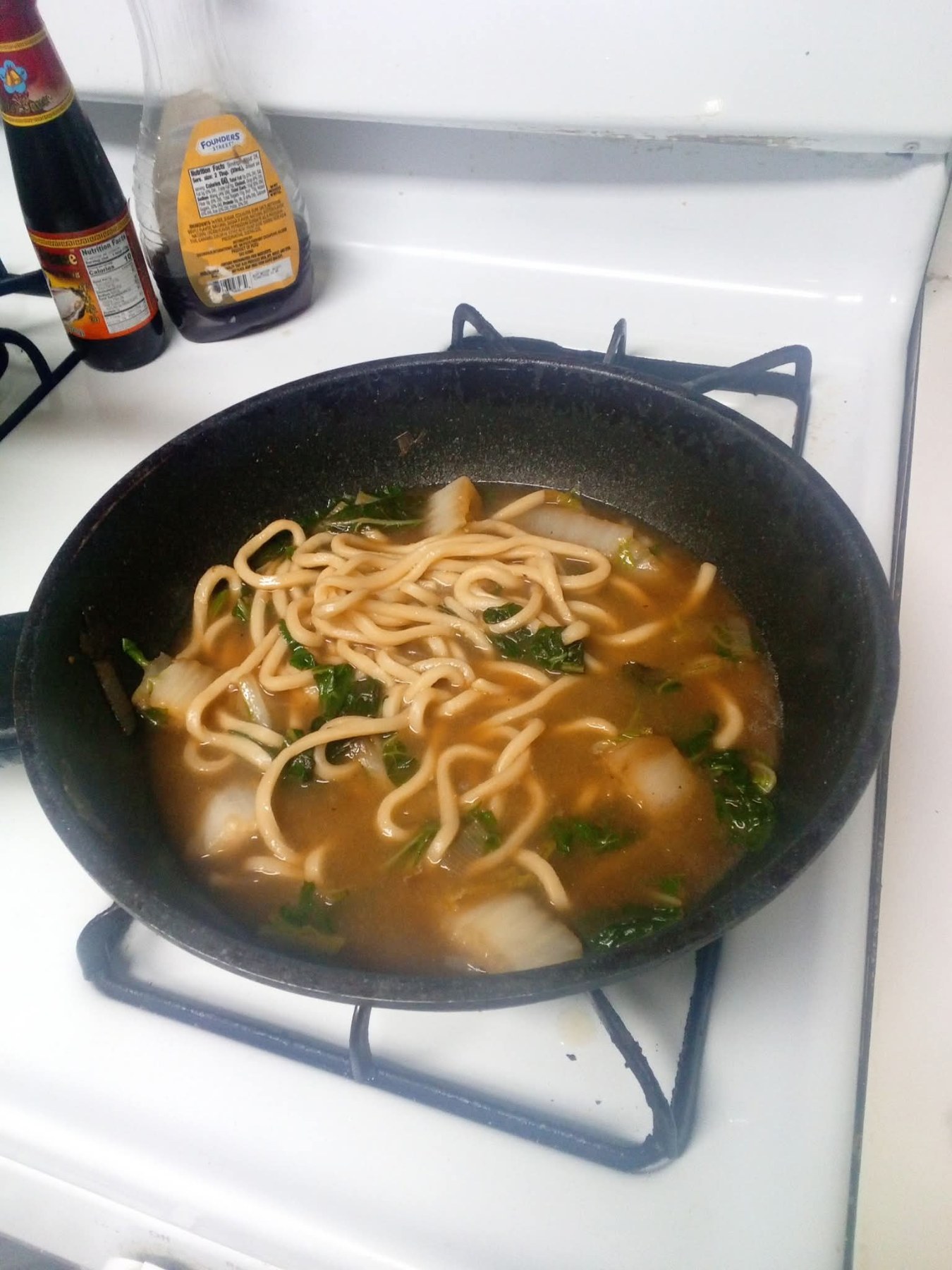
Udon Noodle Soup with Bok Choy in Oyster-Soy Broth is a comforting, savory bowl of chewy wheat noodles and tender greens floating in a glossy, lightly sweet broth. It is the kind of dish you can put together on a weeknight when you want something warm and satisfying without spending an hour at the stove. Each spoonful combines the savory depth of oyster sauce, the salty warmth of soy sauce, and the fragrance of garlic, ginger and toasted sesame oil.
This recipe makes two generous servings and takes about 25 minutes from start to finish, with 10 minutes of prep and 10 minutes of cooking. It suits busy home cooks, students and anyone who enjoys simple Asian-inspired noodle soups. Because the broth comes together quickly in one pan, it is also an easy recipe for beginners who want to build confidence with Asian pantry staples.
Why you’ll love this udon noodle soup
- It comes together in one pan in about 25 minutes, so it is ideal for busy weeknights.
- The oyster-soy broth delivers rich, savory flavor without needing hours of simmering.
- Chewy udon noodles give the soup a satisfying, filling texture that feels like a real meal.
- Baby bok choy adds a fresh, crisp-tender bite and brings color and vegetables to the bowl.
- It is easy to customize with proteins or toppings, so you can make it your own every time.
Ingredients
Serves 2 | Prep time: 10 minutes | Cook time: 10 minutes | Total time: 25 minutes
- 2 portions (about 14 oz / 400 g) fresh or frozen udon noodles
- 3 cups (700 ml) chicken or vegetable broth (or dashi)
- 2 tbsp oyster sauce
- 1 tbsp soy sauce
- 1 tsp toasted sesame oil
- 2 cloves garlic, minced
- 1 tsp grated fresh ginger
- 3-4 heads baby bok choy, halved or quartered
- 1 tsp sugar
- Pinch of white pepper
- 1 scallion, sliced (optional garnish)
The success of this soup depends on a few key ingredients. Udon noodles are thick, wheat-based and far chewier than most other noodles, so choose fresh or frozen udon if you can; they have a much better texture than dried versions. Oyster sauce is the heart of the broth, adding a savory, slightly sweet depth that is hard to replicate, so look for a good-quality bottle at an Asian grocery or the international aisle. For the broth, a low-sodium chicken or vegetable stock works well, or use dashi for a lighter, more traditional Japanese flavor. Baby bok choy is tender and quick-cooking, which is why it suits this soup so well.
Instructions
- Sauté the aromatics. Heat a little oil in a wide pan over medium heat and sauté the garlic and ginger for 30 seconds until fragrant.
- Build the broth. Pour in the broth, then stir in the oyster sauce, soy sauce, sugar, and white pepper. Bring to a gentle simmer.
- Cook the bok choy. Add the bok choy stems and simmer for 2 minutes, then add the leaves so they wilt gently without overcooking.
- Add the noodles. Add the udon noodles, loosening them with chopsticks so they do not clump, and simmer 2-3 minutes until just tender and heated through.
- Season to taste. Taste the broth and adjust seasoning with more soy sauce or oyster sauce until it tastes balanced and savory.
- Finish and serve. Stir in the sesame oil, add the scallions if using, then serve hot straight from the pan or ladle into bowls.
Tips for the best results
- Loosen the udon noodles before adding them to the pan, since frozen or packed noodles often stick together and cook unevenly.
- Keep the broth at a gentle simmer rather than a hard boil, which keeps the noodles springy and prevents the greens from turning mushy.
- Add the bok choy stems first and the leaves later, because the stems need a little more time to become tender.
- Taste before you serve; oyster sauce and soy sauce vary in saltiness, so adjust gradually rather than all at once.
- Add the sesame oil off the heat at the end, since its nutty aroma fades quickly when cooked for too long.
- Rinse baby bok choy well between the leaves to remove any grit, and pat it dry so it does not dilute the broth.
Variations and substitutions
- Add protein: Top with a soft-boiled egg, cubed tofu or thinly sliced beef or chicken for a heartier, more filling meal.
- Use different greens: Spinach, napa cabbage or gai lan can replace bok choy if baby bok choy is hard to find.
- Change the broth: Dashi gives a lighter, more delicate Japanese-style flavor, while a mushroom broth makes the soup fully vegetarian.
- Swap the noodles: Ramen, soba or rice noodles can stand in for udon, though the texture and cooking times will change.
- Spice it up: Add a spoonful of chili oil or a few drops of chili sauce to the bowl for gentle heat.
Serving suggestions
Serve this soup hot in deep bowls so the noodles stay submerged in the broth and the greens remain bright. Pair it with a simple side of steamed edamame, pickled cucumber or a crisp cabbage salad to add contrast in texture and freshness. A small dish of extra scallions, toasted sesame seeds or a squeeze of lime on the side lets everyone personalize their bowl. For a more complete meal, serve it with a few gyoza or a plate of steamed dumplings. Chopsticks and a soup spoon are the traditional way to eat it, so the broth can be sipped between mouthfuls of noodles.
Storage and reheating
Store leftover soup in an airtight container in the refrigerator for up to two days. For best results, keep the noodles and the broth separate if you can, because udon absorbs liquid and becomes soft as it sits. To reheat, warm the broth gently in a pan over medium heat, then add the noodles and heat for just a minute or two until hot. Avoid boiling the soup hard, which can make the bok choy limp and the noodles mushy. Freezing the broth on its own works well for up to three months, but the fresh greens and noodles are best enjoyed the day they are made.
Frequently asked questions
Can I use dried udon noodles instead of fresh?
Yes, you can use dried udon, but you will need to cook it separately according to the package directions before adding it to the soup. Dried udon has a firmer, less springy texture than fresh or frozen, so it is still a good choice when fresh noodles are not available. Rinse the cooked noodles under cold water to remove excess starch before adding them to the broth.
Is there a good substitute for oyster sauce?
Hoisin sauce or a mushroom-based vegetarian oyster sauce can work as substitutes, though each brings a slightly different flavor. Hoisin is sweeter and thicker, so you may want to reduce the sugar in the recipe. Vegetarian oyster sauce keeps the savory depth while making the soup suitable for plant-based diets.
How do I make this soup vegetarian?
Use a good-quality vegetable broth or mushroom broth, and choose a vegetarian or mushroom-based oyster sauce. Check that your soy sauce and udon noodles are also free of animal ingredients, as some brands contain fish-based components. The soup is delicious with tofu or extra vegetables added for protein and substance.
Can I make the broth ahead of time?
You can prepare the broth in advance by sautéing the garlic and ginger, then adding the broth and seasonings and refrigerating it. When you are ready to eat, reheat the broth, add the bok choy and noodles, and finish the soup as the recipe directs. This makes it a handy option for quick weeknight dinners.
What is the best way to keep the noodles from getting soggy?
Cook the noodles just until they are heated through, and serve the soup right away. If you are making extra for later, store the noodles separately from the broth so they do not absorb too much liquid. Loosening the noodles with chopsticks as they go into the pot also helps them cook evenly without clumping.
Final thoughts
Udon Noodle Soup with Bok Choy in Oyster-Soy Broth proves that a deeply satisfying bowl of noodles does not need a long list of ingredients or hours of work. With chewy udon, tender greens and a savory, balanced broth, it is an easy dish to make again and again. Gather your ingredients, set a timer for 25 minutes, and try this recipe tonight. Once you taste that glossy, savory broth, you will likely find it becoming a regular favorite in your kitchen.