
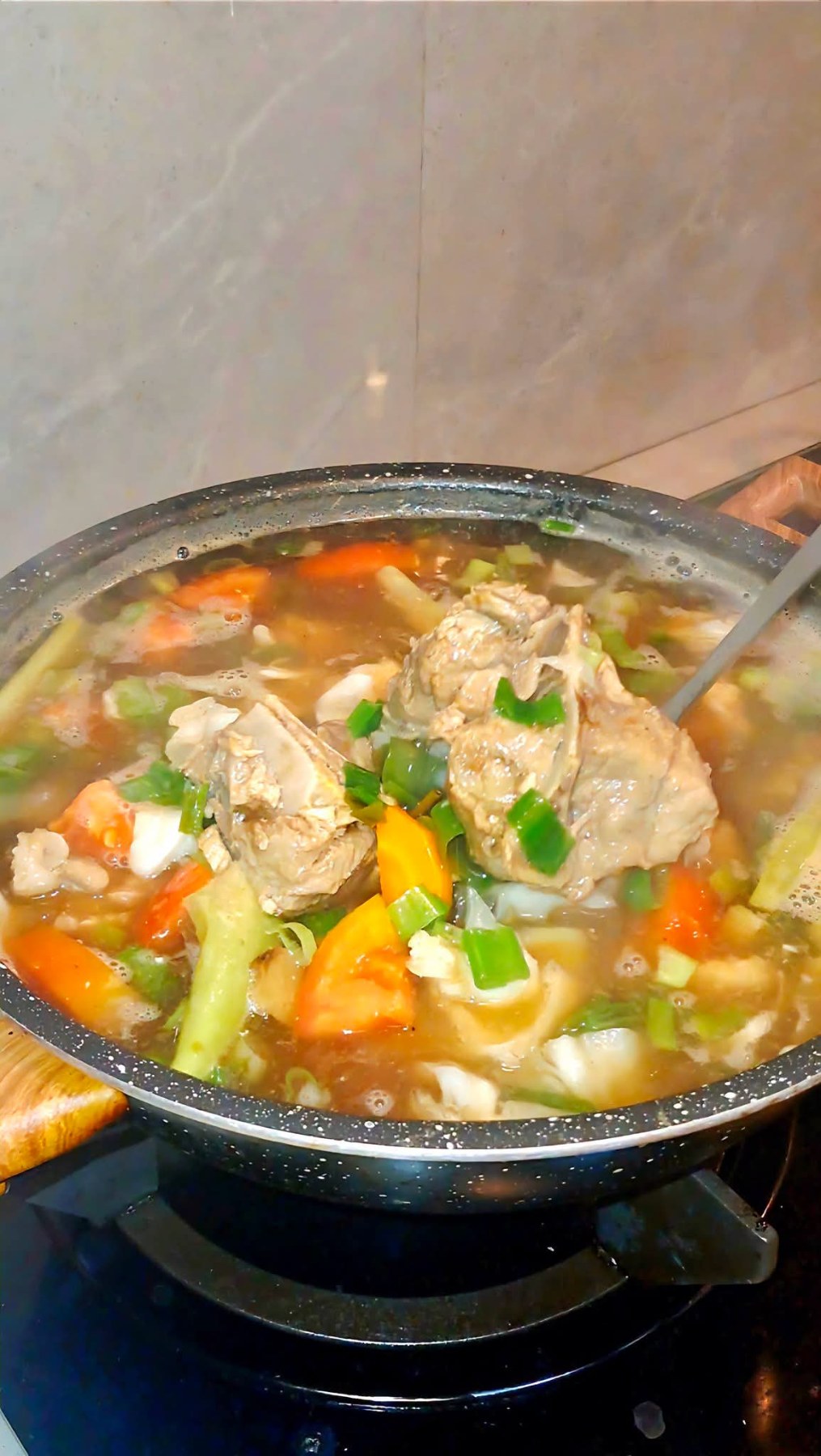
Sop Iga Sapi (Indonesian beef short rib soup) is one of the most comforting dishes in Indonesian home cooking. Tender beef short ribs simmer slowly in a fragrant broth scented with lemongrass, ginger, cloves and nutmeg, then finished with potatoes, carrots, cabbage and tomato. The result is a deep, savory soup that feels like a warm hug on a rainy day.
This recipe is designed for home cooks who want authentic flavor without complicated techniques. It serves 5 to 6 people, takes about 20 minutes to prepare and roughly 2 hours to cook, and the process is mostly hands-off once the ribs are simmering. If you have ever wondered how to make a clear yet flavorful Indonesian beef soup at home, this guide walks you through every step.
Why you’ll love this Indonesian beef short rib soup
- The slow-simmered short ribs become meltingly tender, and the bones add a naturally rich body to the broth.
- Aromatic spices such as cloves, nutmeg and white pepper give the soup its distinctive, warming character.
- Lemongrass and ginger bring a fresh, bright note that balances the heaviness of the beef.
- The soup is a complete meal in one pot, combining protein, starch and vegetables with very little extra work.
- It is easy to adapt to what you have on hand and it reheats beautifully, making it ideal for family dinners and meal prep.
Ingredients
- 1 kg beef short ribs (iga sapi), cut into pieces
- 2.5 liters water
- 5 cloves garlic, minced
- 4 shallots, thinly sliced
- 2 lemongrass stalks, bruised
- 3 cm ginger, bruised
- 2 tomatoes, cut into wedges
- 2 medium potatoes, cut into chunks
- 2 carrots, sliced
- 1/4 head cabbage, cut into pieces
- 2 stalks spring onion, chopped
- 1 stalk celery leaf, chopped
- 2 cloves
- 1/2 tsp ground nutmeg
- 1 tsp ground white pepper
- 2 tsp salt, or to taste
- 1 tsp sugar
- 2 tbsp cooking oil
- Fried shallots, for garnish
- Lime wedges and sambal, to serve
Choose beef short ribs with a good amount of meat clinging to the bone, as this gives the broth more flavor and makes the meat more satisfying to eat. Look for ribs that are bright red with creamy white fat rather than grey or dry-looking pieces. Fresh lemongrass and ginger make a noticeable difference, so bruise them with the back of a knife to release their oils. Tomatoes should be ripe and firm, since they add gentle acidity and sweetness to the soup.
Instructions
- Blanch the ribs. Place the short ribs in a pot of water, bring to a boil and cook for 5 minutes. Drain them and rinse the ribs under running water to remove the scum and impurities.
- Simmer the beef. Return the ribs to a clean pot with 2.5 liters of fresh water. Bring to a boil, then reduce the heat to low and simmer for 1.5 to 2 hours until the meat is tender and pulls easily from the bone.
- Saute the aromatics. Heat the cooking oil in a small pan over medium heat. Add the garlic and shallots and saute until fragrant and golden, being careful not to let them burn.
- Add the spices. Transfer the sauteed garlic and shallots into the soup pot. Add the lemongrass, ginger, cloves, nutmeg and white pepper, stirring gently so the flavors begin to infuse the broth.
- Cook the potatoes and carrots. Add the potato chunks and sliced carrots to the pot and simmer for about 15 minutes until they are almost soft.
- Add the cabbage and tomato. Stir in the cabbage pieces and tomato wedges and cook for another 5 minutes, just until the cabbage is tender but still has a little bite.
- Season the soup. Add the salt and sugar, then taste the broth and adjust the seasoning until it is balanced and savory.
- Finish with herbs. Stir in the chopped spring onion and celery leaf, then turn off the heat so the herbs stay bright and fresh.
- Serve. Ladle the hot soup into bowls and serve with steamed rice, fried shallots, sambal and lime wedges on the side.
Tips for the best results
- Skim the foam that rises to the surface during simmering to keep the broth clear and clean-tasting.
- Keep the heat low once the soup reaches a boil; a gentle simmer tenderizes the meat far better than a rolling boil.
- Sauté the garlic and shallots until golden, not dark brown, because burnt aromatics turn the broth bitter.
- Add the potatoes before the cabbage so they have enough time to cook through without the cabbage turning mushy.
- Taste and adjust the salt only near the end of cooking, since the broth concentrates as it simmers.
- If you are short on time, a pressure cooker can shorten the simmering to about 45 minutes while still giving tender beef.
Variations and substitutions
- Bone-in beef chunks: Use beef shank or oxtail in place of short ribs for a similarly rich broth with a different texture.
- Glass noodles: Add cooked glass noodles to each bowl for a heartier, more filling version.
- Vegetable swap: Replace the cabbage with bok choy or green beans if you prefer a different green vegetable.
- Milder spice: Reduce the cloves and nutmeg slightly if you prefer a lighter, less pronounced spice flavor.
- Lemongrass alternative: Use a little lime zest if fresh lemongrass is unavailable, though the flavor will be less aromatic.
Serving suggestions
Sop Iga Sapi is traditionally served piping hot with a generous bowl of steamed white rice, which soaks up the flavorful broth beautifully. Sprinkle crispy fried shallots over each bowl for crunch and a sweet, toasty aroma. Place a small dish of sambal on the table so everyone can add heat to their taste, and offer lime wedges for a fresh squeeze of acidity. For a complete spread, pair the soup with simple sides such as stir-fried greens, fried tempeh or a crisp cucumber salad. The contrast of hot soup, cool salad and spicy sambal makes for a very satisfying meal.
Storage and reheating
Let the soup cool to room temperature, then transfer it to airtight containers and refrigerate for up to three days. The flavors often improve overnight as the spices settle into the broth. To reheat, warm the soup gently over medium-low heat until it is steaming hot throughout, adding a splash of water if it has thickened too much. For longer storage, freeze the soup in portions for up to three months, and thaw it in the refrigerator before reheating. Keep the fried shallots, sambal and fresh herbs separate until serving so they stay crisp and bright.
Frequently asked questions
Can I make Sop Iga Sapi in a pressure cooker?
Yes, a pressure cooker is an excellent shortcut. Cook the blanched ribs with the water and aromatics under high pressure for about 40 to 45 minutes until the meat is very tender. Then add the potatoes, carrots, cabbage and tomatoes and cook briefly until just tender before seasoning.
Why is my beef still tough after cooking?
Short ribs need a long, gentle simmer to break down their connective tissue. If the meat is tough, the soup likely needs more time on low heat. Make sure the liquid is only gently bubbling rather than boiling hard, and check the meat again after another 20 to 30 minutes.
How do I keep the broth clear?
Blanching the ribs first and skimming the foam regularly during simmering are the two most important steps. Rinsing the ribs after blanching removes residue that would otherwise cloud the broth. Using fresh water for the main simmer also helps keep the soup clean and clear.
What can I use instead of fried shallots?
If you do not have fried shallots, you can quickly fry thinly sliced shallots in a little oil until golden and crisp. Crispy fried onions from the store also work well as a garnish. The goal is a crunchy, savory topping that contrasts with the soft soup.
Is this soup good for meal prep?
It is ideal for meal prep because the flavors deepen after a day in the refrigerator. Store the broth and solids together, but keep garnishes and sambal separate. Reheat gently and add fresh spring onion just before serving to keep it vibrant.
Final thoughts
Sop Iga Sapi is a generous, aromatic soup that rewards a little patience with deeply flavored beef and a broth full of warm spice and fresh herbs. Once you have made it once, the steps become second nature, and you can adjust the spices and vegetables to suit your family. Gather your ingredients, set aside an afternoon, and try this Indonesian beef short rib soup at home. We think you will be glad you did.