
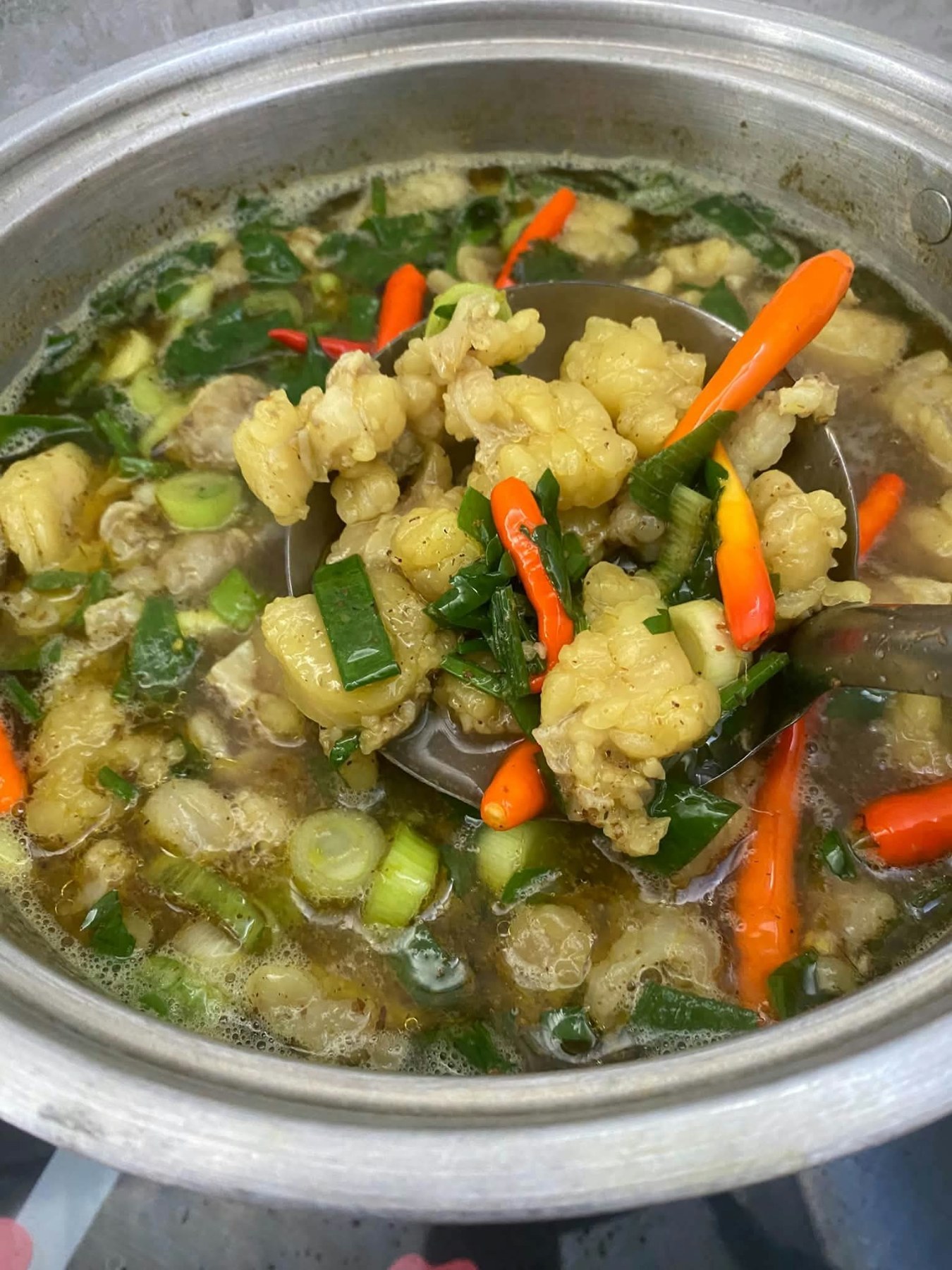
Spicy Thai Pork Intestine Soup, known in Thailand as Tom Saep Sai Mu, is a bold, aromatic soup that shows off the best of Thai street-food flavours. Tender pieces of pork intestine simmer in a fragrant broth scented with lemongrass, galangal and kaffir lime leaves, then finished with a sharp punch of chillies, fish sauce and fresh lime juice. It is a dish for adventurous eaters and anyone who loves offal done well.
This recipe is designed for home cooks who want an authentic result without restaurant equipment. The cleaning process takes a little patience, but once the intestines are properly prepared, the soup comes together in about an hour and a half. It serves four as a main with rice, or more as part of a shared Thai meal.
Why you’ll love this spicy Thai pork intestine soup
- The broth is layered with aromatics, so every spoonful tastes complex and fresh rather than heavy.
- Pork intestine has a pleasant chewy texture that contrasts beautifully with the silky broth.
- The heat of bird’s-eye chillies can be adjusted easily, so you control how fiery the soup becomes.
- Lime juice and fish sauce give the soup a bright, savoury, sour-salty balance typical of Thai cooking.
- It is a budget-friendly way to cook a traditional dish using an inexpensive cut of pork.
Prep time: 30 minutes. Cook time: 1 hour 15 minutes. Total time: 2 hours. Servings: 4.
Ingredients
- 600 g pork intestines, thoroughly cleaned and scrubbed with salt and flour
- 1.2 L water or light pork broth
- 3 stalks lemongrass, bruised and cut into pieces
- 4 slices galangal
- 4 kaffir lime leaves, torn
- 8-12 fresh bird’s-eye chillies, lightly crushed
- 2 tbsp fish sauce, to taste
- 3 tbsp lime juice, to taste
- 1 tsp ground white or black pepper
- 3 spring onions, sliced
- 2 sprigs culantro (or coriander), chopped
- 1 tsp toasted ground rice (optional)
- 1 tsp salt for cleaning
The success of this soup depends on a few key ingredients. Choose pork intestines that look pale and clean, with no strong sour odour, and buy them from a butcher you trust if possible. Fresh lemongrass, galangal and kaffir lime leaves make a noticeable difference, so look for them in Asian grocery stores or the freezer section, where they keep well. Use fresh bird’s-eye chillies for a clean, sharp heat, and taste the fish sauce before adding it, since brands vary widely in saltiness.
Instructions
- Clean the intestines. Rub the intestines thoroughly with salt and flour, rinse repeatedly, and trim away any excess fat. This step removes most of the odour and is the foundation of a clean-tasting broth.
- Blanch the intestines. Boil the intestines in water for 5 minutes, then drain and rinse them well to remove any remaining odour and scum.
- Simmer until tender. Cover the intestines with fresh water and simmer for 40-60 minutes until tender but still slightly chewy. Cut them into bite-size pieces once cooked.
- Build the broth. Bring the broth to a boil with the lemongrass, galangal and kaffir lime leaves, then simmer gently for 5 minutes so the aromatics release their flavour.
- Add the intestines and chillies. Add the cooked intestines and the lightly crushed chillies to the pot, then simmer for 5 more minutes so the flavours meld.
- Season the soup. Stir in the fish sauce, ground pepper and salt, tasting as you go until the balance feels right for you.
- Finish off the heat. Turn off the heat, then stir in the lime juice, spring onions and culantro or coriander. Adding these at the end keeps their fresh flavour bright.
- Serve hot. Ladle the soup into bowls and serve immediately with steamed jasmine rice or sticky rice.
Tips for the best results
- Spend extra time on cleaning; if the intestines still smell strong after the first blanch, repeat the salt and flour scrub before cooking.
- Do not let the soup boil hard once the intestines are in, as vigorous bubbling can toughen the meat.
- Crush the chillies lightly rather than chopping them, so they release heat gradually into the broth.
- Add the lime juice off the heat; prolonged boiling dulls its fresh, sharp character.
- Taste and adjust the fish sauce, lime and chilli in small amounts, because the balance of sour, salty and spicy is the heart of this soup.
- If you are new to offal, start with a smaller quantity of intestines so you can judge the texture you prefer.
Variations and substitutions
- Pork belly or pork ribs: For a milder, more familiar texture, replace the intestines with thinly sliced pork belly simmered until tender.
- Lighter broth: Use a clear chicken or vegetable stock instead of water for a more rounded base.
- Milder heat: Reduce the chillies to 3-4 and leave them whole for a gentle warmth that still carries the aromatics.
- Herb swap: Replace culantro with regular coriander and add a few Thai basil leaves for an anise-like note.
- Extra body: Stir in the optional toasted ground rice for a slightly thicker, more rustic broth.
Serving suggestions
Serve this soup piping hot in deep bowls, with a generous mound of steamed jasmine rice on the side so everyone can balance the heat. Sticky rice is also traditional in northeastern Thai cooking and pairs well with the tangy broth. Offer small dishes of extra lime wedges, fish sauce and sliced chillies at the table so diners can adjust each bowl to their taste. A crisp cucumber salad, a plate of fresh herbs such as mint and Thai basil, and a light stir-fried vegetable dish round out a satisfying meal.
Storage and reheating
Store leftover soup in an airtight container in the refrigerator for up to two days. The broth will continue to develop flavour overnight, but the lime juice and fresh herbs are best added fresh when reheating. Reheat gently on the stove over medium heat until just steaming, avoiding a hard boil so the intestines stay tender. Add a squeeze of lime and a handful of fresh herbs before serving. The soup does not freeze well, as the texture of the intestines can become rubbery after thawing.
Frequently asked questions
How do I clean pork intestines so they don’t smell?
Scrub the intestines with plenty of salt and flour, then rinse several times under cold water. Trim away visible fat and blanch the pieces in boiling water for about five minutes before the main simmer. This two-step process removes most of the odour and leaves the broth clean and fresh.
Can I make this soup without fish sauce?
You can, but the flavour will be noticeably different. Fish sauce provides the savoury depth typical of Thai cooking, so you could replace it with a little soy sauce or extra salt, though the result will taste less authentic. Taste carefully and adjust the lime to keep the sour-salty balance.
How spicy is this soup, and can I reduce the heat?
Bird’s-eye chillies are quite hot, so the amount you use sets the level of spice. Start with the lower end of the range, around eight chillies, and add more only if you enjoy strong heat. Leaving the chillies whole rather than crushed also produces a milder soup.
What is culantro, and can I use coriander instead?
Culantro, sometimes called sawtooth coriander, has a stronger and more pungent flavour than regular coriander. Regular coriander is an easy and widely available substitute that works very well in this soup. Use it generously at the end for a fresh herbal finish.
Is it necessary to cook the intestines for so long?
Yes, a long, gentle simmer is important for achieving the right texture. Cooking for 40-60 minutes makes the intestines tender while keeping a pleasant chewiness. Rushing this step can leave the texture tough, so check for tenderness with a fork before moving on.
Final thoughts
Spicy Thai Pork Intestine Soup is a rewarding dish that rewards patience and careful cleaning. Once you have tasted the balance of lemongrass, lime, chilli and fish sauce in a well-made bowl, you will understand why it remains a favourite across Thailand. Gather your aromatics, take your time with the cleaning, and try this Tom Saep Sai Mu recipe at home. Your kitchen will fill with the most wonderful fragrance, and your table will be ready for something truly special.