
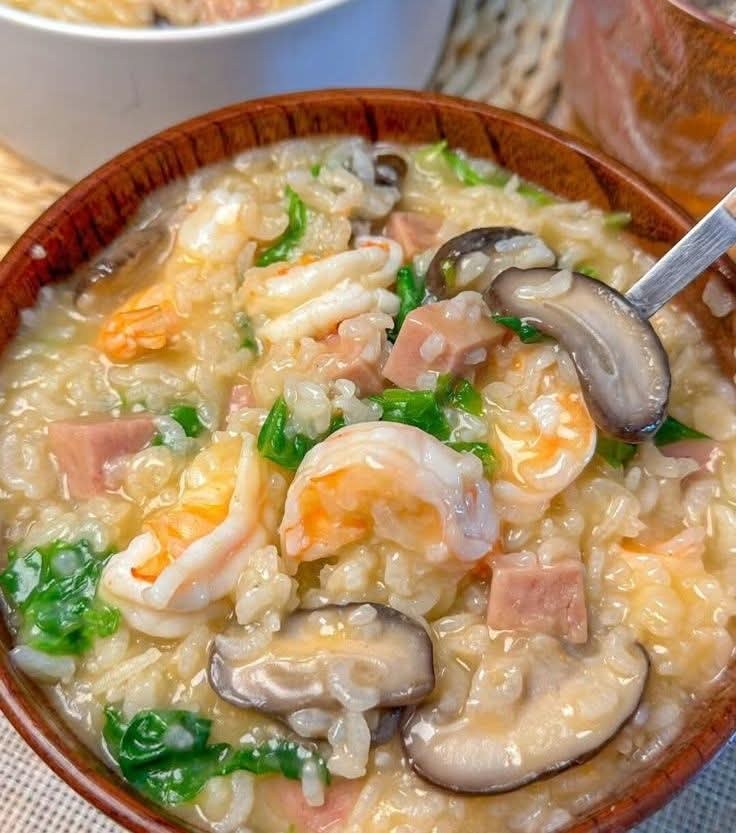
Shrimp, Ham and Shiitake Rice Congee with Greens
Shrimp, Ham and Shiitake Rice Congee with Greens is a comforting, savory bowl of Chinese rice porridge that comes together in one pot. Slowly simmered jasmine rice breaks down into a smooth, creamy base, while tender shrimp, salty ham, earthy shiitake mushrooms and fresh greens add layers of flavor and texture. It is a satisfying breakfast, a light supper, or a warming meal on a cold day.
This recipe serves 3-4 and takes about 15 minutes to prep and 50 minutes to cook. Congee is forgiving: the long, gentle simmer does most of the work, so you can stir occasionally, check the texture and adjust the thickness to your liking. If you have never made it before, this is a great place to start.
Why you’ll love this congee
- It is a complete, balanced meal in a single pot, with rice, protein, mushrooms and vegetables all cooked together.
- The shrimp cook in minutes at the end, so they stay sweet and tender rather than rubbery.
- The shiitake mushrooms and ham give the broth a deep, savory flavor without any complicated steps.
- Leafy greens added at the last moment bring color, freshness and a gentle bite that contrasts the soft rice.
- It is easy to customize, so you can make it thicker or thinner and swap ingredients based on what you have at home.
Ingredients
Servings: 3-4 | Prep time: 15 minutes | Cook time: 50 minutes
- 1 cup jasmine rice, rinsed
- 6 cups chicken stock or water
- 1/2 lb (225 g) medium shrimp, peeled and deveined
- 5 dried or fresh shiitake mushrooms, sliced
- 1/2 cup diced cooked ham
- 2 cups baby spinach or chopped bok choy leaves
- 3 slices fresh ginger
- 1 tbsp neutral oil
- 1 tbsp light soy sauce
- 1 tsp sesame oil
- 1/2 tsp salt, to taste
- White pepper to taste
- 1 scallion, sliced for garnish
Jasmine rice gives the congee its naturally fragrant flavor and breaks down beautifully into a creamy texture, so it is well worth using over long-grain varieties. Choose chicken stock for the richest base, or use water if you want a lighter taste that lets the shrimp and mushrooms stand out. Dried shiitake mushrooms have a more intense, smoky flavor than fresh ones, and their soaking liquid is a bonus for the broth. Look for shrimp that smell clean and feel firm, and pick ham that is lean but flavorful. For the greens, baby spinach wilts in seconds, while bok choy holds a little more crunch.
Instructions
- Prepare the rice and mushrooms. Rinse the rice until the water runs mostly clear. If you are using dried shiitake, soak them in hot water for 30 minutes, then slice them and reserve the soaking liquid.
- Build the aromatics. Heat the oil in a pot over medium heat, sauté the ginger briefly until fragrant, then add the shiitake and cook for 2 minutes until they smell rich and toasty.
- Toast the rice. Add the rice and stir for 1 minute so each grain is coated in oil. Pour in the stock and the mushroom soaking liquid.
- Simmer until creamy. Bring the pot to a boil, then reduce to a low simmer and partially cover. Cook for 35-45 minutes, stirring occasionally, until the rice is very soft and the liquid has thickened into a creamy porridge.
- Add the ham. Stir in the diced ham and simmer for 3 minutes so it warms through and releases its flavor into the broth.
- Cook the shrimp. Add the shrimp and cook for 2-3 minutes, until they turn pink and are just cooked through. Avoid overcooking them.
- Wilt the greens. Fold in the spinach or bok choy and cook for about 1 minute, until just wilted but still bright.
- Season to taste. Stir in the soy sauce, salt, white pepper and sesame oil. If the congee is too thick, add a splash of hot water until it reaches your preferred consistency.
- Serve. Ladle into warm bowls and top with sliced scallions before serving.
Tips for the best results
- Rinse the rice thoroughly to remove surface starch and excess dust, which keeps the texture clean rather than gluey.
- Stir the pot every 10 minutes or so, especially near the bottom, to prevent the rice from sticking and scorching.
- Keep the heat low once simmering; a vigorous boil can break the rice unevenly and splatter the pot.
- Add the shrimp only at the end, because they cook very quickly and become tough if left in the hot liquid too long.
- Season gradually at the finish, since the stock and ham can already be salty and the flavors concentrate as the congee thickens.
- Adjust the consistency with hot water rather than cold, so the congee stays hot and the texture stays smooth.
Variations and substitutions
- Chicken instead of shrimp: Thinly sliced chicken thighs can be cooked in the broth for 10-12 minutes until tender, giving a heartier bowl.
- Vegetarian version: Use vegetable stock, omit the ham and shrimp, and add extra mushrooms and tofu cubes for protein and savoriness.
- Different greens: Choose Chinese broccoli, napa cabbage or kale; tougher greens may need an extra minute or two to soften.
- Brown rice: Brown rice adds a nuttier flavor and more fiber, but it needs more liquid and a longer simmer, often 60-75 minutes.
- Extra flavor: A few slices of fried garlic, a drizzle of chili oil or a pinch of finely chopped cilantro add brightness and aroma.
Serving suggestions
Serve this congee hot, straight from the pot, in deep bowls so the broth and toppings have room to shine. A few drops of soy sauce or a spoonful of chili oil on the side let everyone adjust the seasoning to their own taste. For a fuller meal, pair it with a plate of crisp Chinese fried dough sticks, pickled vegetables or a simple cucumber salad dressed with rice vinegar and sesame oil. The contrast between the soft, creamy porridge and something crunchy or tangy makes each spoonful more interesting. A pot of warm green tea rounds out the meal nicely, especially for breakfast.
Storage and reheating
Store leftover congee in an airtight container in the refrigerator for up to 3 days. The rice will thicken considerably as it cools, which is completely normal. To reheat, place it in a saucepan over low heat and stir in a splash of hot water or stock, a little at a time, until it loosens to the texture you like. Avoid high heat, which can make the bottom scorch. Shrimp can become slightly firmer after storage, so you may prefer to cook fresh shrimp when reheating rather than storing them already in the pot.
Frequently asked questions
Can I make shrimp congee in a slow cooker?
Yes, a slow cooker works well for the rice and broth. Combine the rinsed rice, stock, ginger and mushrooms, cook on low for 6-7 hours, then stir in the ham, shrimp and greens during the last 10 minutes. Season just before serving so the flavors stay balanced.
How do I keep congee from becoming too thick?
Congee naturally thickens as it sits, so add hot water or stock a little at a time while reheating or serving. Using a slightly higher liquid ratio at the start also helps. Taste and adjust until the consistency is smooth and pourable.
Can I use leftover rice instead of fresh rice?
Leftover cooked rice can be used, but it will not break down into the same creamy texture as raw rice simmered for a long time. For the best result, use uncooked jasmine rice. If you use cooked rice, simmer it for 15-20 minutes so it softens and thickens into a porridge.
Are dried shiitake mushrooms better than fresh?
Dried shiitake have a deeper, more concentrated flavor, and their soaking liquid adds savory depth to the broth. Fresh shiitake are still delicious and quicker to use, so choose whichever you have on hand. Just slice fresh mushrooms and sauté them briefly before adding the rice.
Is congee good for a light breakfast?
Congee is a popular breakfast across many parts of Asia because it is warm, gentle and filling. This version with shrimp and greens makes it a more substantial meal, but you can easily make a smaller bowl for a simpler morning start.
Final thoughts
Shrimp, Ham and Shiitake Rice Congee with Greens is a rewarding dish that rewards patience with a bowl of silky, savory comfort. Once you understand the rhythm of the simmer and the timing of the shrimp and greens, it becomes a dish you can make by feel. Gather your ingredients, set the pot on low, and enjoy the aroma filling your kitchen. We hope you will try this recipe soon and find your own favorite way to finish each bowl.