
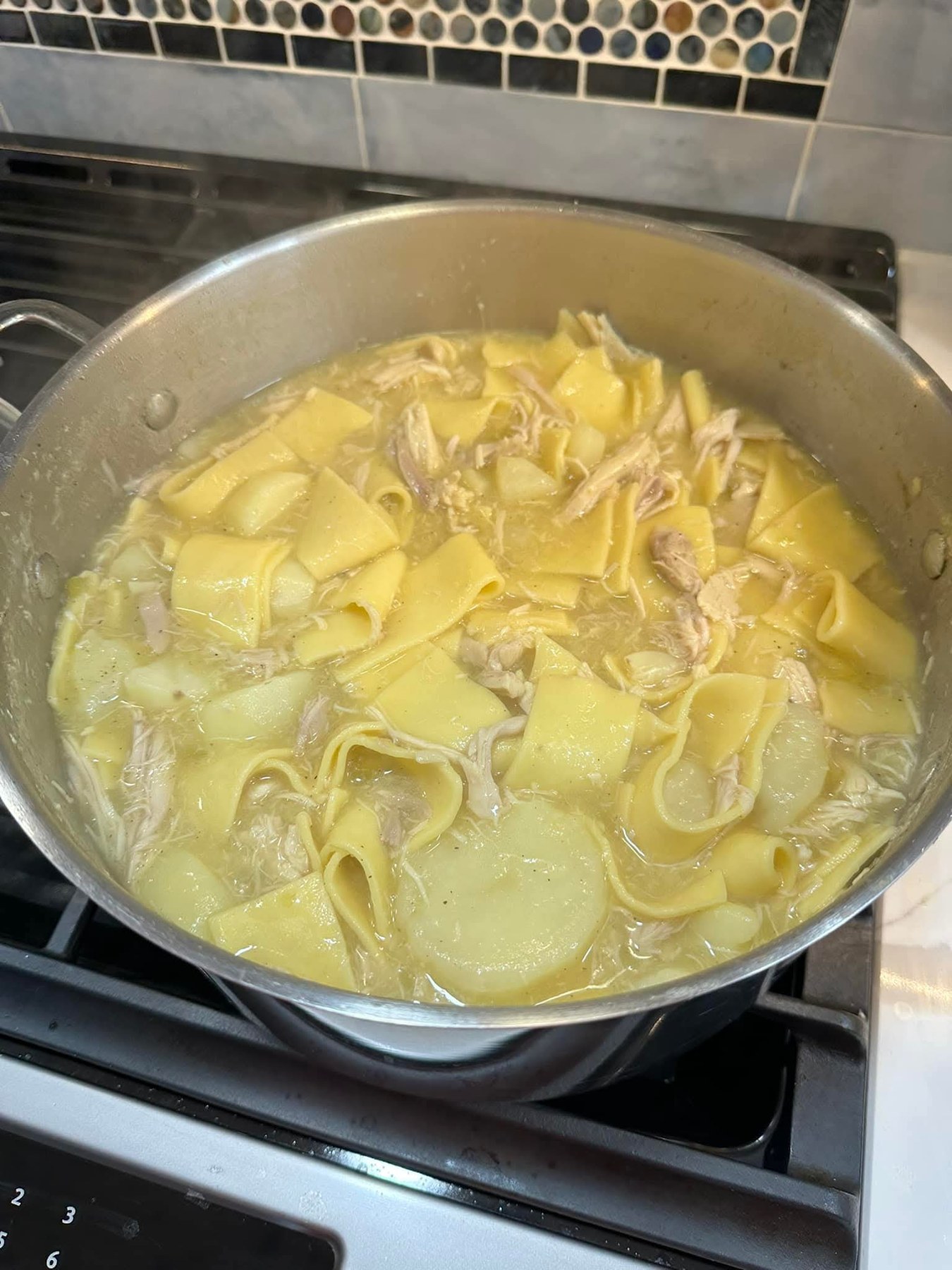
Pennsylvania Dutch chicken and potato pot pie is not a pie at all, but a rich, hearty chicken stew thickened with soft, homemade noodle squares and tender potato slices. It is the kind of dish that has warmed Pennsylvania farm kitchens for generations, and it still earns a place at the table on cold evenings. It is built from simple pantry staples: a whole chicken, a pot of broth, a few potatoes and a dough of flour and eggs.
This recipe is written for home cooks who want a traditional, comforting meal for six to eight people. The method is forgiving, the ingredients are inexpensive, and the result is a deeply flavorful broth that becomes almost silky from the starch released by the noodles. Once you have made it once, you will understand why so many families consider it a Sunday tradition.
Why you’ll love this Pennsylvania Dutch chicken and potato pot pie
- It turns a single whole chicken into two meals, with a rich broth and plenty of tender meat for the pot.
- The noodle squares give the stew a satisfying, homestyle texture that store-bought pasta cannot quite match.
- Potatoes add body and make the dish filling enough to serve as a complete one-pot dinner.
- Most of the work is hands-off simmering, so the cooking time is easy to fit around other plans.
- It feeds a crowd affordably and tastes even better the next day, which makes it ideal for busy weeks.
Ingredients
Serves 6 to 8. Prep time: 20 minutes. Cook time: 1 hour 30 minutes. Total time: 1 hour 40 minutes.
- 1 whole chicken (about 3.5 to 4 lb) or 2 lb bone-in chicken pieces
- 3 quarts water or chicken broth
- 1 onion, quartered
- 1 celery rib (optional, for the broth)
- 4 medium potatoes (about 1.5 lb), peeled and sliced into thick rounds
- 1 lb pot pie squares or wide egg noodles (or homemade: 2 cups flour, 2 eggs, 1/2 tsp salt, 3 to 4 tbsp water)
- 1 tsp salt, plus more to taste
- 1/2 tsp black pepper
- 2 tbsp chopped fresh parsley
- 1 tbsp butter (optional)
For the best flavor, choose a plump, fresh whole chicken or bone-in pieces such as thighs and legs, since the bones and dark meat give the broth its depth. Yellow or waxy potatoes hold their shape well in the pot, while starchy russets can break apart. If you buy ready-made pot pie squares, look for wide, thick noodles so they hold up to simmering. Homemade noodles are worth the effort: they absorb the broth beautifully and give the stew its characteristic chewy bite.
Instructions
- Simmer the chicken. Place the chicken in a large pot with the onion, celery, salt and water. Bring to a gentle simmer and cook for about 1 hour, until the meat is tender and pulls easily from the bone.
- Strain and shred. Remove the chicken and strain the broth into a clean bowl. Return the broth to the pot. Shred the meat, discarding the skin, bones and cartilage.
- Cook the potatoes. Bring the broth to a boil and add the sliced potatoes. Cook for 10 to 12 minutes, until they are partly tender.
- Make the noodle dough. If you are making homemade squares, combine the flour, eggs, salt and water into a stiff dough. Knead briefly, then roll it very thin on a floured surface and cut it into 2-inch squares.
- Add the noodles. Drop the squares into the boiling broth one at a time so they do not stick together. Stir gently to keep them separated.
- Finish cooking. Cook for 10 to 15 minutes, until the noodles and potatoes are tender and the broth has thickened slightly from the dough starch.
- Season and combine. Stir the shredded chicken back into the pot. Add the pepper, butter and parsley, then taste and adjust the salt.
- Serve. Ladle the hot stew into deep bowls and serve immediately.
Tips for the best results
- Keep the broth at a gentle simmer rather than a hard boil while the chicken cooks, which keeps the meat tender and the broth clear.
- Roll homemade dough as thin as you can without tearing it, since thin squares cook quickly and taste more delicate.
- Dust the squares lightly with flour and let them rest for 10 minutes before cutting so they do not stick together in the pot.
- Add the noodles in small batches to maintain a steady boil, which prevents the dough from clumping.
- Stir gently once the noodles are in, so you do not break the potato slices or tear the squares.
- Taste the broth before adding salt at the end, since the flavor concentrates as the stew simmers and the chicken releases its seasoning.
Variations and substitutions
- Turkey: Use leftover roast turkey and its carcass for the broth, which makes a delicious after-holiday version of the stew.
- Vegetable boost: Add diced carrots or parsnips with the potatoes for extra color and sweetness.
- Gluten-free: Use a gluten-free pasta sheet cut into squares, but cook it separately to avoid breaking it down in the broth.
- Richer broth: Use all dark meat or add a few extra chicken wings to deepen the flavor of the soup.
- Herb swap: Replace the parsley with fresh thyme or celery leaves for a more earthy, savory finish.
Serving suggestions
Serve the pot pie in deep bowls with a generous handful of fresh parsley scattered on top. A simple green salad with a sharp vinaigrette balances the richness of the broth and noodles. Crusty bread or soft dinner rolls are perfect for soaking up the last of the broth. For a traditional Pennsylvania Dutch spread, add pickled beets, applesauce or a plate of sliced cheese on the side. Pair the meal with iced tea, apple cider or a light, crisp white wine.
Storage and reheating
Let the pot pie cool to room temperature, then transfer it to airtight containers and refrigerate for up to three days. The noodles will continue to absorb liquid as the stew sits, so the texture becomes thicker over time. To reheat, warm it slowly over medium-low heat and stir in a splash of hot broth or water to loosen it. You can also freeze the stew for up to three months, though the noodles are softer after thawing. Reheat until steaming hot throughout before serving.
Frequently asked questions
Is Pennsylvania Dutch pot pie the same as a regular chicken pot pie?
No, they are quite different. Pennsylvania Dutch pot pie is a stew of chicken, potatoes and thick noodle squares simmered in broth, with no crust. A regular chicken pot pie is baked in a pastry shell with vegetables and a creamy sauce. The Pennsylvania Dutch version is closer to a hearty soup or stew.
Can I use store-bought noodles instead of making them?
Yes, store-bought pot pie squares or wide egg noodles work very well and save a lot of time. Choose wide, sturdy noodles so they hold their shape in the simmering broth. Cook them in the same way as the homemade squares, adding them gradually to the boiling broth.
Why did my noodles turn mushy?
Mushy noodles usually come from overcooking or from adding them too quickly without enough boiling liquid. Make sure the broth is at a steady boil before adding the squares, and check them after 10 minutes. Stirring too vigorously can also break them down, so stir gently.
Can I make this with a rotisserie chicken?
Yes, a rotisserie chicken is a convenient shortcut. Skip the first simmering step and use the meat for the stew. Make the broth with water, the onion, celery and salt, plus the carcass if you have it, simmering it for about 30 minutes to build flavor before adding the potatoes and noodles.
Does the stew really thicken on its own?
It does. The starch from the noodle dough and potatoes gradually releases into the broth, giving it a naturally velvety body. If the stew becomes thicker than you like after standing, simply add a little hot broth or water until it reaches the right consistency.
Final thoughts
Pennsylvania Dutch chicken and potato pot pie is a dish that rewards patience and simple ingredients. With a whole chicken, a pot of broth and a little homemade dough, you can create a meal that feels generous, warming and deeply satisfying. Gather your family, put on a big pot, and give this traditional recipe a try this week. We think you will want to make it again and again.