
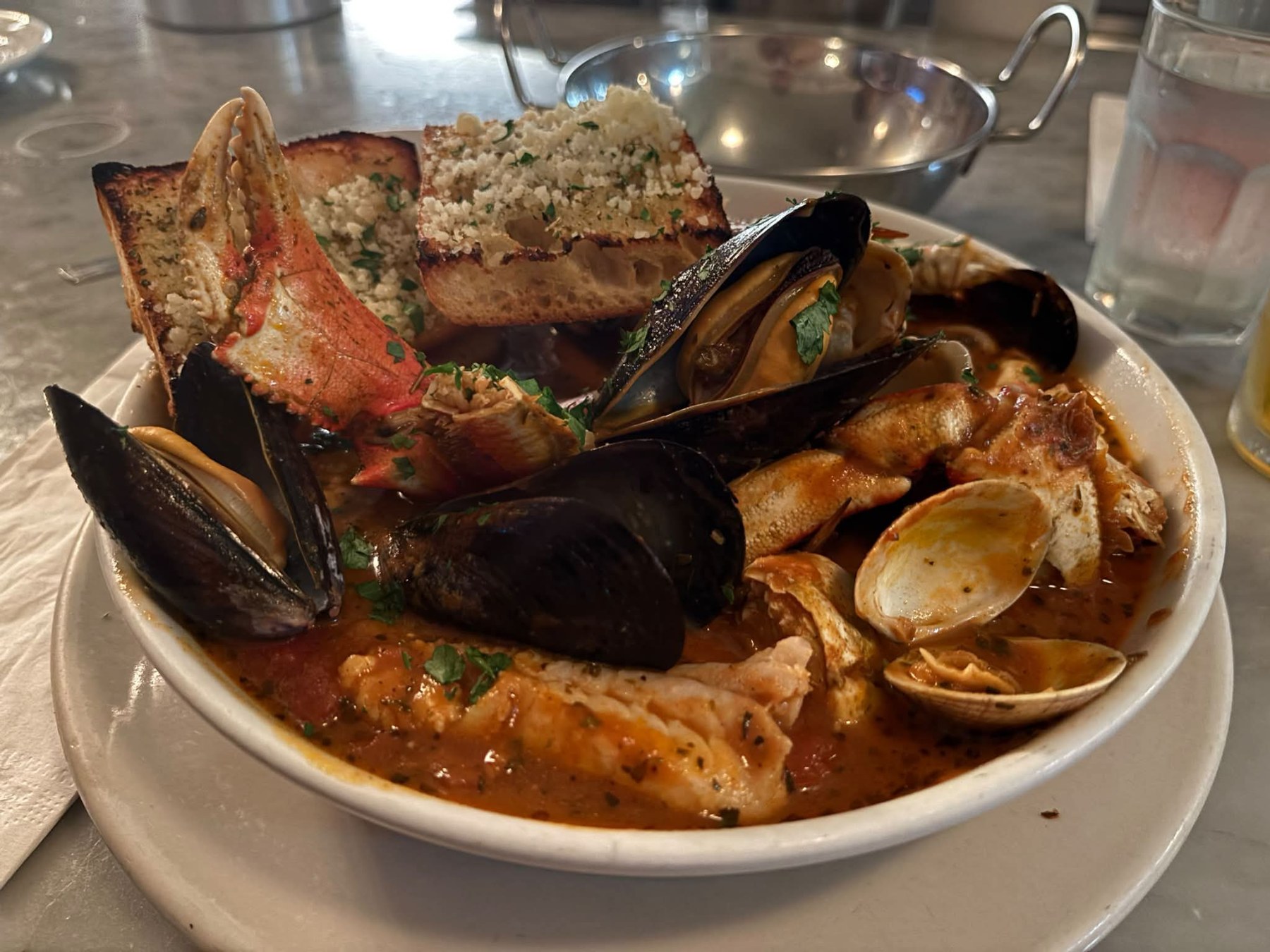
Cioppino (San Francisco Seafood Stew) is one of the most celebrated dishes to come out of the city’s fishing history. Built on a bright tomato and white wine broth loaded with crab, mussels, clams and firm white fish, it is the kind of meal that makes a dinner table feel like a celebration. Originally made by Italian fishermen who cooked their catch in a communal pot, it has grown into a beloved classic that home cooks can recreate with confidence.
This recipe is designed for four people and takes about one hour from start to finish, with roughly 25 minutes of preparation and 50 minutes of cooking. It suits weekend dinners, casual gatherings, and anyone who wants an impressive one-pot meal without complicated techniques. The broth is developed gradually, so every bite of seafood picks up layers of flavor from the aromatics, wine and herbs.
Why you’ll love this Cioppino
- It delivers a generous mix of seafood in a single pot, so every spoonful feels special.
- The tomato and white wine broth is rich and balanced, and it tastes even better when you mop it up with garlic toast.
- It is flexible, letting you use crab legs, shrimp or whichever fresh fish your market has on hand.
- Most of the work happens in one Dutch oven, which keeps cleanup manageable for such an impressive dish.
- It is a natural centerpiece for entertaining, because the pot can sit in the middle of the table for everyone to share.
Ingredients
- 3 tbsp olive oil
- 1 yellow onion, diced
- 1 fennel bulb, diced
- 4 cloves garlic, minced
- 1 red bell pepper, diced
- 2 tbsp tomato paste
- 1 can (28 oz) crushed tomatoes
- 1 cup dry white wine
- 3 cups fish or seafood stock
- 1 bay leaf
- 1 tsp dried oregano
- 1/2 tsp red pepper flakes
- 1 whole cooked Dungeness crab, cleaned and cracked (or 1.5 lb crab legs or claws)
- 1 lb mussels, scrubbed and debearded
- 1 lb littleneck clams, scrubbed
- 1 lb firm white fish (halibut or cod), cut into chunks
- 1/2 lb large shrimp (optional)
- Salt and black pepper
- 1/4 cup chopped fresh parsley
- 4 thick slices sourdough or ciabatta
- 3 tbsp butter, 1 clove garlic, grated Parmesan for the garlic toast
The success of Cioppino depends on the quality of its seafood, so buy the freshest you can find. Dungeness crab is the traditional choice on the West Coast, but crab legs or claws make an excellent substitute. Look for mussels and clams that are tightly closed or close when tapped, and avoid any with cracked shells. Choose firm white fish such as halibut or cod that holds its shape in the broth, and use a flavorful fish or seafood stock, since it forms the backbone of the stew. A dry white wine you would happily drink will give the broth a clean, bright finish.
Instructions
- Start the aromatics. Heat the olive oil in a large Dutch oven over medium heat. Sauté the onion, fennel and bell pepper for about 8 minutes, until they are soft and fragrant.
- Build the flavor base. Add the garlic, tomato paste, oregano and red pepper flakes, and cook for 2 minutes, stirring often so the paste deepens in color without burning.
- Deglaze with wine. Pour in the white wine and simmer for 3 minutes, scraping up any browned bits from the bottom of the pot.
- Simmer the broth. Add the crushed tomatoes, stock and bay leaf. Simmer partially covered for 25 to 30 minutes, then season with salt and pepper to taste.
- Cook the crab and fish. Add the crab pieces and white fish chunks to the broth and cook for 4 to 5 minutes, until the fish is just opaque.
- Add the shellfish. Stir in the clams and mussels, cover the pot and cook for 5 to 7 minutes, until the shells open. Discard any that stay closed. Add the shrimp for the last 3 minutes if using.
- Make the garlic toast. Mix the softened butter with the minced garlic and parsley, spread it over the bread, top with grated Parmesan, and broil until golden and crisp.
- Serve. Ladle the stew into wide bowls, garnish generously with fresh parsley, and serve with the garlic toast on the side.
Tips for the best results
- Scrub clams and mussels under cold running water and pull off any beards just before cooking, since they spoil quickly once cleaned.
- Add the seafood in stages, starting with the firm fish and finishing with shellfish, so nothing turns rubbery or overcooked.
- Keep the broth at a gentle simmer rather than a hard boil to protect the delicate texture of the fish.
- Taste the broth before adding the seafood, because the salt needed depends on the stock and the seafood will release its own brininess.
- Cover the pot once the clams and mussels go in, which traps steam and opens the shells evenly.
- Broil the garlic toast briefly and watch it closely, since Parmesan can go from golden to burnt in seconds.
Variations and substitutions
- Swap the white fish: Use salmon, snapper or sea bass if halibut and cod are hard to find, adjusting the cooking time for thickness.
- Use different shellfish: Scallops or squid can replace the shrimp for a different texture.
- Change the wine: A dry rosé or dry vermouth works in place of white wine, though the flavor will shift slightly.
- Make it spicier: Increase the red pepper flakes or add a finely chopped fresh chili for more heat.
- Go dairy-free on the toast: Use olive oil in place of butter and a nutritional yeast topping in place of Parmesan for a different finish.
Serving suggestions
Cioppino is a complete meal on its own, but a few simple sides can round it out nicely. A crisp green salad with lemon vinaigrette cuts through the richness of the broth and adds freshness to the table. Warm sourdough bread is essential for soaking up the tomato broth, and the garlic toast makes a satisfying addition. Serve with a chilled dry white wine, such as a Sauvignon Blanc or Vermentino, to echo the flavors in the stew. For a relaxed gathering, set out large bowls, crusty bread and nutcrackers for the crab so everyone can dig in together.
Storage and reheating
Cioppino is best eaten fresh, because shellfish loses its texture as it sits. If you have leftovers, let them cool, then refrigerate in an airtight container for up to one day. Keep the broth and seafood together so the flavors continue to develop. To reheat, warm the stew gently over low heat, stirring occasionally, and avoid boiling it, which can toughen the fish and shellfish. Discard any mussels or clams that have not opened after cooking, and do not freeze leftovers, since the seafood will become rubbery when thawed.
Frequently asked questions
What is the difference between Cioppino and bouillabaisse?
Cioppino is an American dish from San Francisco that uses a tomato and wine broth with a mix of local seafood. Bouillabaisse is a French dish from Marseille that typically uses saffron and fennel in a broth with a different selection of fish. Both are rich seafood stews, but their flavor profiles and origins are quite distinct.
Can I make Cioppino ahead of time?
You can prepare the tomato broth up to one day in advance and refrigerate it. Add the fish and shellfish just before serving, because they cook quickly and can overcook if prepared too early. This approach keeps the seafood tender and makes the final assembly much faster.
What seafood is best for Cioppino?
The best choices are a combination of firm white fish, crab, mussels and clams, since each adds different flavor and texture. Fresh, high-quality seafood makes the biggest difference. If you are unsure, ask your fishmonger what is freshest that day and build the stew around it.
Is Cioppino spicy?
Cioppino is usually mildly spicy, with just a touch of heat from red pepper flakes. You can adjust the amount to suit your taste, adding more for a bolder kick or leaving them out entirely for a gentler dish. The broth should still feel bright and savory regardless of the heat level.
Can I use frozen seafood?
Frozen seafood can work well if it is thawed properly in the refrigerator overnight. Pat it dry before adding it to the pot so the broth does not become watery. Fresh seafood is ideal, but good-quality frozen options are a practical alternative when fresh is not available.
Final thoughts
Cioppino is a dish that brings together the flavors of the sea, the warmth of a tomato broth and the comfort of shared bread at the table. Once you have made it once, you will quickly learn to adjust it to your favorite seafood and your own taste. Gather your ingredients, set aside an hour, and invite your friends or family to join you. We hope you enjoy making this San Francisco classic as much as we do.