
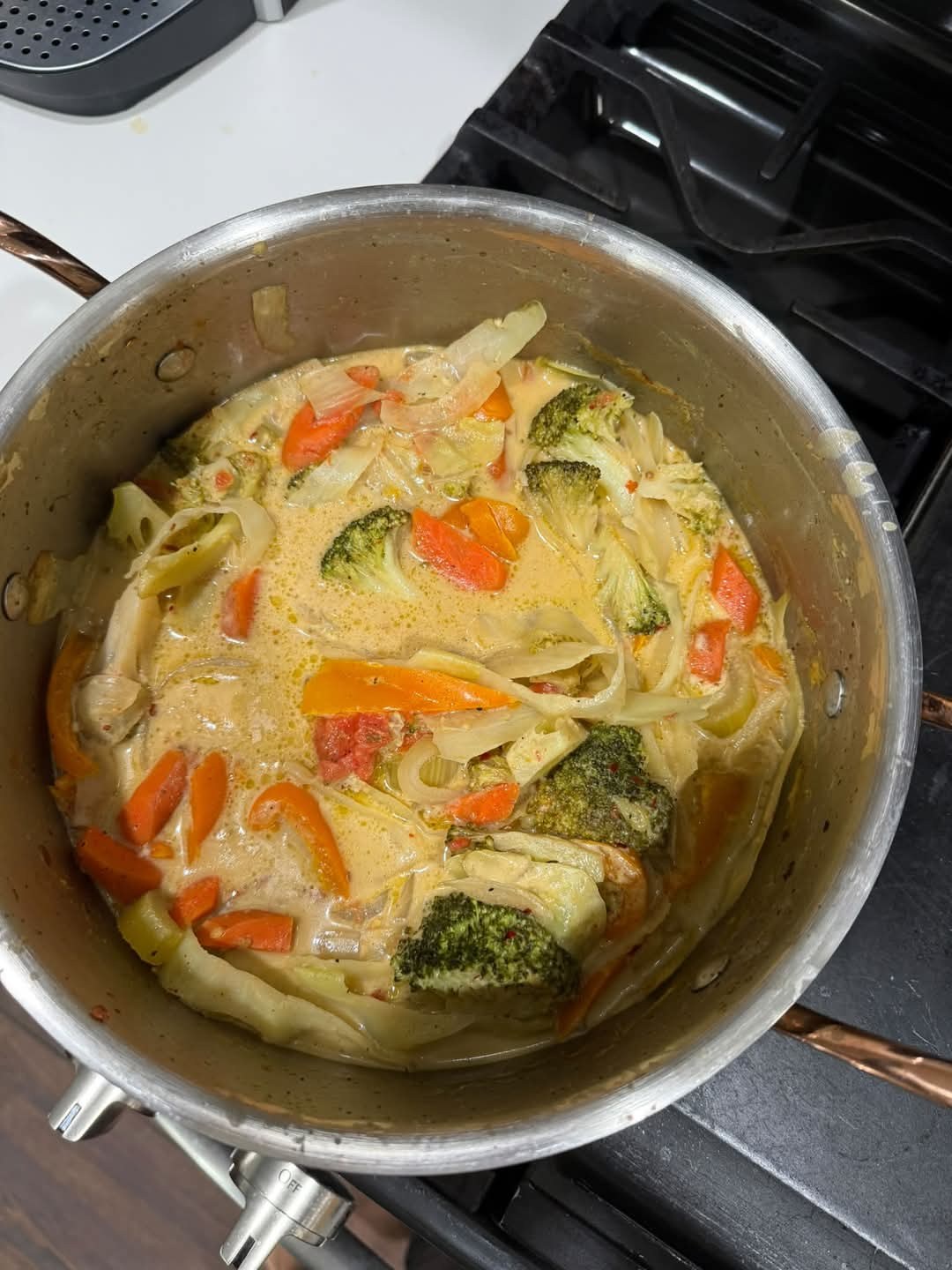
Creamy Coconut Red Curry with Mixed Vegetables is a fragrant, comforting one-pot dinner that comes together in about 40 minutes. Rich coconut milk gives the sauce a silky body, red curry paste brings warmth and gentle heat, and a colorful mix of carrots, bell pepper, broccoli and cabbage makes every spoonful satisfying. It is an easy choice for busy weeknights, vegetarian dinners and anyone who wants a restaurant-style curry without a long list of specialty ingredients.
This recipe serves 4 and is built on a simple method: soften the aromatics, bloom the curry paste, simmer the vegetables in coconut milk and finish with a splash of soy sauce, sugar and lime. Because the vegetables are added in stages, each one keeps its texture and flavor. Read on for the ingredient list, clear instructions, tips for the best results and plenty of ideas for variations and serving.
Why you’ll love this creamy coconut red curry
- It is ready in about 40 minutes, making it a practical choice for a fast weeknight dinner.
- The coconut milk and red curry paste create a rich, balanced sauce without needing any complicated techniques.
- It is naturally flexible, so you can use whatever vegetables you have on hand in the fridge.
- One large pot is all you need, which keeps both preparation and cleanup simple.
- It is easy to scale up for guests or to make ahead for lunches the next day.
Ingredients
Servings: 4 | Prep time: 15 minutes | Cook time: 20 minutes | Total time: 40 minutes
- 1 tbsp coconut or vegetable oil
- 1 medium onion, sliced
- 3 cloves garlic, minced
- 1 tbsp grated fresh ginger
- 2 to 3 tbsp red curry paste
- 1 can (13.5 oz) full-fat coconut milk
- 1 cup vegetable broth
- 2 carrots, sliced on the diagonal
- 1 orange bell pepper, cut into strips
- 2 cups broccoli florets
- 2 cups sliced cabbage
- 1 tomato, diced
- 1 tbsp soy sauce
- 1 tsp sugar
- Juice of 1/2 lime
- Salt to taste
- Cooked jasmine rice, for serving
- Fresh cilantro or Thai basil, for garnish (optional)
The foundation of this curry is the combination of red curry paste and full-fat coconut milk. Look for a red curry paste with a short ingredient list, since brands vary considerably in heat and intensity; start with 2 tablespoons and add more only if you want extra spice. Full-fat coconut milk gives the sauce its characteristic creaminess, while light versions can make it thin and watery. Choose firm, bright vegetables with no soft spots, and slice the carrots on the diagonal so they cook evenly. Fresh ginger and garlic make a noticeable difference, so use them rather than powdered substitutes whenever possible.
Instructions
- Soften the aromatics. Heat the oil in a large pot over medium heat and saute the sliced onion for 3 to 4 minutes, until it becomes soft and translucent.
- Add garlic and ginger. Stir in the minced garlic and grated ginger and cook for about 1 minute, until the kitchen smells fragrant.
- Bloom the curry paste. Stir in the red curry paste and fry for 1 to 2 minutes. This brief toasting wakes up the spices and deepens the flavor of the whole dish.
- Build the sauce. Pour in the coconut milk and vegetable broth, stirring to dissolve the paste completely, then bring the liquid to a gentle simmer.
- Cook the firmer vegetables. Add the carrots and cabbage and simmer for 5 minutes, until they begin to soften.
- Add the remaining vegetables. Stir in the bell pepper, tomato and broccoli and simmer for another 5 to 7 minutes, until everything is tender-crisp.
- Season to taste. Add the soy sauce, sugar, lime juice and salt, then taste and adjust the balance of salty, sweet and sour as needed.
- Serve. Ladle the curry over hot jasmine rice and garnish with fresh cilantro or Thai basil before serving.
Tips for the best results
- Keep the heat at a gentle simmer once the coconut milk is added; a hard boil can cause the sauce to separate and turn grainy.
- Stir the curry paste into the onion mixture before adding liquid so it blooms properly and does not clump.
- Add the vegetables in the order given, since carrots and cabbage need more time than broccoli and tomato.
- Taste before adding salt, because soy sauce and curry paste already contribute saltiness.
- Squeeze in the lime juice at the end, as heat can dull its bright flavor if it is added too early.
- Do not overcrowd the pot with vegetables, or the curry will take longer to return to a simmer and the texture will suffer.
Variations and substitutions
- Add protein: Stir in cubed firm tofu, chickpeas or cooked chicken during the final simmer for a heartier meal.
- Change the vegetables: Snow peas, green beans, zucchini or cauliflower work well in place of broccoli or cabbage.
- Adjust the heat: Use less curry paste for a mild version, or add a sliced fresh chili or a pinch of chili flakes for more fire.
- Try a different broth: Chicken broth gives a richer flavor if you are not cooking vegetarian, and water can replace broth in a pinch.
- Swap the rice: Brown rice, quinoa or rice noodles all pair nicely with the sauce and offer different textures.
Serving suggestions
Serve this curry hot in deep bowls over fluffy jasmine rice so the sauce soaks in. A wedge of extra lime on the side lets everyone brighten their bowl to taste. For a fuller meal, add a simple cucumber salad with rice vinegar, or a plate of crisp spring rolls. Naan or warm flatbread is also excellent for scooping up the sauce. Garnish generously with cilantro or Thai basil, which add freshness and a lovely aroma. Thai iced tea or a cold lager make refreshing drinks alongside the spice, and a light green tea works well if you prefer something non-alcoholic.
Storage and reheating
Let the curry cool to room temperature, then transfer it to an airtight container and refrigerate for up to 4 days. Store the rice separately so it does not become soggy. To reheat, warm the curry gently in a saucepan over low to medium heat, adding a splash of broth or water if it has thickened too much. Avoid boiling it vigorously, which can make the coconut milk separate. The curry can also be frozen for up to 3 months, though the vegetables will soften somewhat after thawing.
Frequently asked questions
Can I make this curry ahead of time?
Yes, this curry tastes even better the next day as the flavors continue to blend. Prepare it fully, cool it and store it in the refrigerator. Reheat gently on the stove until hot all the way through, adding a little liquid if needed to loosen the sauce.
Is red curry paste very spicy?
It depends entirely on the brand and how much you use. Many commercial pastes are moderately hot, so starting with 2 tablespoons and tasting is the safest approach. You can always add more paste, chili or a squeeze of lime to adjust the heat to your preference.
Can I use light coconut milk instead?
You can, but the sauce will be thinner and less creamy. Full-fat coconut milk gives the best texture and richness. If you choose a light version, you may want to simmer the curry a little longer to reduce and thicken the liquid.
What vegetables work best in this curry?
Sturdy vegetables that hold their shape during simmering work best, such as carrots, bell peppers, broccoli, cabbage, green beans and cauliflower. Softer vegetables like spinach or zucchini can be added in the last few minutes so they do not turn mushy.
Is this curry vegetarian and vegan?
It is naturally vegetarian when made with vegetable broth, and it can be vegan if you check that your curry paste contains no shrimp paste. Many red curry pastes do contain shrimp, so read the label carefully before you buy.
Final thoughts
Creamy Coconut Red Curry with Mixed Vegetables proves that a satisfying, aromatic dinner does not have to be complicated. With a handful of pantry staples and a colorful selection of vegetables, you can have a bowl of comforting curry on the table in under an hour. Try this recipe tonight, adjust the spice and vegetables to suit your family, and enjoy the rich, fragrant results over a generous portion of rice.