
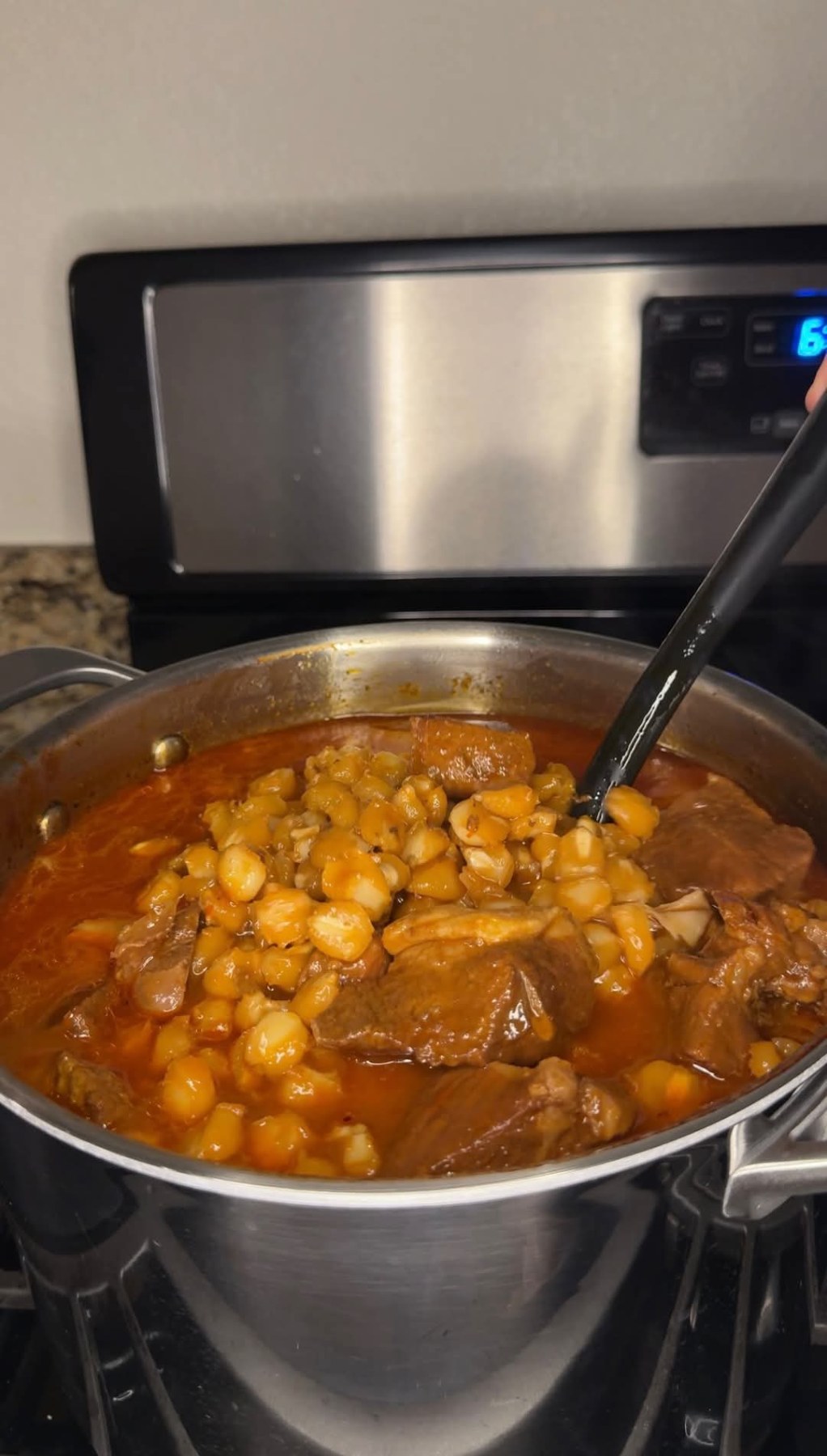
Pozole Rojo (Red Pork and Hominy Stew) is one of Mexico’s most beloved comfort dishes, a deeply flavorful pot of tender pork and chewy hominy simmered in a brick-red broth made from toasted dried chiles. It is the kind of meal families gather around for celebrations, weekend lunches, and cold evenings, and it is surprisingly approachable for home cooks who are willing to give it a few hours of gentle attention.
This recipe makes a generous batch for 8 to 10 servings, which means it is ideal for a crowd or for planning leftovers for the week. The preparation takes about 30 minutes, the cooking time is roughly 3 hours, and the total time comes to about 3 hours 30 minutes. Most of that time is hands-off simmering, so you can get on with your day while the pot does the work.
Why you’ll love this Pozole Rojo
- The broth develops a rich, layered flavor from slow-cooked pork and a smooth sauce of toasted chiles, garlic, and onion.
- Hominy adds a pleasantly chewy, corn-forward texture that makes every spoonful feel hearty and satisfying.
- It is a true make-ahead dish that tastes even better the following day, once the flavors have had time to meld.
- The garnish bar lets everyone build their own bowl with crunchy cabbage, bright radishes, fresh lime, and crisp tostadas.
- It feeds a large group with minimal effort, making it a practical and impressive choice for gatherings.
Ingredients
Serves 8 to 10. Prep time 30 minutes, cook time 3 hours, total time 3 hours 30 minutes.
- 3 lb bone-in pork shoulder or pork neck bones, cut into large chunks
- 2 lb pork ribs or pork feet (optional, for body)
- 2 cans (29 oz each) white hominy, drained and rinsed (or 1 lb dried hominy, cooked)
- 6 dried guajillo chiles, stemmed and seeded
- 3 dried ancho chiles, stemmed and seeded
- 1 white onion, halved
- 6 cloves garlic
- 2 tsp dried Mexican oregano
- 1 tsp ground cumin
- 2 bay leaves
- 1 tbsp salt, plus more to taste
- 10 cups water or pork broth
- Optional garnishes: shredded cabbage, sliced radishes, diced onion, lime wedges, dried oregano, tostadas
The success of this stew depends largely on the chiles and the pork. Guajillo chiles give the broth its bright red color and gentle, slightly tangy flavor, while ancho chiles add sweetness and depth. Look for chiles that are pliable and fragrant rather than brittle or dusty. For the pork, bone-in shoulder is the classic choice because the bones and connective tissue release gelatin and body into the broth. If you can find pork feet or ribs, they add extra richness. Canned hominy is convenient, but rinse it well to remove the packing liquid, and choose a brand with plump, intact kernels.
Instructions
- Start the pork broth. Place the pork in a large stockpot with half the onion, 3 garlic cloves, the bay leaves, and 1 tbsp salt. Cover with 10 cups of water or pork broth and bring to a boil over medium-high heat, skimming off the foam that rises to the surface.
- Simmer the pork. Reduce the heat, partially cover the pot, and let it simmer gently for 1.5 to 2 hours, until the pork is fork-tender and beginning to fall away from the bone.
- Toast the chiles. While the pork cooks, heat a dry skillet over medium heat and toast the guajillo and ancho chiles for about 30 seconds per side, until fragrant. Be careful not to let them scorch, since burnt chiles turn bitter. Transfer them to a bowl, cover with hot water, and soak for 20 minutes until soft.
- Blend the chile sauce. Drain the chiles and place them in a blender with the remaining onion, the remaining 3 garlic cloves, the cumin, the oregano, and about 1 cup of the soaking liquid. Blend until completely smooth, then strain the mixture through a fine mesh sieve to remove any skins or seeds.
- Combine the stew. Pour the chile sauce into the pot with the pork and stir well to combine. Add the drained and rinsed hominy at the same time.
- Finish simmering. Continue to simmer everything together for another 45 to 60 minutes, until the broth turns rich and brick-red and the hominy is tender and puffed open. Taste the broth and adjust the salt as needed.
- Serve with garnishes. Ladle the stew into large bowls and set out shredded cabbage, sliced radishes, diced onion, lime wedges, dried oregano, and tostadas so everyone can add their own finishing touches.
Tips for the best results
- Skim the foam carefully during the first boil, since this keeps the broth clean and clear rather than cloudy and greasy.
- Toast the chiles just until fragrant. If they start to smoke or blacken, discard them and start again, because scorched chiles make the whole pot taste bitter.
- Strain the chile sauce for a silky texture. Skipping this step leaves tough bits of skin that can make the broth feel gritty.
- Season in stages. Add salt to the pork broth, then taste again once the chile sauce and hominy are in, since the flavors concentrate as the stew reduces.
- Keep the stew at a gentle simmer rather than a hard boil, which keeps the pork tender and prevents the broth from becoming overly reduced.
- If the stew thickens too much as it sits, add a splash of water or broth to loosen it before serving.
Variations and substitutions
- Chicken pozole: Swap the pork for bone-in chicken thighs and reduce the initial simmer to about 45 minutes, until the meat is cooked through and tender.
- Pozole Verde: For a green version, replace the red chiles with tomatillos, green chiles, cilantro, and epazote for a fresh, tangy flavor.
- Milder heat: Ancho and guajillo chiles are already mild, but you can reduce the number of guajillos slightly if you prefer an even gentler broth.
- Vegetarian version: Use vegetable broth, add mushrooms or roasted squash for body, and keep the chile sauce as written for a satisfying meatless stew.
- Dried hominy: If you use 1 lb of dried hominy, soak it overnight and cook it until tender before adding it to the pot, allowing extra time for it to soften.
Serving suggestions
Pozole Rojo is traditionally served in deep bowls, with the garnishes arranged on the table so each guest can build their own bowl. Shredded cabbage adds a cool, crunchy contrast to the warm, rich broth, while sliced radishes bring a peppery bite. A generous squeeze of lime brightens the flavors, and a pinch of dried oregano sprinkled over the top adds an aromatic finish. Crisp tostadas on the side are perfect for scooping up pieces of pork and for adding extra crunch. Serve with cold drinks such as horchata, agua fresca, or a light Mexican lager to balance the richness of the stew.
Storage and reheating
Pozole keeps very well, and many cooks think it improves overnight as the flavors settle. Let the stew cool to room temperature, then transfer it to airtight containers and refrigerate for up to 4 days. For longer storage, freeze it in portions for up to 3 months, leaving a little headspace in each container for expansion. Reheat gently over medium-low heat on the stovetop, stirring occasionally, and add a splash of water or broth if the stew has thickened. Store the garnishes separately and add them fresh just before serving to keep them crisp.
Frequently asked questions
Can I make Pozole Rojo ahead of time?
Yes, Pozole Rojo is an excellent make-ahead dish. The flavors deepen as it rests, so making it a day in advance often produces a richer result. Refrigerate it once cooled, then reheat gently before serving and adjust the salt and water as needed.
What is the difference between red and green pozole?
Red pozole gets its color and earthy flavor from dried red chiles such as guajillo and ancho. Green pozole, known as Pozole Verde, uses tomatillos, green chiles, and herbs like cilantro and epazote for a brighter, more tangy taste. Both styles usually include pork and hominy.
Can I use canned hominy instead of dried?
Canned hominy is a convenient and reliable choice that works very well in this recipe. Simply drain and rinse it thoroughly before adding it to the pot. Dried hominy is also delicious but requires soaking and longer cooking to become tender.
Is Pozole Rojo very spicy?
Guajillo and ancho chiles are mild to medium in heat, so the stew is flavorful rather than fiery. Most of the heat is gentle, and you can control the level by reducing the number of chiles or by serving extra garnishes like sliced radishes and lime to balance the bowl.
Do I need to use pork feet or ribs?
They are optional. Bone-in pork shoulder or neck bones are enough to create a flavorful broth. Pork feet and ribs add extra body and richness, so include them if you can find them, but the stew will still be delicious without them.
Final thoughts
Pozole Rojo (Red Pork and Hominy Stew) rewards a little patience with a pot full of deep, comforting flavor and a table full of happy eaters. The toasted chiles, tender pork, and chewy hominy come together into something truly special, and the garnish bar makes every bowl feel personal. Gather your ingredients, set aside an afternoon, and give this classic a try. We think you will find it becomes a recipe you return to again and again.