
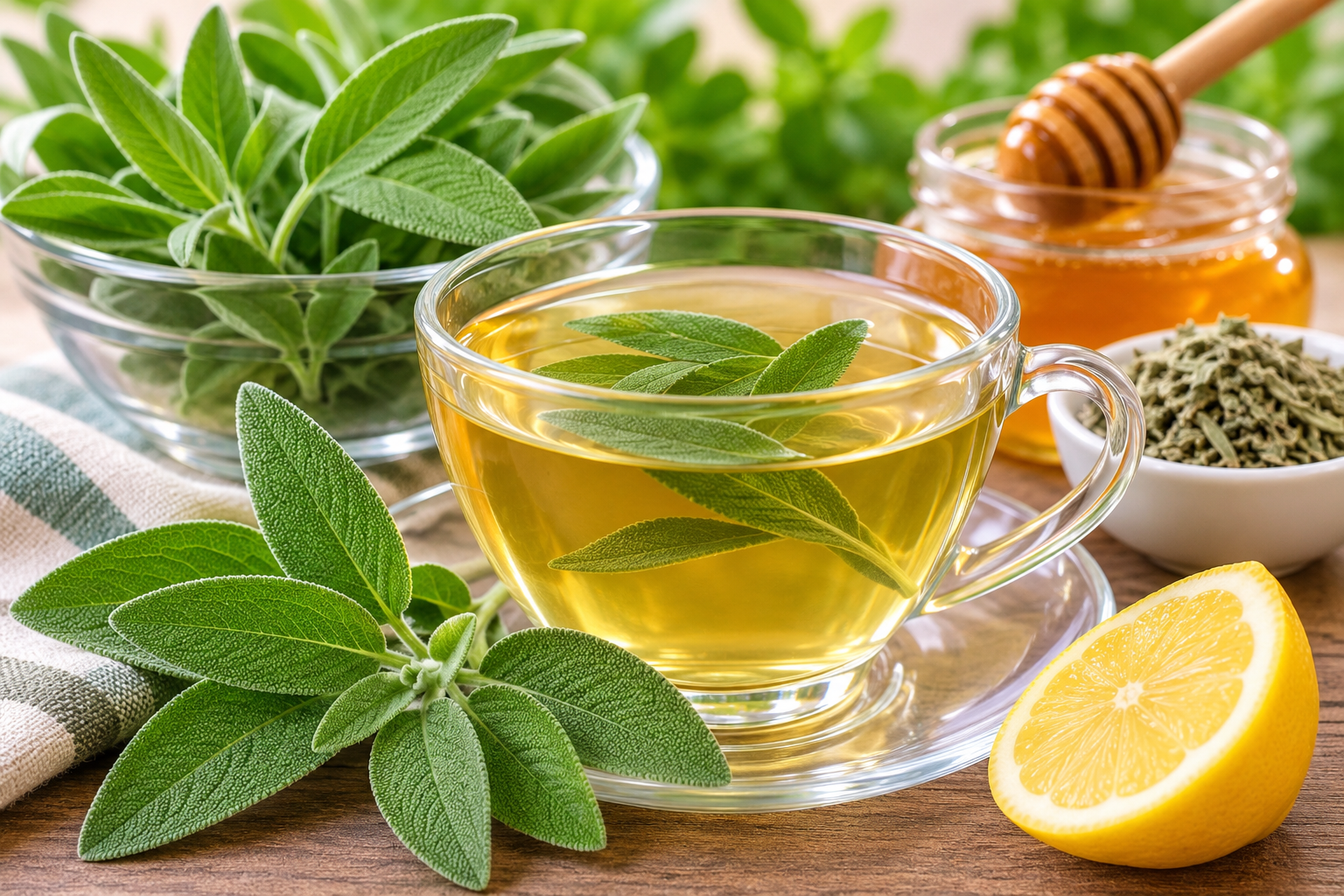
Sage Leaves: A Natural Herbal Drink for Wellness, Memory, and Everyday Health
Sage leaves, scientifically known as Salvia officinalis, have been used for centuries in traditional herbal practices. Known for their pleasant aroma and distinctive flavor, these green leaves are commonly used in cooking and in homemade herbal teas.
Sage is native to the Mediterranean region and has become a popular ingredient in many traditional remedies. Today, people continue to explore its potential benefits for general wellness, digestion, memory, and healthy aging.
1. What Makes Sage Leaves Special?
Sage contains naturally occurring plant compounds, including rosmarinic acid and other antioxidant substances. These compounds have attracted scientific interest because of their potential antioxidant and anti-inflammatory activities.
Antioxidants help protect cells against oxidative stress, which is associated with the natural aging process and several health conditions.
Although laboratory research has identified interesting properties in sage, more human studies are needed to establish its actual health benefits.
2. Sage and Brain Health
One of the most interesting areas of research involving sage is its possible relationship with memory and cognitive function.
Some small studies have suggested that certain sage preparations may influence attention and memory performance. Researchers are particularly interested in how compounds found in sage interact with processes involved in brain function.
However, these findings should not be interpreted as proof that sage prevents or reverses dementia or Alzheimer’s disease.
People experiencing memory problems should seek medical advice rather than relying on herbal remedies.
3. Potential Anti-Inflammatory Properties
Sage contains plant compounds that have demonstrated antioxidant and anti-inflammatory activity in laboratory research.
Inflammation is part of the body’s natural defense system. However, persistent inflammation can be associated with different health problems.
Scientists continue to investigate whether sage extracts may have useful applications in this area. At present, there is insufficient clinical evidence to recommend sage as a treatment for chronic inflammation.
4. Sage and Joint Health
Joint discomfort and stiffness are common concerns, particularly as people get older.
Some laboratory studies have investigated the biological activities of sage compounds, including their potential effects on inflammatory pathways.
Nevertheless, there is no strong clinical evidence showing that drinking sage tea can cure arthritis, eliminate joint pain, or reverse osteoarthritis.
People with joint problems should follow appropriate medical advice and treatment plans.
5. How to Prepare Fresh Sage Tea
Fresh sage tea is one of the simplest ways to enjoy this aromatic herb.
Ingredients:
- 5 to 6 fresh sage leaves
- 1 cup of hot water
- 1 teaspoon of honey (optional)
- 1 slice of lemon (optional)
Instructions:
- Wash the fresh sage leaves carefully.
- Bring one cup of water to a boil.
- Place the leaves inside a clean cup.
- Pour the hot water over the leaves.
- Cover the cup and allow the leaves to steep for approximately 5 to 7 minutes.
- Strain the liquid to remove the leaves.
- Add honey or lemon if desired.
- Enjoy your warm herbal infusion.
Sage tea has a distinctive herbal flavor and can be enjoyed as an occasional beverage.
6. Fresh Sage Leaves or Dried Sage?
Both fresh and dried sage can be used to prepare herbal tea.
Fresh sage leaves provide a mild, aromatic flavor, while dried sage generally has a stronger and more concentrated taste.
When using dried sage, a small quantity is usually sufficient for one cup of tea.
Always choose clean, properly stored herbs and make sure the plant has been correctly identified before using it.
7. Important Safety Precautions
Although sage is commonly used as a culinary herb, consuming large quantities may not be safe.
Some varieties of sage contain thujone, a natural compound that can be toxic in high amounts.
Pregnant women should avoid medicinal quantities of sage unless advised by a healthcare professional. People who are breastfeeding, taking medication, or managing chronic health conditions should also seek professional advice before using concentrated sage preparations.
Sage essential oil should never be treated like ordinary sage tea because it can contain much higher concentrations of active compounds.
Conclusion
Sage leaves are an aromatic Mediterranean herb with a long history of culinary and traditional use. Their naturally occurring plant compounds have attracted scientific interest, particularly in research involving antioxidants, inflammation, and cognitive function.
A simple cup of sage tea can be an enjoyable addition to a balanced lifestyle. However, it is important to understand the difference between traditional uses, promising laboratory findings, and proven medical treatments.
Sage should be enjoyed responsibly and should never replace prescribed medication or professional medical care.