
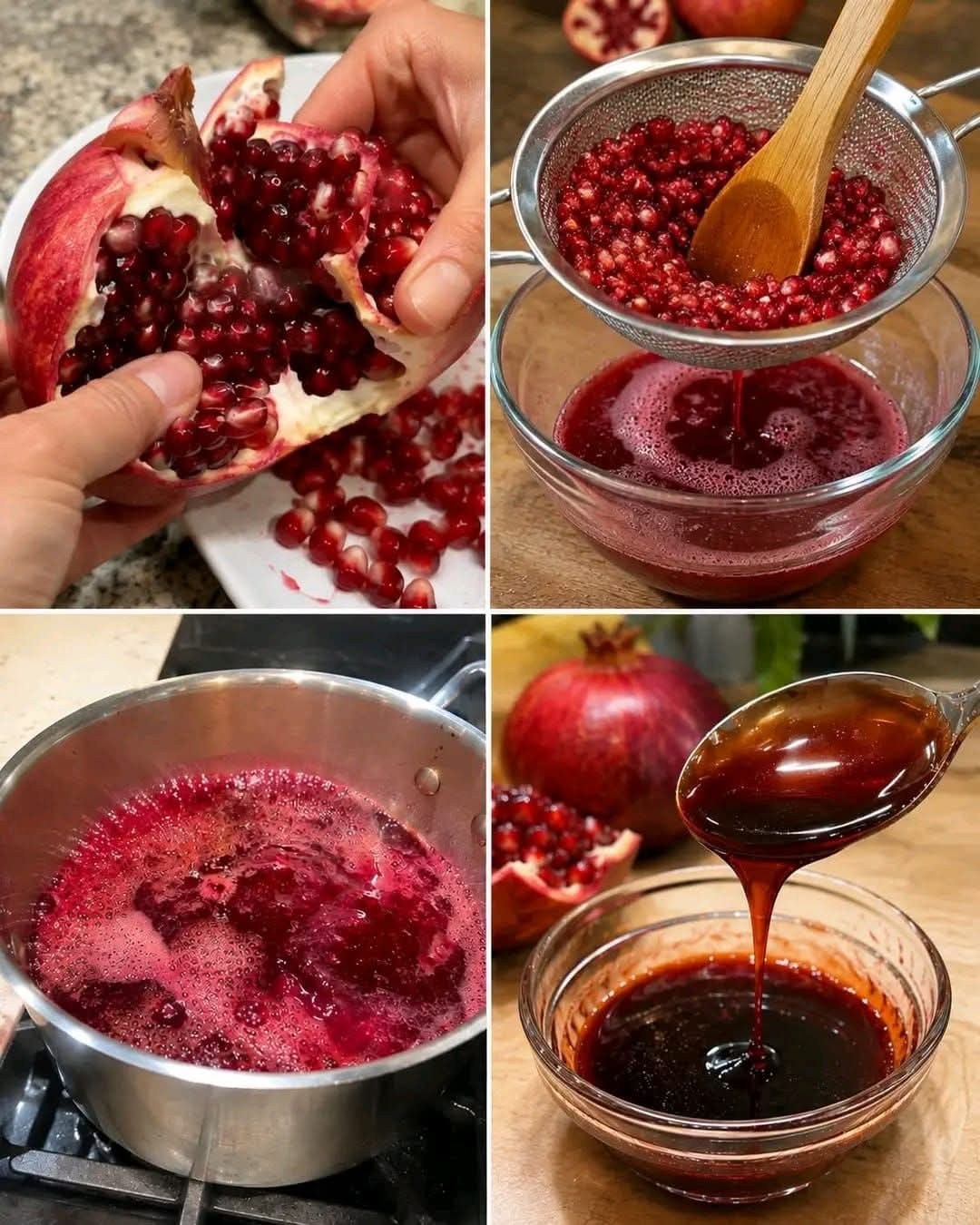
Homemade pomegranate molasses is one of the most rewarding pantry staples you can make at home. This tangy, deeply fruity syrup is a cornerstone of Middle Eastern cooking, and it brings a bright, sweet-sour punch to salads, grilled meats, roasted vegetables and desserts. Making it yourself takes only a handful of ingredients and a little patience while the juice reduces on the stove.
This recipe is designed for home cooks who want an authentic result without any special equipment. You will extract fresh juice from ripe pomegranates, sweeten it lightly, add a splash of lemon to sharpen the flavor, and simmer it slowly until it turns into a glossy, concentrated molasses. Because it is made from scratch, you control the sweetness and tartness exactly the way you like it.
Why you’ll love this homemade pomegranate molasses
- It uses just three simple ingredients, so the flavor of the fresh fruit shines through without any artificial additives.
- You can adjust the sugar to suit the natural tartness of your pomegranates, making every batch perfectly balanced.
- A small jar goes a long way, because the syrup is concentrated and a little adds a lot of depth to any dish.
- It keeps well in the refrigerator for months, so one afternoon of cooking supplies your kitchen for the season.
- It is far more vibrant than most store-bought versions, with a fresh, bright fruitiness that is hard to find in a bottle.
Ingredients
Servings: About 1/2 cup | Prep time: 20 minutes | Cook time: 50 minutes
- 4 large ripe pomegranates (about 4 cups of arils, yielding roughly 2 to 2.5 cups juice)
- 1/4 cup granulated sugar (optional, adjust to the tartness of your fruit)
- 1 tablespoon fresh lemon juice
Choose pomegranates that feel heavy for their size, with firm, unblemished skin and a deep red color. Heavier fruit usually contains more juice, which gives you a better yield. Taste a few arils before you start: if the fruit is very sweet, you may want to reduce the sugar or skip it entirely, and if it is quite tart, the full amount will balance it nicely. Fresh lemon juice is important because it adds acidity that keeps the final syrup lively rather than flat.
Instructions
- Prepare the pomegranates. Cut the pomegranates in half and pull out the arils, which are the juicy red seeds. Discard the white pith and the bitter skin as you work, and try to keep the arils intact.
- Extract the juice. Press the arils through a fine-mesh sieve with a wooden spoon, or blend them briefly and strain the mixture, to collect the juice in a bowl. Press firmly so you get as much liquid as possible.
- Combine the ingredients. Pour the juice into a wide stainless steel saucepan and add the sugar and lemon juice. A wide pan helps the liquid evaporate more quickly.
- Bring it to a boil. Heat the mixture over medium-high heat, stirring until the sugar dissolves completely. Once it boils, lower the heat so the liquid settles into a steady simmer.
- Simmer until reduced. Let the juice simmer uncovered for 45 to 60 minutes, skimming off any foam and stirring occasionally. Continue until the liquid is reduced to about 1/2 cup and thick enough to coat the back of a spoon.
- Cool and store. Remove the pan from the heat and let the syrup cool, as it will thicken further in the process. Transfer it to a clean, dry jar and refrigerate for up to 2 to 3 months.
Tips for the best results
- Use a wide pan rather than a deep one, since a larger surface area speeds up evaporation and shortens the cooking time.
- Keep the heat at a gentle simmer once the mixture boils, because a rolling boil can scorch the sugars and make the molasses taste bitter.
- Skim the foam regularly, especially at the start, to keep the final syrup clear and clean-tasting.
- Test the thickness by dribbling a little onto a cold plate; if it runs quickly, keep simmering, and if it sets into a glossy layer, it is ready.
- Remember that the syrup thickens substantially as it cools, so do not over-reduce it on the stove or it may become too sticky.
- Avoid aluminum or copper pans, because the acid in the pomegranate juice can react with the metal and affect both color and flavor.
Variations and substitutions
- Less sweet version: Omit the sugar entirely for a pure, tart molasses that works especially well in savory dishes.
- Honey instead of sugar: Replace the sugar with an equal amount of honey for a softer, floral sweetness, adding it once the juice has started to simmer.
- Spiced version: Add a cinnamon stick or a few cardamom pods to the juice while it reduces, then remove them before storing.
- Citrus twist: Swap the lemon juice for fresh lime or orange juice for a slightly different aroma that pairs beautifully with grilled dishes.
- Thinner syrup: Stop the cooking a few minutes earlier for a looser consistency that is easier to drizzle and mix into dressings.
Serving suggestions
Pomegranate molasses shines in both savory and sweet cooking. Whisk a spoonful into olive oil and lemon juice for a bold salad dressing, or use it as a glaze for roasted chicken, lamb or salmon during the last few minutes of cooking. It is classic in Middle Eastern dishes such as muhammara, a roasted red pepper and walnut dip, and it adds a wonderful tang to stews and braised meats. For dessert, drizzle it over vanilla ice cream, Greek yogurt or a bowl of fresh fruit. A little goes a long way, so start with a teaspoon and taste as you go.
Storage and reheating
Store your homemade pomegranate molasses in a clean, airtight glass jar in the refrigerator, where it will keep well for two to three months. The syrup may thicken when chilled, so let it sit at room temperature for a few minutes or warm it gently before using. Always use a clean spoon to take out portions to prevent contamination. If you notice any mold, off smells or cloudy changes in texture, discard the jar. There is no need to reheat the molasses for everyday use, but a brief warming in a small pan helps it loosen and blend smoothly into sauces and dressings.
Frequently asked questions
Can I make pomegranate molasses with store-bought juice?
Yes, you can use 100 percent pomegranate juice without added sugar in place of fresh juice. Choose a high-quality product, since some bottled juices are blended with other fruit juices and will taste different. Keep in mind that the flavor of fresh pomegranates is usually brighter, so the result will be slightly milder. Taste the juice first and adjust the sugar and lemon to your liking.
Why is my pomegranate molasses not thickening?
Thickening takes time, so the most common reason is that the syrup simply needs more simmering. Keep cooking gently and test it on a cold plate or spoon. Remember that the molasses will continue to thicken as it cools, so it can look thinner while still hot. A wide pan will also help the liquid evaporate faster and reach the right consistency.
Does pomegranate molasses need to be refrigerated?
Because it contains sugar and acid, the syrup is quite stable, but refrigeration is the safest way to keep it fresh for two to three months. Store it in a sealed, clean glass jar. At room temperature it may still keep for a short time, but cold storage preserves its flavor and color far longer.
Why does my molasses taste bitter?
Bitterness usually comes from cooking the juice too hard or from including the white pith of the fruit during extraction. Keep the simmer gentle and be careful to remove all the pith before pressing the arils. Using a fine sieve also helps keep bitter bits out of the final syrup.
How do I know if my pomegranate molasses has gone bad?
Look for signs of mold, a fermented or sour smell beyond the normal tang, or a fizzy, cloudy appearance. Any of these means the syrup should be thrown out. Using clean utensils and sealing the jar tightly will help prevent spoilage.
Final thoughts
Making your own pomegranate molasses is a simple project that rewards you with a jar of vibrant, versatile flavor you can use in countless recipes. Once you taste the difference that fresh fruit and a patient simmer make, you may never go back to the store-bought version. Gather a few ripe pomegranates this season and give this recipe a try. Your salads, marinades and desserts will thank you.