
Introduction
Baked Buttered Onions are a timeless vegetable side dish cherished for their rich, comforting flavor and luscious texture. This recipe elevates simple onions by slow-baking them with butter and herbs, resulting in a tender, golden accompaniment that enhances a wide range of main courses. Whether you are preparing a casual family dinner or an elegant holiday meal, this dish adds warmth and depth with minimal fuss.
Designed for home cooks of all skill levels, this recipe requires just a handful of basic ingredients and under an hour to prepare and bake. Its straightforward method, combined with the natural sweetness of the onions and the richness of butter, makes it a reliable and crowd-pleasing side that pairs beautifully with roast meats, sausages, potatoes, and more. The gentle baking process draws out the onions’ natural flavors while creating a melt-in-your-mouth texture that’s hard to resist.
Why you’ll love this Baked Buttered Onions recipe
- This recipe transforms everyday onions into a rich, flavorful side dish that complements a variety of proteins and vegetables.
- The slow baking softens the onions perfectly while allowing the edges to caramelize lightly, adding a delicate golden color and enhanced taste.
- It uses simple pantry staples and requires minimal preparation, making it accessible and convenient for cooks of all experience levels.
- The combination of butter and herbs naturally enhances the sweetness of the onions, creating a comforting flavor profile without added sugars.
- Its versatility means it can be served alongside meats, mixed with potatoes, or even used as a flavorful topping for toast, salads, or sandwiches.
Ingredients
- 4 large white or yellow onions, thinly sliced
- 3 tbsp butter, cut into small pieces
- 1 tsp salt
- 1/2 tsp black pepper
- 1/2 tsp dried thyme or mixed herbs
- 1 tbsp olive oil or 2 tbsp water (optional, to prevent sticking)
This recipe serves 3-4 people and requires about 10 minutes of preparation time and 45-55 minutes of baking. The key to success lies in selecting fresh, firm onions that are free from blemishes or soft spots, as these will provide the best texture and flavor. Yellow onions offer a classic balance of sweetness and sharpness, while white onions give a milder taste. Butter brings a creamy richness that perfectly complements the onions’ natural sugars, while dried thyme or mixed herbs add an aromatic earthiness that elevates the dish. The optional olive oil or water helps to maintain moisture and prevent the onions from sticking to the baking dish during cooking, ensuring a tender result.
Instructions
- Preheat the oven: Set your oven to 190°C (375°F) to prepare for baking the onions.
- Prepare the onions: Peel and thinly slice the onions into rings or half-moons, ensuring even thickness for uniform cooking.
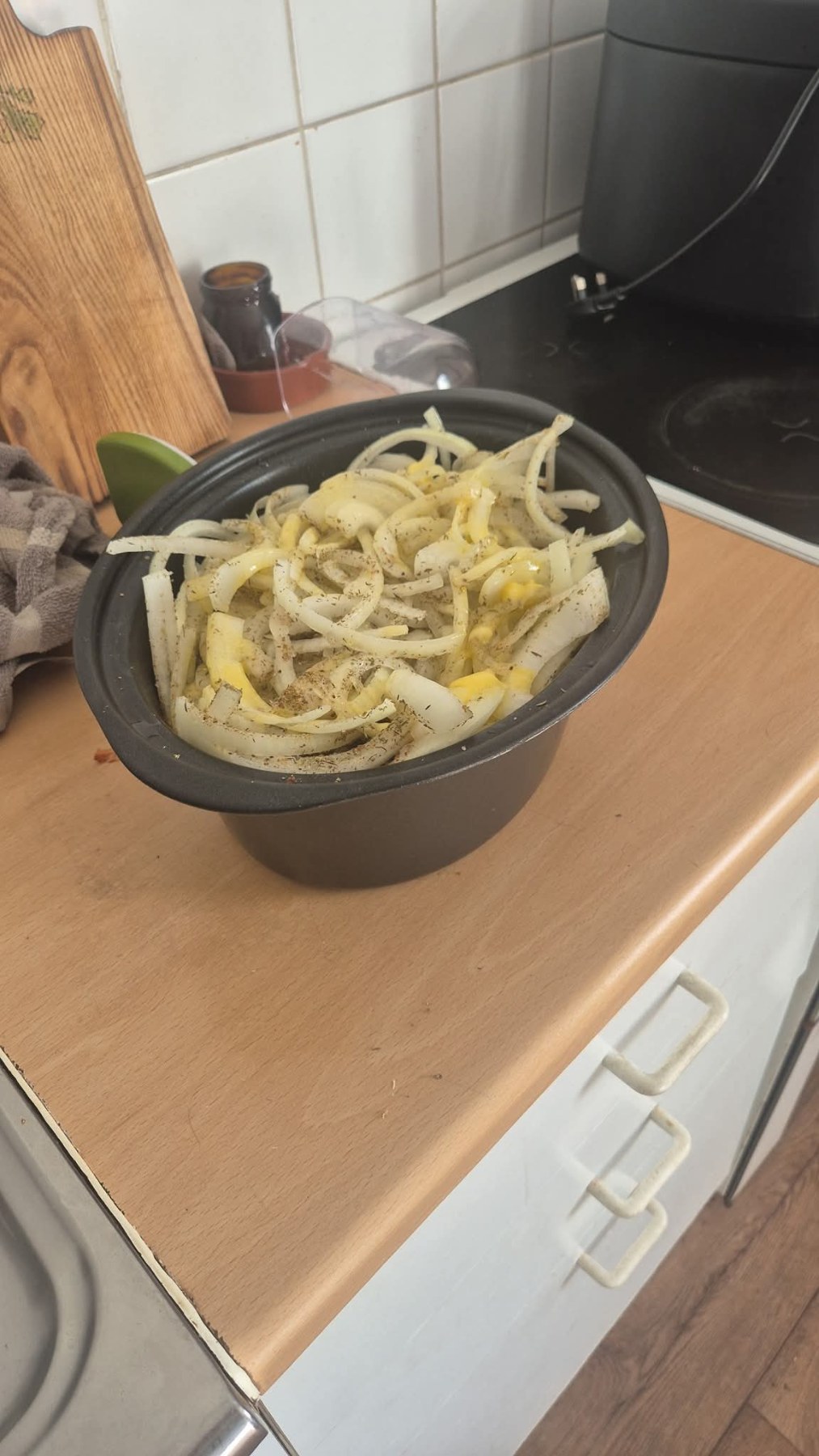
- Season the onions: Place the sliced onions in a small casserole or baking dish. Sprinkle with salt, black pepper, and dried thyme or mixed herbs to infuse flavor.
- Add butter and moisture: Dot the onions evenly with the small pieces of butter. Add a tablespoon of olive oil or a splash of water if you prefer extra moisture to prevent sticking.
- Cover and bake: Cover the dish with a lid or foil and bake for 30 minutes to allow the onions to soften gently.
- Uncover and continue baking: Remove the cover, stir gently to mix, then bake uncovered for an additional 15-25 minutes until the onions are tender and edges turn golden.
- Serve hot: Transfer to a serving dish and enjoy immediately as a delicious side to your favorite roast meats, sausages, or potatoes.
Tips for the best results
- Slice onions evenly: Ensuring uniform thickness helps all pieces cook at the same rate, preventing some from burning while others remain undercooked or crunchy.
- Use a covered baking dish: Covering the onions during the initial baking traps steam, softening them gently and preventing drying out, which is key to tender, flavorful results.
- Stir gently after covered baking: Mixing the onions before uncovering promotes even browning and caramelization while maintaining the onion’s structure, avoiding mushiness.
- Adjust seasoning after baking: Tasting and adding salt or herbs at the end allows you to fine-tune flavors once the onions have concentrated their sweetness.
- Choose fresh, firm onions: Onions that are dense and heavy for their size will hold up well to baking and provide the best texture and flavor depth.
- Be patient with baking time: Slow cooking is crucial to unlock the onions’ natural sugars and achieve tenderness, so avoid rushing the process for the best taste.
Variations and substitutions
- Red onions: Use red onions for a sweeter, more colorful dish with a slightly sharper bite that mellows when baked.
- Herb swaps: Replace dried thyme with rosemary or oregano to introduce different aromatic profiles that complement various cuisines.
- Dairy-free option: Substitute butter with olive oil or a plant-based butter alternative to accommodate dietary restrictions while maintaining richness.
- Sweet and tangy twist: Add a splash of balsamic vinegar or a sprinkle of brown sugar before baking to introduce a balance of acidity and sweetness.
- Additional aromatics: Incorporate minced garlic or shallots alongside the onions for deeper aroma and complexity in flavor.
Serving suggestions
Baked Buttered Onions are an ideal accompaniment to a variety of dishes. They complement roast chicken, beef, or pork beautifully by adding a rich, buttery contrast that enhances the savory flavors of the meat. Pairing them with grilled sausages or alongside roasted or creamy mashed potatoes creates a hearty, comforting meal perfect for cooler days. For vegetarian or vegan adaptations, serve these onions with grain bowls, roasted vegetable medleys, or hearty legumes to add depth and richness. Additionally, their warm, tender texture makes them an excellent topping for toasted bread, salads, or sandwiches, lending a burst of flavor and moisture.
Storage and reheating
Leftover Baked Buttered Onions can be stored in an airtight container in the refrigerator for up to 3 days to maintain freshness and flavor. When reheating, gently warm them in a saucepan over low heat or in an oven preheated to 160°C (320°F), stirring occasionally to prevent sticking and promote even heating. Avoid microwaving if possible, as it tends to make the onions soggy and less appetizing. Reheated onions can also be stirred into pasta dishes, added to baked casseroles, or used as a flavorful topping to breathe new life into leftovers.
Frequently asked questions
Can I use red onions instead of white or yellow onions?
Yes, red onions are a great alternative and will impart a sweeter, slightly more pungent flavor along with a vibrant purple hue. When baked, red onions mellow significantly and develop a pleasant sweetness, although they tend to retain a bit more bite than yellow onions. They also add visual appeal to your dish if color is a consideration.
Is it necessary to cover the onions while baking?
Covering the onions during the initial baking stage is important because it traps steam, which helps soften the onions thoroughly without drying them out. This gentle steaming allows the onions to become tender and juicy. Removing the cover partway through baking encourages browning and caramelization, which adds depth and complexity to the flavor. Skipping the covered stage may result in drier, less tender onions.
Can I prepare this dish ahead of time?
Absolutely, you can prepare the onions by peeling, slicing, and seasoning them in advance, then refrigerate until ready to bake. Alternatively, you can bake the dish fully and reheat it gently before serving. However, freshly baked onions will always have the best texture and flavor, so reheating should be done carefully to avoid drying out or sogginess.
What can I use if I don’t have dried thyme or mixed herbs?
If you don’t have dried thyme or mixed herbs on hand, other dried herbs such as rosemary, oregano, or sage work well as substitutes and bring their own unique flavors. Fresh herbs can also be used, but it’s best to add them towards the end of baking or after cooking to preserve their delicate aroma and prevent bitterness.
How can I make this recipe dairy-free?
To make this recipe dairy-free, simply replace the butter with olive oil or a plant-based butter alternative. Olive oil adds a slightly lighter flavor but still provides the necessary fat to soften and flavor the onions. Plant-based butter options can deliver a closer flavor match to traditional butter if preferred.
Final thoughts
Baked Buttered Onions are an effortlessly elegant side dish that brings a comforting richness and natural sweetness to any meal. Their tender texture and golden caramelized edges create a deliciously satisfying contrast to a variety of main courses. With minimal ingredients and simple preparation, this recipe is perfect for home cooks wanting to add a flavorful vegetable side to their repertoire. Try this recipe soon and experience the warm, buttery comfort of perfectly baked onions at your table.