
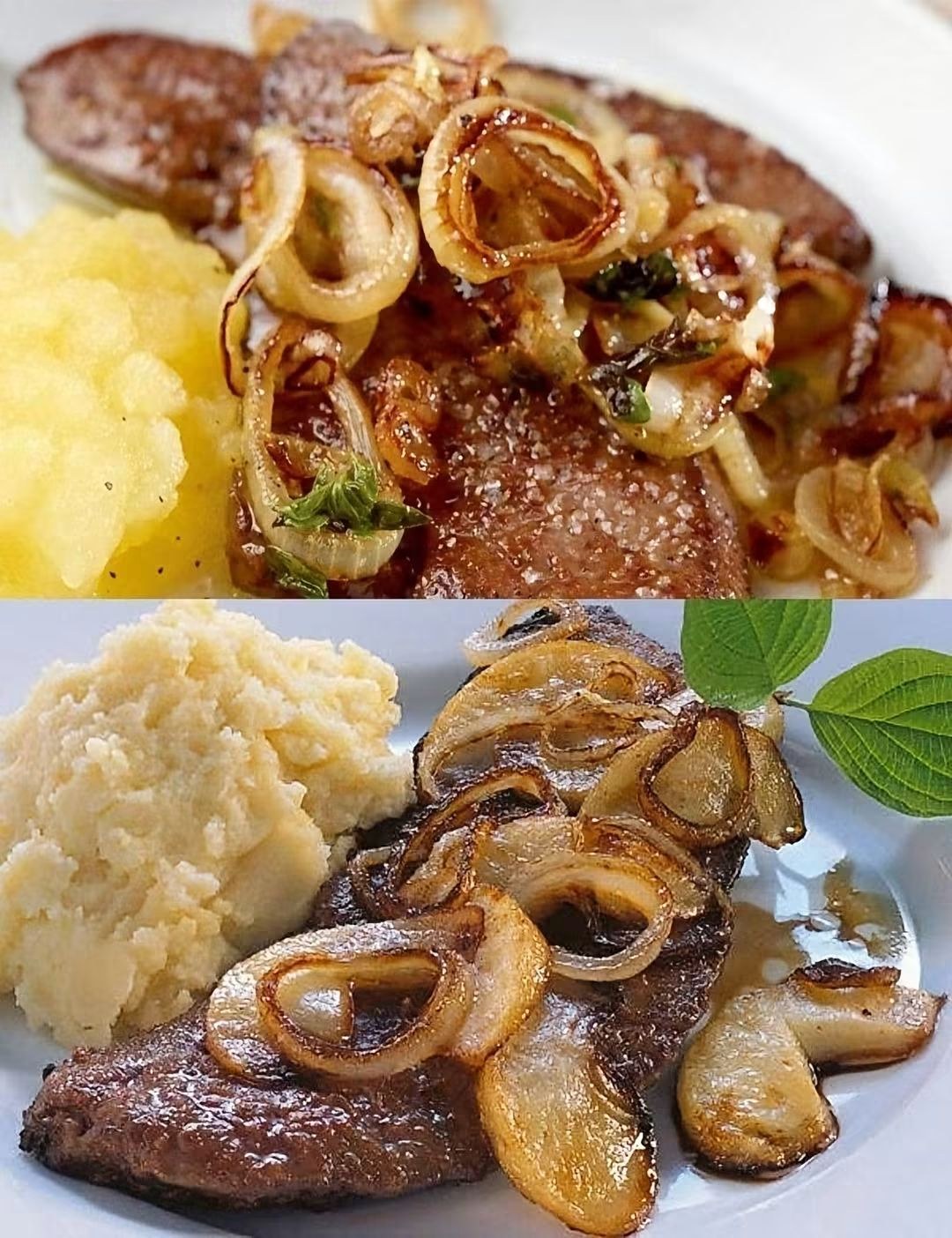
Berliner Leber is one of the most beloved classic dishes of German home cooking, and it is easy to see why. Thin slices of tender calf or beef liver are lightly floured and pan-fried until browned, then served alongside sweet, deeply caramelized onions, golden apple rings and a generous mound of buttery mashed potatoes. It is a complete, hearty meal that feels both rustic and special, perfect for a family dinner or a weekend lunch when you want something traditional.
This recipe is written for four servings and comes together in about 50 minutes, with 20 minutes of preparation and 30 minutes of cooking. It suits anyone who wants to try liver for the first time as well as seasoned fans of offal. The combination works because the sweetness of the apples and onions balances the rich, mineral flavor of the liver, while the mash soaks up the pan juices beautifully.
Why you’ll love this Berliner Leber
- The sweet, tart apple rings and slow-cooked onions give the liver a delicious contrast that keeps every bite interesting.
- Dusting the liver in flour creates a light golden crust that seals in moisture and keeps the inside tender.
- Everything is cooked in one pan, so the flavors build on each other and there is very little washing up.
- The mashed potatoes are simple to make and provide a comforting, creamy base for the rich pan juices.
- The dish is naturally wholesome and filling, made from everyday ingredients you can find in most supermarkets.
Ingredients
Serves 4
- 600 g calf or beef liver, trimmed and cut into thin slices
- 3 large onions, sliced into rings
- 2 tart apples (e.g. Boskoop), cored and cut into thick rings
- 3 tbsp all-purpose flour for dredging
- 3 tbsp butter or clarified butter
- 1 tbsp vegetable oil
- 1 kg floury potatoes, peeled and cut up
- 100 ml warm milk
- 2 tbsp butter for the mash
- 1 tsp dried marjoram
- salt and freshly ground black pepper
- coarse salt for finishing
- fresh parsley or herbs for garnish (optional)
Calf liver is traditionally the most tender choice, though beef liver works well if it is what you can find. Look for liver that is smooth, glossy and deep reddish-brown, without dry edges or a strong sour smell. Floury potatoes such as Russet or Maris Piper break down into a fluffy mash, while waxy varieties tend to turn gluey. Choose tart apples like Boskoop, which hold their shape in the pan and balance the richness of the dish.
Instructions
- Make the mash. Boil the peeled potatoes in salted water for about 20 minutes until tender. Drain them well, then mash with the warm milk and 2 tbsp butter. Season with salt, pepper and a little nutmeg if you like, and keep the mash warm while you cook the rest.
- Caramelize the onions. Melt 1 tbsp butter in a large pan over medium heat. Add the onion rings and fry for 12 to 15 minutes, stirring occasionally, until they turn deep golden and caramelized. Season with the dried marjoram and a pinch of salt, then remove and keep warm.
- Fry the apples. In the same pan, add a little more butter and fry the apple rings for 2 to 3 minutes per side until golden. Set them aside with the onions.
- Prepare the liver. Pat the liver slices dry with kitchen paper and remove any membranes or tough veins. Dredge each slice lightly in flour, shaking off the excess. Do not salt the liver before frying.
- Fry the liver. Heat the remaining butter and the oil in the pan over medium-high heat until foaming. Fry the liver slices for 1.5 to 2 minutes per side, until browned on the outside and still slightly pink in the middle.
- Season and deglaze. Once fried, season the liver with pepper and coarse salt. Splash a little water or stock into the pan and scrape up the browned bits to make a quick pan sauce.
- Plate and serve. Arrange the liver on warm plates with the onions and apple rings alongside, add a generous mound of mashed potatoes, and spoon over the pan juices. Garnish with fresh parsley or herbs if using.
Tips for the best results
- Cook the liver quickly and briefly. Overcooked liver becomes tough and grainy, so aim for a slight pinkness in the center.
- Wait to salt the liver until after frying. Salt drawn in before cooking can draw out moisture and make the surface less tender.
- Be patient with the onions. Low to medium heat and regular stirring give the sweetest, most golden result, and rushing them leads to bitter, scorched edges.
- Make sure the pan is hot before adding the liver, so it sears instead of steaming in its own juices.
- Fry in batches if your pan is crowded. Too many slices at once lower the temperature and cause the liver to turn grey.
- Keep the mash warm by covering it, and add the warm milk gradually so the potatoes stay creamy rather than watery.
Variations and substitutions
- Use pork liver for a milder, more affordable option. It cooks in the same way but has a slightly firmer texture.
- Swap the marjoram for thyme or sage if you prefer a different herbal note, though marjoram is the most traditional choice.
- Replace the apples with pears for a softer, more delicately sweet flavor that still pairs well with the liver.
- Add a few crispy bacon pieces or fried pancetta to the onions for a smoky, savory twist.
- Use a mix of potatoes and celeriac or parsnip in the mash for an extra layer of flavor and a lighter feel.
Serving suggestions
Berliner Leber is traditionally served with mashed potatoes, but it is also excellent with a simple side of green salad dressed with a light vinaigrette to cut through the richness. A dish of pickled cucumbers or gherkins adds a sharp, tangy contrast that many Germans enjoy with it. For a heartier meal, serve with a slice of rustic rye bread to soak up the pan juices. A glass of crisp white wine or a light German lager pairs nicely with the savory and sweet flavors on the plate.
Storage and reheating
Leftover liver is best eaten within one day. Store the liver, onions, apples and mash separately in airtight containers in the refrigerator. To reheat, warm the mash gently in a saucepan with a splash of milk, and reheat the liver quickly in a hot, lightly oiled pan for under a minute per side so it does not dry out. The onions can be warmed in a small pan over low heat. Avoid microwaving the liver, as it tends to become rubbery.
Frequently asked questions
Can I use frozen liver for Berliner Leber?
Yes, frozen liver works well if it is thawed properly. Thaw it slowly in the refrigerator overnight, then pat it very dry before dredging in flour. Frozen liver can release more moisture, so drying it thoroughly helps it brown instead of steaming in the pan.
How do I stop liver from tasting bitter?
Soaking the liver in milk for 30 minutes before cooking can mellow any bitterness and makes the flavor milder. Remove any membranes and tough veins before cooking, as these can add an unpleasant taste. Cooking the liver quickly and not overcooking it also keeps the flavor clean.
What is the best potato for the mashed potatoes?
Floury potatoes such as Russet or Maris Piper are ideal because they become light and fluffy when mashed. Waxy potatoes can turn heavy and gluey. Always cut the potatoes into even pieces so they cook at the same rate.
Can I prepare parts of this dish in advance?
You can prepare the onions and apples a few hours ahead and keep them warm or reheat them gently. The mash can also be made in advance and kept warm over a pan of simmering water. The liver is best fried just before serving so it stays tender and browned.
Is Berliner Leber suitable for beginners?
Yes, this is a very approachable recipe. The steps are simple and the most important rule is to cook the liver briefly. With a little attention to timing, even cooks new to liver can achieve a tender, flavorful result.
Final thoughts
Berliner Leber is a dish that rewards simple, careful cooking, bringing together tender liver, sweet onions, tart apples and creamy potatoes in one satisfying plate. Once you have made it a couple of times, you will find the rhythm of the pan and the timing of the liver becomes second nature. We encourage you to try this classic recipe at home, adjust the herbs and sides to your taste, and enjoy a traditional German meal that is both comforting and full of character.