
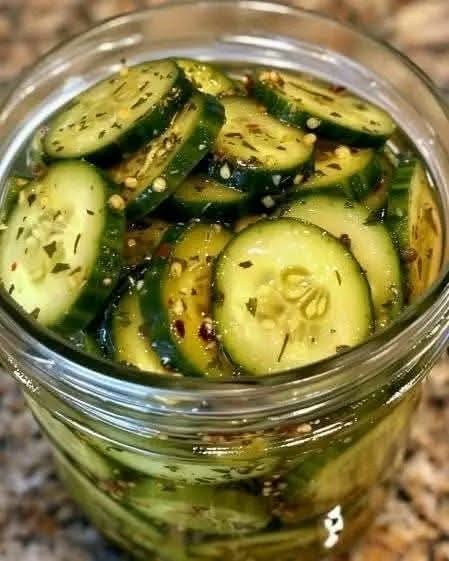
Quick refrigerator pickled cucumbers with mustard seed, dill and red pepper flakes are one of the easiest pickles you can make at home. There is no canning, no special equipment and no long wait: you slice the cucumbers, pour a warm vinegar brine over them, and let the fridge do the rest. The result is crisp, tangy, lightly sweet and gently spiced, with a bright dill aroma that pairs with almost anything on the table.
This recipe is made for busy home cooks who want homemade pickles without the commitment of a canning session. It yields about 8 servings and takes roughly 10 minutes of prep and 5 minutes of cooking, plus a few hours of chilling. Because the brine is simple and the method forgiving, it is also a great first pickling project for beginners and a reliable way to use up a bag of small cucumbers from the market.
Why you’ll love this quick refrigerator pickle
- It comes together in about 15 minutes of hands-on time, with no boiling-water canner required.
- The mustard seeds, dill and red pepper flakes give a layered flavor that tastes far more complex than the short ingredient list suggests.
- The cucumbers stay pleasantly crunchy because they are sliced thin and eaten within a few weeks rather than stored at room temperature for months.
- You control the sweetness and heat, so you can make the batch mild for kids or fiery for spice lovers.
- It is a budget-friendly way to make a jar of something special from a few pantry staples and a handful of cucumbers.
Ingredients for quick refrigerator pickled cucumbers
- 4 small Kirby or pickling cucumbers, sliced into 1/4-inch rounds
- 1 cup white vinegar (or apple cider vinegar)
- 1 cup water
- 2 tablespoons sugar
- 1 tablespoon kosher salt
- 1 teaspoon mustard seeds
- 1 teaspoon red pepper flakes
- 1 teaspoon dried dill (or oregano)
- 2 cloves garlic, smashed (optional)
Makes about 8 servings. Prep time is about 10 minutes and cook time about 5 minutes. Kirby cucumbers are the best choice because they are firm, low in seeds and hold their crunch well. Standard English cucumbers work too, but they are watery and softer, so choose a firm variety if you can. White vinegar gives the cleanest, sharpest flavor, while apple cider vinegar adds a slightly fruity note that is lovely with the mustard seeds. Use kosher salt rather than table salt, because table salt often contains anti-caking agents and iodine that can cloud the brine and change the taste. Fresh dill can replace the dried version if you have it; use about a tablespoon chopped.
Instructions for quick refrigerator pickles
- Prepare the cucumbers. Wash the cucumbers well, trim off both ends, and slice them into 1/4-inch rounds. Uniform slices pickle evenly and stay crisp.
- Pack the jar. Pack the cucumber slices tightly into a clean 1-quart glass jar. Tight packing keeps the slices from floating and helps the brine reach every piece.
- Heat the brine. In a small saucepan, heat the vinegar, water, sugar and salt just until the sugar and salt dissolve. Stir gently and do not let it boil for long, since a hard boil can soften the cucumbers.
- Add the seasonings. Remove the pan from the heat and stir in the mustard seeds, red pepper flakes, dried dill and smashed garlic if you are using it. The residual heat releases their aromas without scorching them.
- Pour and submerge. Pour the warm brine over the cucumbers until they are fully covered. Tap the jar gently on the counter to release air bubbles, and push any slices that rise to the surface back under the liquid.
- Cool and chill. Let the jar cool to room temperature, then seal it with a lid and refrigerate for at least 4 hours, ideally overnight. The flavor develops most during the first day.
- Store and enjoy. Keep the pickles refrigerated at all times and enjoy them within 2 to 3 weeks for the best texture.
Tips for the best results
- Start with the freshest cucumbers you can find, since older or limp cucumbers will not stay crisp no matter how well you pickle them.
- Slice evenly at 1/4 inch so every piece absorbs the brine at the same rate and the texture stays consistent.
- Avoid boiling the brine hard. Warming it just until the sugar and salt dissolve keeps the cucumbers firmer.
- Let the brine cool for a few minutes before pouring if the jar is glass, to reduce the risk of cracking from sudden temperature change.
- Make sure every slice is submerged, because any exposed cucumber can spoil faster and look unappealing.
- Taste the brine after it has chilled overnight and adjust the next batch with a little more sugar or pepper flakes if you want a different balance.
Variations and substitutions
- Apple cider vinegar: Swap it for white vinegar for a mellower, slightly fruity brine that pairs well with the mustard seeds.
- Fresh dill: Use about a tablespoon of chopped fresh dill in place of the dried herb for a brighter, greener flavor.
- Oregano: Replace the dill with dried oregano for a Mediterranean-style pickle with an earthy edge.
- Extra heat: Add a sliced fresh chili or increase the red pepper flakes for a spicier jar.
- Onion or carrot: Add thin slices of red onion or carrot sticks to the jar for extra color and crunch.
Serving suggestions
These pickles are wonderful as a crunchy side for sandwiches, burgers and grilled meats, where their acidity cuts through rich flavors. Chop them and fold them into potato salad, egg salad or a tuna mixture for a tangy lift. They also make an excellent snack on their own, straight from the jar, or alongside a cheese board with sharp cheddar. For a casual spread, arrange the slices next to hummus, crackers and cold cuts. A spoonful of the brine can even be used as a zesty splash in a salad dressing or a Bloody Mary.
Storage and reheating
Store the pickles in the refrigerator at all times, in a tightly sealed jar. Because this is a quick refrigerator method and not a shelf-stable canned pickle, they should be kept cold and eaten within 2 to 3 weeks for the best flavor and crunch. The cucumbers will gradually soften over time, so the first week is the sweet spot for texture. There is no need to reheat these pickles, since they are served cold. If you notice cloudiness, an off smell, or soft or slimy slices, discard the jar and make a fresh batch.
Frequently asked questions
Do I need to can these quick pickles?
No, these are refrigerator pickles, so canning is not necessary. They are meant to be stored in the fridge and eaten within a few weeks. Because they are not processed for shelf stability, they should never be left at room temperature for long periods.
How long do refrigerator pickles last?
For the best texture and flavor, enjoy them within 2 to 3 weeks while they stay refrigerated. The cucumbers gradually soften after that. Always check for cloudiness, bad odor or slimy slices before eating.
Can I use regular cucumbers instead of Kirby cucumbers?
You can, but the result will be softer and more watery. Kirby or pickling cucumbers are firmer with thinner skins and fewer seeds, which helps them stay crisp. If you use a larger variety, consider scooping out the seeds before slicing.
Why are my pickles soft?
Soft pickles usually come from cucumbers that were not fresh, from boiling the brine too hard, or from slices that were too thin or unevenly cut. Start with firm, fresh cucumbers, keep the brine warm rather than boiling, and make sure every slice is submerged.
Can I make these pickles less sweet?
Yes. Reduce the sugar to 1 tablespoon for a tangier pickle, or omit it entirely for a sharp, savory version. Keep in mind that the sugar also helps balance the acidity, so the final flavor will be sharper.
Final thoughts
Quick refrigerator pickled cucumbers with mustard seed, dill and red pepper flakes prove that great homemade flavor does not require complicated techniques. With a few pantry staples, a bag of cucumbers and a little patience overnight, you get a crisp, zesty jar that brightens sandwiches, salads and snack boards all week long. Try this recipe once, then adjust the heat, sweetness and herbs to make it your own. Once you taste the first crunchy slice, you will want to make another batch.