
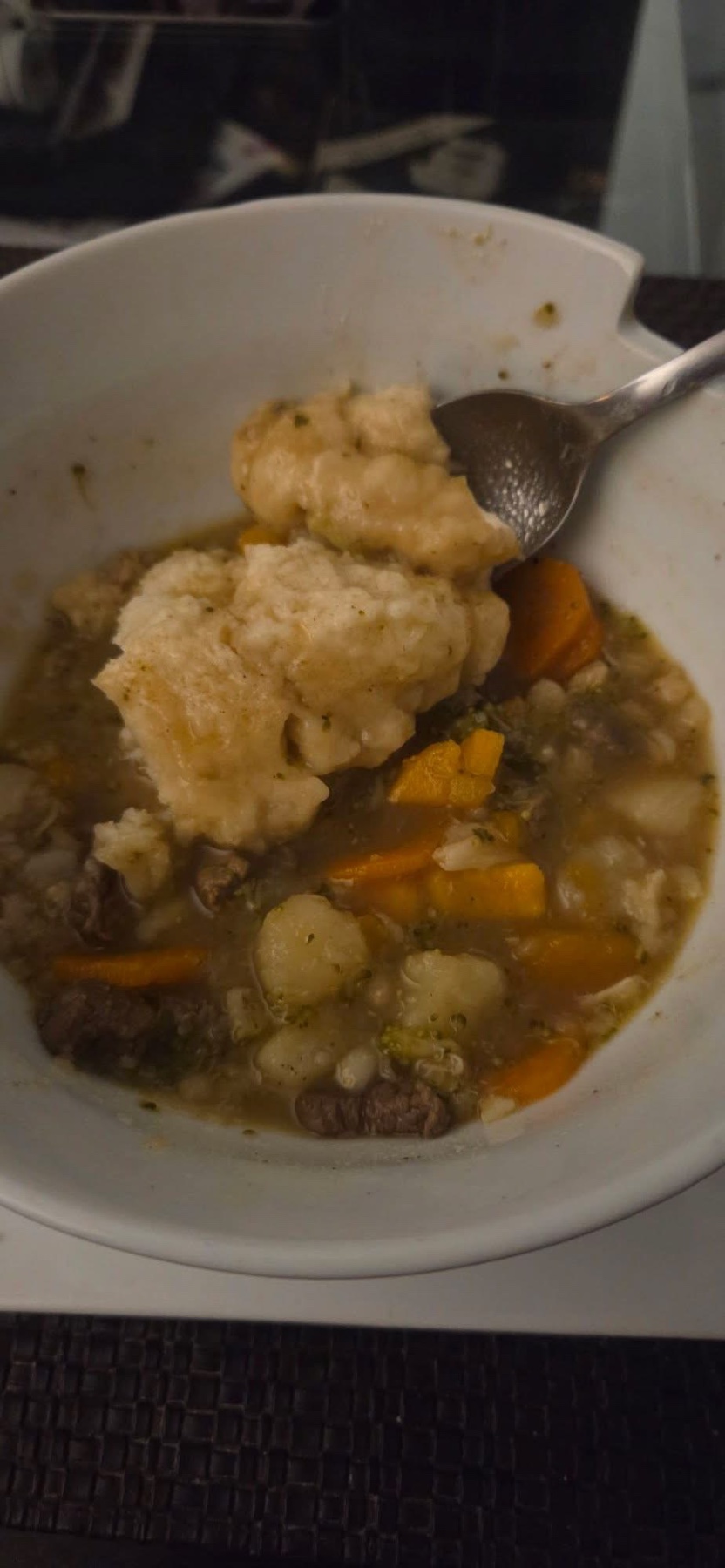
Beef stew with herb dumplings is the kind of comforting, one-pot dinner that fills the kitchen with warmth and makes a cold evening feel instantly better. Tender chunks of beef chuck simmer slowly in a savory broth alongside carrots, potatoes and squash, and soft, herb-flecked dumplings puff up on top like little clouds. It is a classic main course for families, Sunday lunches and anyone who loves a meal that feels like a hug.
This beef stew with herb dumplings recipe is designed for home cooks who want a dependable result without fuss. It serves 4 to 6 people, takes about 25 minutes to prepare and roughly 2 hours to cook, and it relies on simple pantry staples plus a few fresh herbs. The method builds flavor in layers, so even a modest pot of stew tastes deep and well rounded.
Why you’ll love this beef stew with herb dumplings
- The slow simmer turns tough beef chuck into meltingly tender bites that fall apart with a spoon.
- Browning the meat and softening the tomato paste create a rich, savory base that tastes like it took much longer to make.
- The vegetables cook right in the broth, so the stew is a complete meal with no side dishes required.
- The dumplings are quick to mix, steam directly on top of the stew, and soak up the flavorful broth as they cook.
- It is a flexible recipe that works well for batch cooking, leftovers and feeding a crowd on a budget.
Ingredients
- 1.5 lb (700 g) beef chuck, cut into 1-inch cubes
- 2 tbsp vegetable oil
- 1 onion, diced
- 2 cloves garlic, minced
- 2 tbsp tomato paste
- 5 cups (1.2 L) beef broth
- 3 carrots, sliced
- 2 medium potatoes, cubed
- 1 cup cubed butternut squash or sweet potato
- 1 cup small broccoli or cauliflower florets
- 1/4 cup pearl barley (optional)
- 1 tsp dried thyme
- 1 bay leaf
- Salt and pepper to taste
- For the dumplings: 1 cup all-purpose flour
- 1.5 tsp baking powder
- 1/2 tsp salt
- 1 tbsp chopped fresh parsley or herbs
- 2 tbsp cold butter
- 1/2 cup milk
Beef chuck is the best cut for this stew because it has enough connective tissue to become silky and rich during a long, gentle simmer. Look for well-marbled pieces with a deep red color and trim any large pieces of hard fat before cubing. Choose a firm, starchy potato such as Yukon Gold so the cubes hold their shape, and pick a fresh, firm butternut squash or sweet potato for natural sweetness. For the dumplings, use cold butter and fresh herbs; parsley is the easiest choice, but chives or a small amount of finely chopped rosemary also work well. Good beef broth matters a great deal, so choose a low-sodium version you enjoy the taste of and adjust the salt at the end.
Instructions
- Brown the beef. Pat the beef dry and season with salt and pepper. Heat the oil in a large heavy pot and brown the beef in batches, so the pieces sear rather than steam. Set the browned beef aside.
- Build the base. Saute the onion in the same pot for 5 minutes, scraping up the browned bits from the bottom. Add the garlic and tomato paste and cook for 1 minute, stirring constantly.
- Simmer the beef. Return the beef to the pot and add the broth, thyme, bay leaf and barley if using. Bring to a boil, then cover and simmer gently for 1 hour 15 minutes until the beef is nearly tender.
- Add the vegetables. Stir in the carrots, potatoes and squash and simmer for 20 minutes more. Add the broccoli or cauliflower for the last 5 to 10 minutes so it stays bright and tender-crisp.
- Mix the dumpling dough. Whisk the flour, baking powder, salt and herbs together. Cut in the butter until the mixture looks crumbly, then stir in the milk until just combined; do not overmix.
- Steam the dumplings. Drop large spoonfuls of dough onto the simmering stew, leaving space between them. Cover tightly and cook without lifting the lid for 15 minutes until the dumplings are puffed and cooked through.
- Finish and serve. Remove the bay leaf, taste and adjust the seasoning, then serve hot in deep bowls with a dumpling or two in each portion.
Tips for the best results
- Brown the beef in batches; crowding the pot leads to gray meat instead of a deep, caramelized crust.
- Keep the stew at a gentle simmer rather than a hard boil, which toughens the meat and clouds the broth.
- Add the potatoes and squash on time so they are tender but not mushy by the time you add the dumplings.
- Keep the butter very cold and stop mixing the dumpling dough as soon as the milk is incorporated for the lightest texture.
- Never lift the lid while the dumplings are steaming, or they may collapse and turn dense.
- Taste the broth before serving; the salt in store-bought broth varies, so season at the end rather than at the start.
Variations and substitutions
- Red wine version: Add 1/2 cup of dry red wine after browning the onion and let it reduce by half for a deeper, more robust flavor.
- Lighter beef: Use lean sirloin in place of chuck, though reduce the simmering time to about 45 minutes to prevent it from drying out.
- Gluten-free dumplings: Substitute a 1-to-1 gluten-free baking flour blend and check that your baking powder is certified gluten-free.
- Different herbs: Swap the parsley for chives, dill or a small amount of finely chopped rosemary to change the character of the dumplings.
- Vegetable boost: Add parsnips, mushrooms or green beans with the carrots for extra texture and earthiness.
Serving suggestions
Serve the stew in deep bowls with two or three dumplings on top and a generous spoonful of broth. A crusty bread or a soft dinner roll is perfect for mopping up the gravy at the bottom of the bowl. For a fresh contrast, add a simple green salad with a sharp vinaigrette, or a side of steamed green beans tossed with lemon. A sprinkle of freshly chopped parsley or black pepper over the top adds color and a finishing touch. In cooler months, a glass of dry red wine or a warm mug of apple cider complements the rich flavors nicely.
Storage and reheating
Let the stew cool to room temperature, then refrigerate it in an airtight container for up to 3 days. Dumplings are best eaten fresh, so if you expect leftovers, you can store the stew and dumplings separately and make fresh dumplings when reheating. To reheat, warm the stew gently in a saucepan over low heat, adding a splash of broth or water if it has thickened. Freezing works well for the stew alone for up to 3 months, so thaw it overnight in the refrigerator before reheating.
Frequently asked questions
Can I make beef stew with herb dumplings in a slow cooker?
Yes, you can brown the beef and onion first, then transfer everything except the dumplings to a slow cooker. Cook on low for 7 to 8 hours until the beef is tender. Add the dumplings during the last 30 minutes on high, keeping the lid closed, so they steam properly.
Why are my dumplings dense?
Dense dumplings usually come from overmixing the dough or from lifting the lid during cooking. Mix the dough only until the milk is just combined, and keep the lid firmly closed for the full 15 minutes so the steam can make them light and fluffy.
What is the best cut of beef for stew?
Beef chuck is the most reliable choice because its connective tissue breaks down into rich gelatin during long cooking. Other good options include brisket and short ribs, though they may need a longer simmer to become fully tender.
Can I make the stew ahead of time?
Absolutely. Stew often tastes even better the next day because the flavors have time to meld. Make the stew up to two days ahead, refrigerate it, and then reheat it gently before adding freshly made dumplings just before serving.
Can I use dried herbs in the dumplings?
You can, but use only about one third of the amount called for in fresh herbs, since dried herbs are much more concentrated. Add them to the flour mixture at the start so they hydrate and release their flavor evenly.
Final thoughts
Beef stew with herb dumplings rewards a little patience with deep flavor, tender meat and light, herby dumplings that feel like a special treat. Once you have made it a couple of times, you will find it easy to adjust the vegetables, herbs and seasoning to suit your family. Gather your ingredients, set aside a lazy afternoon, and try this recipe for a dinner that will be remembered long after the pot is empty.