
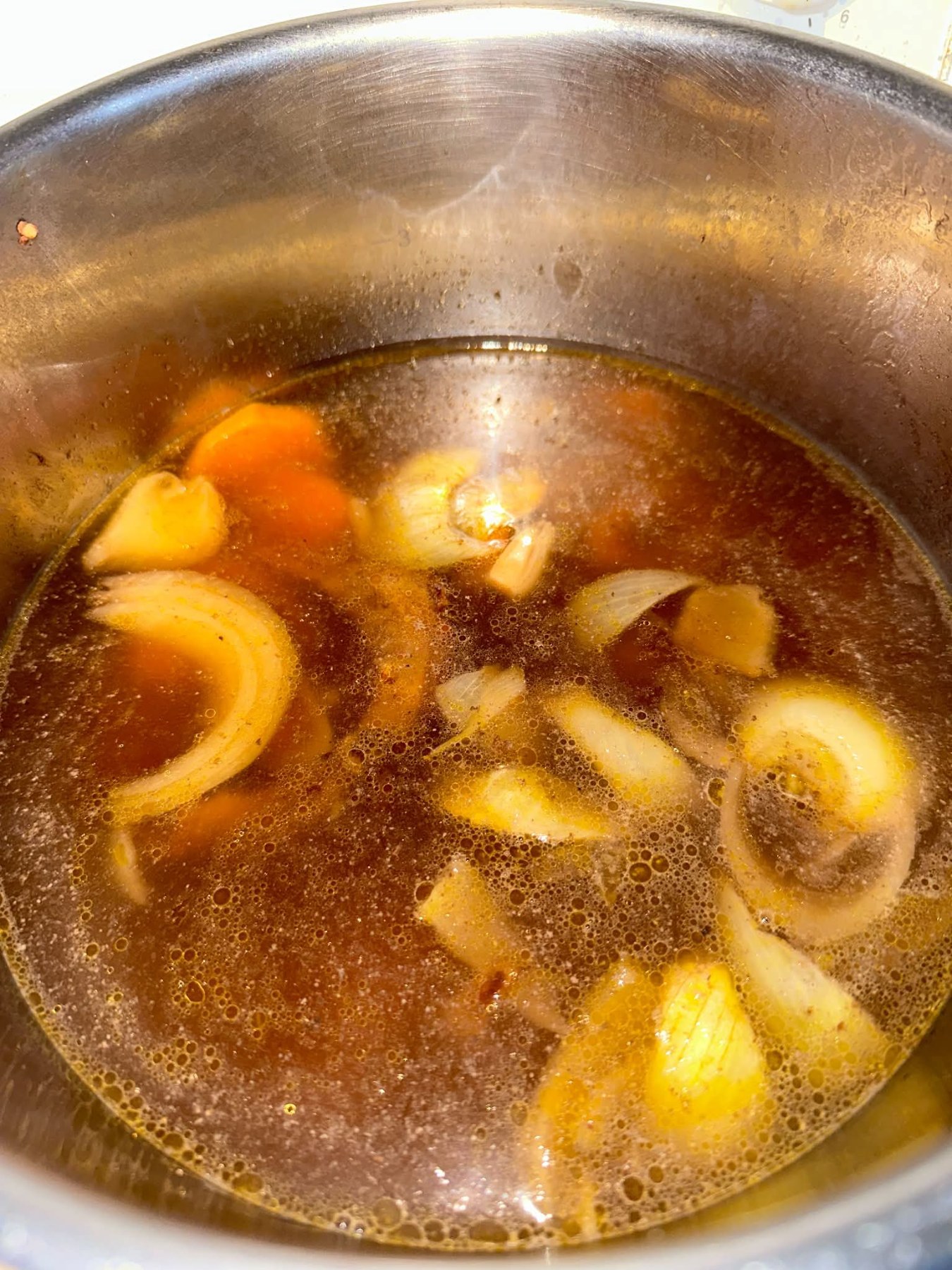
Brown Vegetable Stock is a richly flavored, aromatic broth crafted by gently caramelizing vegetables before simmering them to extract deep, layered flavors. Unlike a simple vegetable broth, this stock offers a warm amber color and a complexity that adds depth to soups, stews, sauces, and a wide variety of dishes. It’s perfect for home cooks who want to enhance their meals with a meat-free base that doesn’t sacrifice taste.
This recipe requires just a handful of common vegetables and simple seasonings, taking about 10 minutes to prepare and around an hour to simmer. Whether you follow a vegetarian or vegan lifestyle or simply want a wholesome, flavorful foundation for your cooking, this brown vegetable stock is an easy, rewarding recipe to master.
Why you’ll love this Brown Vegetable Stock
- It delivers a rich, deep flavor that enhances soups and sauces without meat, making dishes more satisfying.
- Caramelizing the vegetables before simmering adds natural sweetness and a complex, roasted aroma to the broth.
- Made with simple, wholesome ingredients that are easy to source and budget-friendly for everyday cooking.
- This stock is vegan and vegetarian-friendly, catering to diverse dietary preferences without compromising flavor.
- You can prepare it in under two hours, providing a convenient homemade alternative to store-bought stocks that often contain additives.
Ingredients
- 2 large onions, cut into wedges
- 2 medium carrots, cut into large chunks
- 4 garlic cloves, lightly crushed
- 1 celery stalk, cut into chunks
- 1 tablespoon olive oil
- 8 cups water
- 1 teaspoon kosher salt
- 1/2 teaspoon black peppercorns
- 1 bay leaf
Preparation and cooking times: About 10 minutes prep, 1 hour simmering, yields about 6 cups of stock. The key ingredients—onions, carrots, garlic, celery, and olive oil—form the classic aromatic base. Select firm, fresh vegetables free from blemishes or softness to ensure the best natural sweetness and flavor extraction. Opt for a good-quality olive oil with a mild aroma to enrich the stock’s fragrance without overpowering it. Whole black peppercorns and a bay leaf add subtle layers of spice and herbal complexity that complement the caramelized vegetables without masking their natural taste.
Instructions
- Heat the olive oil: Place a large pot over medium heat and warm the olive oil until shimmering but not smoking. This ensures the oil is hot enough to brown the vegetables without burning.
- Brown the vegetables: Add the onions, carrots, celery, and lightly crushed garlic cloves to the pot. Cook, stirring occasionally, for 8-10 minutes until the vegetables develop light brown spots and a caramelized aroma. This step is crucial for developing the stock’s deep flavor and rich color.
- Add liquids and seasonings: Pour in 8 cups of water, then add the kosher salt, black peppercorns, and bay leaf, stirring gently to combine. The water starts to extract the flavors from the browned vegetables and aromatics.
- Bring to a boil: Increase the heat until the stock just reaches a boil, then immediately reduce the heat to maintain a gentle simmer. Rapid boiling can cloud the stock and reduce clarity.
- Simmer uncovered: Let the stock simmer uncovered for 45-60 minutes, allowing the flavors to deepen and the broth to become a warm amber-brown color. Uncovered simmering helps concentrate the flavors by reducing excess water.
- Strain and season: Remove the pot from heat and strain out the vegetables and spices using a fine mesh sieve. Taste the stock and adjust seasoning if needed. Use immediately or let it cool before refrigerating. Straining thoroughly ensures a smooth, clean broth without vegetable bits.
Tips for the best results
- Make sure to brown the vegetables well: Proper caramelization brings out natural sugars and creates a deeper, more complex flavor profile essential to brown vegetable stock.
- Use a heavy-bottomed pot: This promotes even heat distribution, preventing hot spots that can burn vegetables and spoil the flavor.
- Do not cover the pot while simmering: Keeping it uncovered allows moisture to evaporate, concentrating the flavors and intensifying the stock’s richness.
- Skim off any foam or impurities: Removing foam that rises during simmering results in a clearer, cleaner-tasting stock and improves its appearance.
- Cool the stock quickly before storing: Rapid cooling reduces the risk of bacterial growth, preserving freshness and food safety.
- Strain thoroughly to remove all solids: A fine mesh sieve or cheesecloth ensures your stock is smooth and free of unwanted vegetable bits, making it ideal for delicate sauces or clear soups.
Variations and substitutions
- Add mushrooms: Incorporate dried or fresh mushrooms for an earthy umami boost that deepens the stock’s savory notes.
- Use different herbs: Substitute or add thyme, parsley stems, or rosemary to introduce varied herbal nuances and tailor the flavor to your dish.
- Swap olive oil: Use avocado or grapeseed oil for a different flavor profile or a higher smoke point if you prefer to brown vegetables at a higher temperature.
- Include tomato paste: Stir in a tablespoon of tomato paste with the vegetables during browning for a more robust color and a subtle tangy sweetness.
- Make a quick version: Skip the browning step and simmer vegetables directly for a lighter, faster broth, though it won’t have the same depth of flavor.
Serving suggestions
Brown vegetable stock is an excellent base for a wide range of soups, such as hearty vegetable soups, minestrone, or lentil stews, where its richness enhances every bite. Use it to cook grains like rice, quinoa, or barley, infusing them with extra flavor that plain water cannot provide. It also works wonderfully as a substitute for water in sauces, gravies, and braises, enriching dishes with warmth and depth. Serve the stock warm as a comforting broth on its own, garnished with fresh herbs like parsley or thyme, or a squeeze of lemon juice to brighten the flavors and add a fresh contrast.
Storage and reheating
Once cooled, store brown vegetable stock in airtight containers in the refrigerator for up to 4 days to maintain freshness and prevent spoilage. For longer storage, freeze the stock in portioned amounts using ice cube trays or freezer-safe containers, allowing you to thaw only what you need. Frozen stock can be kept for up to 3 months without significant loss of flavor or quality. When reheating, warm the stock gently on the stove over medium-low heat, stirring occasionally to prevent scorching. Avoid boiling after freezing, as this can diminish delicate flavors and alter the texture.
Frequently asked questions
What is the difference between brown vegetable stock and regular vegetable broth?
Brown vegetable stock differs from regular vegetable broth primarily in its preparation. The vegetables are caramelized first, which enhances natural sugars and creates a deeper, richer flavor and amber color. Regular vegetable broth typically simmers raw vegetables, resulting in a lighter, less complex taste. The browning step adds sweetness and roasted notes that make brown vegetable stock more versatile and flavorful.
Can I use other vegetables for brown vegetable stock?
Yes, you can experiment with additional vegetables like leeks, parsnips, fennel, or mushrooms to customize the flavor profile. Mushrooms, especially dried shiitake, add an earthy umami depth, while parsnips bring a subtle sweetness. However, onions, carrots, celery, and garlic remain the classic foundation for a balanced and rich stock, ensuring a well-rounded base flavor.
Is it necessary to brown the vegetables for this stock?
Browning the vegetables is essential for achieving the characteristic deep flavor and warm color of brown vegetable stock. This caramelization process develops natural sugars and Maillard reactions that create complex aromas and tastes. Omitting this step results in a lighter, less flavorful broth, more akin to standard vegetable stock or broth.
How long can I store homemade vegetable stock?
Homemade vegetable stock can be safely stored in the refrigerator for up to 4 days when kept in airtight containers. For longer preservation, freezing is recommended; stock can be frozen for up to 3 months without losing much flavor or quality. Always cool the stock quickly before refrigerating or freezing to minimize bacterial growth and maintain freshness.
Can I use brown vegetable stock in recipes that call for chicken stock?
Absolutely. Brown vegetable stock provides a rich, savory base that works well as a substitute for chicken stock, especially in vegetarian or vegan dishes. While the flavor profile differs slightly, the depth and warmth of brown vegetable stock enhance soups, risottos, sauces, and stews just as effectively as chicken stock.
Final thoughts
Making brown vegetable stock at home is a straightforward way to boost the flavor of your cooking with a wholesome, deeply aromatic base. With just a few fresh ingredients and some patience for caramelization and simmering, you’ll create a broth that adds warmth and complexity to countless dishes. Try this recipe to experience how homemade stock can transform your meals with richer, more vibrant flavors.