
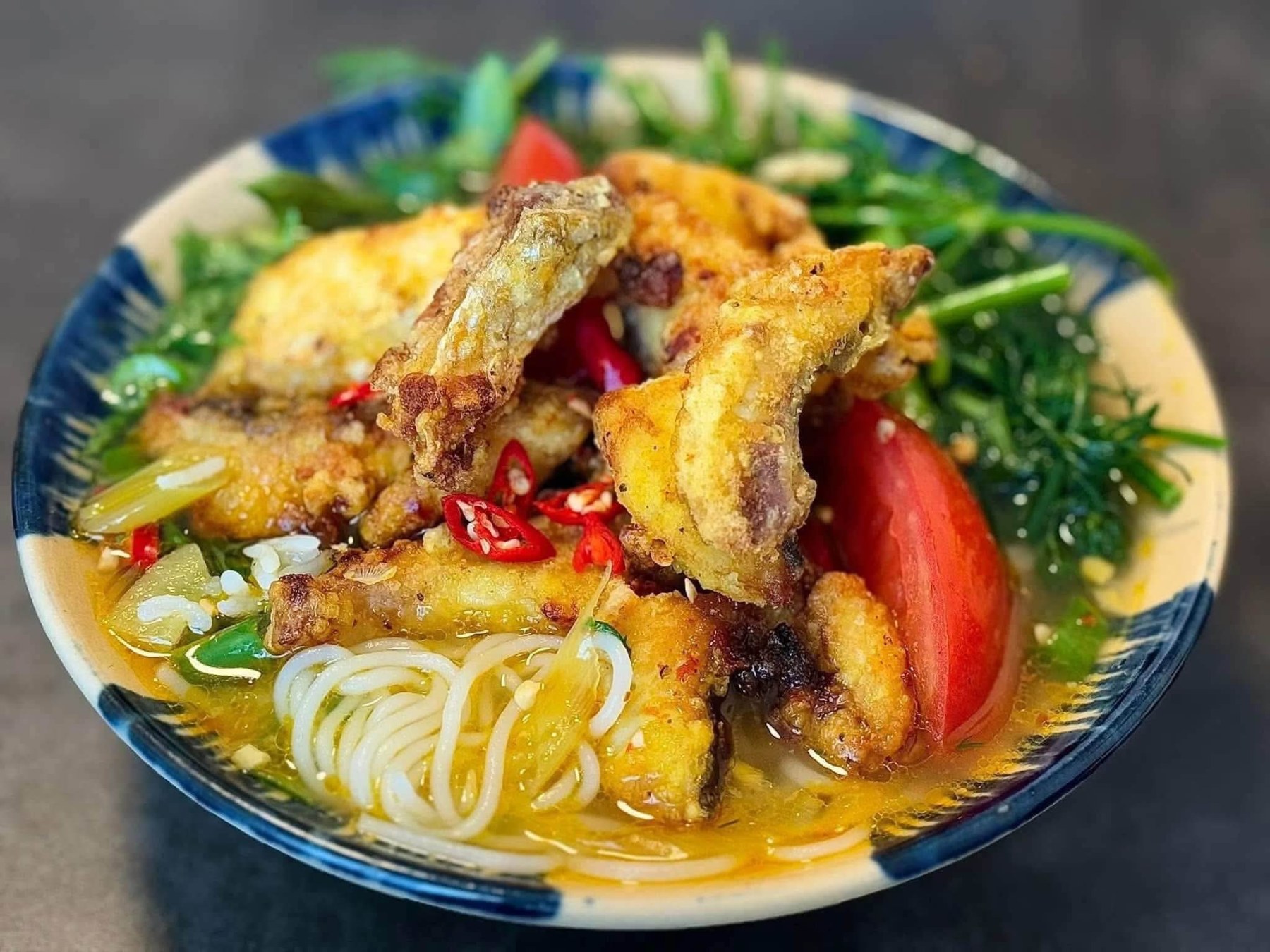
Bún Cá (Vietnamese Fried Fish Noodle Soup with Dill and Tomato) is one of those dishes that makes an ordinary weeknight feel special. Crisp golden pieces of fish rest on a bed of soft rice vermicelli, surrounded by a bright, sour broth scented with lemongrass, tomato and fresh dill. It is a comforting bowl for anyone who loves noodle soup, and it is surprisingly approachable for home cooks who want to explore Vietnamese flavors.
This recipe serves four and takes about 1 hour 10 minutes in total, with 30 minutes of prep and 40 minutes of cooking. The fish is marinated and lightly fried, while the broth simmers gently with tomato and pineapple for a balance of sweet and sour. Once you understand the rhythm of the steps, it becomes an easy recipe to repeat on busy days.
Why you’ll love this bún cá
- The crisp turmeric-marinated fish gives every bite a satisfying crunch against the soft noodles.
- The tangy tomato and pineapple broth is refreshing and bright, perfect for warm evenings or cool rainy days.
- Fresh dill adds an herbal aroma that makes this soup taste unmistakably Vietnamese.
- Every component can be prepared in a logical order, so the dish feels manageable even for beginners.
- You can customize the sourness, heat and garnishes to suit your own taste, making it a flexible family favorite.
Ingredients
Servings: 4 | Prep time: 30 minutes | Cook time: 40 minutes | Total time: 1 hour 10 minutes
- 600 g firm white fish (snakehead, catfish, or perch), cut into chunks
- 1 tsp turmeric powder
- 1 tsp salt
- 1/2 tsp ground black pepper
- 2 tbsp fish sauce, divided
- 3 tbsp cornstarch or rice flour for dusting
- Oil for deep-frying
- 2 shallots, minced
- 1 stalk lemongrass, bruised
- 3 ripe tomatoes, cut into wedges
- 200 g fresh pineapple, sliced
- 1.5 liters fish or pork bone stock
- 1 tbsp rice vinegar or tamarind juice for sourness
- 1 tsp sugar
- 400 g fresh round rice vermicelli (bún)
- 1 large bunch dill, cut into pieces
- 2 scallions, sliced
- 2 red chilies, sliced
- Lime wedges and shrimp paste (mắm tôm) to serve
The fish is the heart of this soup, so choose the firmest white fish you can find. Snakehead and catfish are traditional in Vietnam, but perch or another firm, mild fish works well in most markets. Ask your fishmonger to cut it into bite-sized chunks, and look for pieces with clean flesh and no strong odor. Ripe tomatoes give the broth its natural sweetness and color, while fresh pineapple adds a gentle tropical brightness. Fresh round rice vermicelli is much softer and more delicate than dried noodles, so seek it out in an Asian grocery if you can.
Instructions
- Marinate the fish. Combine the fish chunks with turmeric, salt, pepper and 1 tbsp fish sauce in a bowl. Toss gently so every piece is coated, then let it rest for 20 minutes.
- Fry the fish. Dust the fish lightly with cornstarch or rice flour, shaking off any excess. Deep-fry at 170°C until deep golden and crisp, about 5-6 minutes, then drain on a rack.
- Build the aromatic base. Heat a little oil in a pot and sauté the shallots and lemongrass until fragrant. Add the tomato wedges and cook until they soften and begin to break down.
- Simmer the broth. Pour in the stock and add the pineapple, then bring everything to a gentle simmer. Season with the remaining fish sauce, sugar and vinegar or tamarind, and simmer for 10 minutes so the flavors meld.
- Cook the noodles. Blanch the fresh vermicelli briefly in boiling water until just warmed through, then drain and divide among four bowls.
- Assemble the bowls. Arrange the crispy fried fish on top of the noodles, then ladle the hot broth around it so the fish stays crisp as long as possible.
- Garnish and serve. Top generously with dill, scallions, sliced chilies and a tomato wedge. Serve with lime wedges and shrimp paste on the side so everyone can adjust their bowl.
Tips for the best results
- Pat the fish dry before marinating so the turmeric and salt adhere well and the coating crisps evenly.
- Keep the oil at a steady 170°C; if it is too cool the fish will be greasy, and if it is too hot the outside will burn before the inside cooks.
- Fry the fish in small batches so the pieces do not crowd each other and lose their crunch.
- Taste the broth before serving and adjust the sourness with more tamarind, pineapple or lime, since ripe tomatoes vary in acidity.
- Add the dill at the very end so it stays bright, fresh and fragrant rather than turning dull from heat.
- Do not overcook the vermicelli; a quick blanch is enough, and soggy noodles will quickly ruin the texture of the bowl.
Variations and substitutions
- Different fish: Use tilapia, cod or another firm white fish if snakehead or catfish is unavailable, adjusting frying time slightly for thickness.
- Vegetarian version: Replace the fish with firm tofu or king oyster mushrooms, and use a vegetable stock with a splash of soy sauce instead of fish sauce.
- Milder broth: Reduce the vinegar or tamarind and use less chili for a gentler, kid-friendly soup.
- Extra greens: Add sliced bean sprouts, shredded cabbage or water spinach to the bowls for more freshness and crunch.
- Gluten-free option: Rice flour is already in the ingredient list, so this dish can easily be made gluten-free if you check that your stock and fish sauce are labeled accordingly.
Serving suggestions
Bún cá is best served hot, in large bowls, as a complete meal on its own. Place a small plate of extra herbs, lime wedges, sliced chilies and shrimp paste on the table so everyone can customize their bowl. A simple cucumber salad or a plate of fresh lettuce and mint leaves makes a refreshing side, and a pot of hot jasmine tea pairs nicely with the tangy broth. For a casual gathering, set out the noodles, fish and broth separately so guests can assemble their own bowls.
Storage and reheating
Store leftover broth, noodles and fish in separate airtight containers in the refrigerator, and eat them within two days for the best texture. The fried fish is most enjoyable fresh, but you can reheat it briefly in a hot oven or air fryer to restore some crispness. Rewarm the broth gently on the stove until it just simmers, and pour it over freshly blanched noodles rather than reheating the noodles themselves, which can become mushy. Dill and scallions are best added fresh each time you serve.
Frequently asked questions
What fish is best for bún cá?
Traditional recipes use snakehead or catfish because they are firm and hold their shape when fried. Perch, tilapia or cod are good alternatives as long as the fish is firm and mild. Avoid very delicate fish, which can fall apart in the hot oil and broth.
Can I make the broth ahead of time?
Yes, the broth tastes even better after resting for a few hours or overnight, as the flavors deepen. Refrigerate it in a sealed container and reheat it gently before serving. Add the fresh dill and scallions only when you are ready to eat.
Is there a substitute for shrimp paste?
If you do not have shrimp paste, a small spoonful of fish sauce mixed with lime juice and chili makes a suitable dipping sauce. It will not have the same funky depth, but it still complements the soup nicely. Many people simply leave it out without any loss of enjoyment.
Why is my fried fish soggy?
Soggy fish usually means the oil was not hot enough or the pieces were crowded in the pan. Fry in small batches at 170°C and drain the fish on a rack rather than paper towels, which can trap steam. Serve the fish as soon as possible after frying.
Can I use dried rice noodles instead of fresh ones?
Dried rice vermicelli can be used if fresh noodles are hard to find. Cook them according to the package directions, drain well, and rinse briefly in cold water to stop the cooking. The texture will be slightly firmer than fresh, but the soup will still be delicious.
Final thoughts
Bún cá is a wonderful way to bring the bright, balanced flavors of Vietnam into your own kitchen. With crisp fish, tangy broth, fresh dill and soft noodles, every bowl offers something new to enjoy. Gather your ingredients, follow the steps one at a time, and taste as you go. We hope you will try this recipe soon and make it your own.