
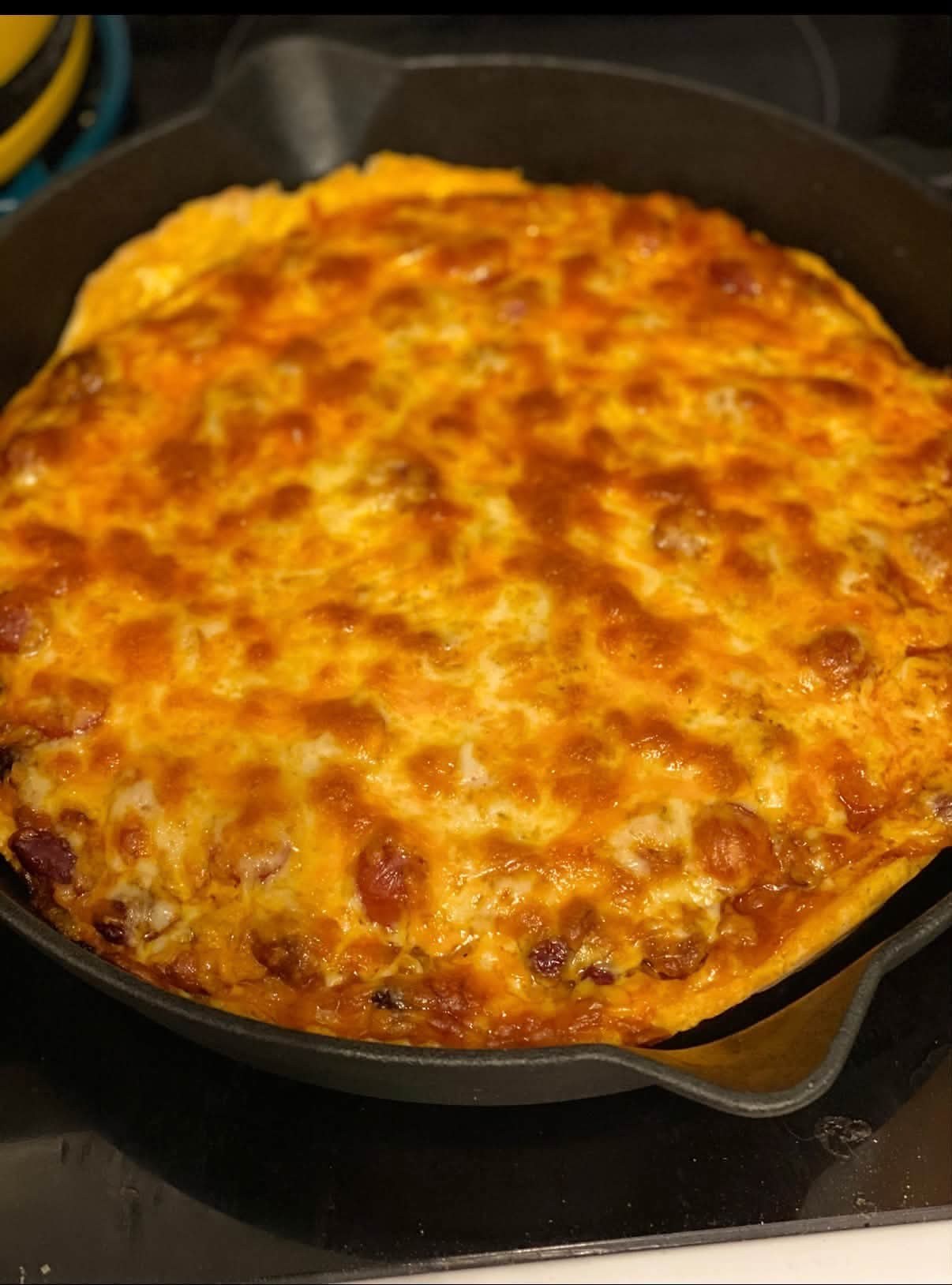
Cast-Iron Deep-Dish Pizza is a deliciously hearty take on traditional pizza, baked right in a cast-iron skillet. This recipe delivers a thick, golden crust with layers of melted cheese, savory tomato sauce, and your choice of pepperoni or Italian sausage. It’s ideal for anyone craving a comforting, restaurant-style pizza that’s easy to make at home and impresses with its rich, layered flavors.
Designed to serve 4 to 6 people, this deep-dish pizza takes about 20 minutes to prep and 20 to 25 minutes to bake, making it a great choice for a weekend dinner or casual gathering. The cast-iron skillet ensures even cooking and a perfect crust every time, while the combination of mozzarella, provolone, and Parmesan cheeses packs in a rich, gooey texture that melts beautifully. Whether you’re new to pizza making or a seasoned home cook, this recipe balances simplicity with indulgence.
Why you’ll love this Cast-Iron Deep-Dish Pizza
- The cast-iron skillet creates a crispy, golden crust with a tender interior, giving you the perfect texture contrast in every bite.
- A rich blend of mozzarella, provolone, and Parmesan cheeses offers a complex, gooey topping that melts evenly and adds layers of flavor.
- The thick pizza sauce balances savory and tangy flavors for a classic deep-dish taste that complements the cheeses and meats perfectly.
- Simple ingredients and straightforward steps make it accessible for home cooks of all levels, without sacrificing restaurant-quality results.
- Customizable with pepperoni or Italian sausage to suit your favorite toppings, or easily adapted for vegetarian options.
Ingredients
- 1 lb pizza dough
- 2 tbsp olive oil
- 2 cups shredded low-moisture mozzarella
- 1/2 cup shredded provolone
- 3/4 cup thick pizza sauce
- 3 oz pepperoni slices or 1/2 cup cooked Italian sausage
- 1/4 cup grated Parmesan
- 1/2 tsp dried oregano
- 1/4 tsp garlic powder
- 1/4 tsp red pepper flakes (optional)
- Cornmeal or flour for shaping
This recipe’s key ingredients include fresh pizza dough and a mix of cheeses that melt beautifully, creating layers of flavor and texture. Choosing low-moisture mozzarella is essential because it contains less water than fresh mozzarella, which prevents the pizza from becoming soggy while still melting to a creamy consistency. Thick pizza sauce is preferred to keep the crust crisp and avoid excess moisture. When selecting toppings, opt for quality pepperoni or cook your own Italian sausage to control seasoning and texture. The cast-iron skillet is indispensable for this recipe as it evenly distributes heat, giving you that signature deep-dish crust with a crispy bottom and soft, chewy interior.
Instructions
- Preheat and prepare skillet: Preheat your oven to 475°F (245°C). Place a 10- to 12-inch cast-iron skillet in the oven for a few minutes to heat thoroughly. Carefully remove the hot skillet and coat the surface with olive oil to prevent sticking and encourage a golden, crispy crust.
- Shape the dough: On a lightly floured or cornmeal-dusted surface, stretch the pizza dough into a round shape roughly the size of your skillet. Transfer and press the dough into the hot skillet, gently pushing it slightly up the sides to create a deep rim that will hold all the delicious toppings securely during baking.
- Add cheese layer: Evenly sprinkle half of the shredded mozzarella over the dough, forming a base layer of cheese that will melt into the crust and provide a rich foundation for the toppings.
- Add toppings: Arrange the pepperoni slices or cooked Italian sausage evenly over the mozzarella layer. Distributing the meat toppings uniformly ensures balanced flavor in every slice.
- Spread sauce: Spoon the thick pizza sauce over the toppings, leaving a small border near the dough’s edge to prevent overflow as it bakes. The thick sauce adds robust flavor without weighing down the crust.
- Top with remaining cheese and seasonings: Add the remaining mozzarella, provolone, and Parmesan cheeses on top of the sauce. Sprinkle dried oregano, garlic powder, and red pepper flakes if desired, to enhance the aroma and add subtle heat.
- Bake the pizza: Place the skillet in the preheated oven and bake for 18 to 25 minutes. Bake until the crust is fully cooked and golden brown, and the cheese is melted, bubbly, and slightly blistered on top.
- Rest before slicing: Remove the skillet from the oven and let the pizza rest for 5 to 10 minutes. This resting period allows the cheese and sauce to set slightly, making it easier to slice cleanly without toppings sliding off.
Tips for the best results
- Preheat your cast-iron skillet thoroughly: A properly heated skillet ensures the dough starts cooking immediately on contact, creating a crispy bottom crust that contrasts with the soft interior.
- Choose low-moisture mozzarella: This cheese melts well without releasing excess water that can make the crust soggy, preserving the ideal texture of your deep-dish pizza.
- Stretch and press dough evenly: Ensuring an even thickness and pushing the dough up the sides creates a sturdy rim to hold generous toppings and sauce without spilling.
- Control sauce quantity: Using a thick sauce and leaving a small border prevents sogginess and messy overflow, maintaining the structure and clean edges of your pizza.
- Let the pizza rest before slicing: This step allows the cheese and sauce to firm up, which makes slicing easier and keeps toppings intact for a neater presentation.
- Adjust baking time to your oven and skillet size: Different ovens and skillet thicknesses can affect cooking time; watch for golden crust and bubbly cheese to know when it’s ready.
Variations and substitutions
- Vegetarian: Replace meat toppings with sautéed mushrooms, bell peppers, olives, or spinach for a vibrant vegetarian alternative that still delivers plenty of flavor.
- Spicy: Increase heat by adding extra red pepper flakes, sliced jalapeños, or spicy sausage to give your pizza a fiery kick.
- Cheese blend: Swap provolone with fontina, gouda, or even smoked mozzarella to experiment with different cheese profiles and textures.
- Gluten-free: Use a gluten-free pizza dough to accommodate dietary restrictions without compromising on the deep-dish experience.
- Fresh herbs: Add fresh basil, oregano, or parsley after baking for a burst of freshness and aromatic complexity.
Serving suggestions
Serve your cast-iron deep-dish pizza hot and fresh, sliced into generous wedges that showcase the thick crust and gooey cheese layers. Pair it with a crisp green salad dressed lightly with vinaigrette or a classic Caesar salad to provide a refreshing contrast that balances the pizza’s richness. Garlic bread or roasted vegetables such as zucchini, asparagus, or bell peppers are excellent side dishes that complement the robust flavors. For beverages, opt for a cold soda or iced tea to refresh the palate, or a light red wine such as Pinot Noir or Chianti to enhance the savory notes of the pizza. This combination creates a satisfying and well-rounded meal perfect for family dinners or casual entertaining.
Storage and reheating
Leftover deep-dish pizza stores well in an airtight container or wrapped tightly in plastic wrap in the refrigerator for up to 3 days. To reheat, place slices on a baking sheet and warm in a preheated oven at 375°F (190°C) for 8 to 10 minutes. This method revives the crispy crust and melts the cheese nicely without drying out the pizza. Avoid reheating in the microwave if possible, as it tends to make the crust soggy and the texture less enjoyable. For longer storage, you can freeze the pizza wrapped securely in foil and plastic wrap for up to 2 months; thaw overnight in the refrigerator before reheating.
Frequently asked questions
Can I use store-bought pizza dough for this recipe?
Yes, store-bought pizza dough is a convenient choice that works well for this recipe. Allow the dough to come to room temperature before shaping, as this relaxes the gluten and makes it easier to stretch without tearing. This step also helps achieve a better rise and texture when baking.
What size cast-iron skillet should I use?
A 10- to 12-inch cast-iron skillet is ideal for this deep-dish pizza recipe. This size provides enough surface area for a thick crust and ample toppings while ensuring even heat distribution for consistent cooking. Using a skillet that’s too small may result in overcrowding, while a larger one might produce a thinner crust.
Can I make this pizza vegetarian?
Absolutely. Simply omit the pepperoni or Italian sausage and substitute with your favorite vegetables like mushrooms, spinach, roasted peppers, or olives. These alternatives provide great flavor and texture, making the pizza delicious and suitable for vegetarian diets.
How do I prevent the crust from burning?
Coating the skillet with olive oil not only prevents sticking but also creates a barrier that protects the crust from direct heat, reducing the risk of burning. Additionally, keep a close eye on the pizza during the last few minutes of baking. If you notice the crust browning too quickly, tent the pizza loosely with foil to shield it while allowing the cheese to finish melting.
Is it necessary to let the pizza rest before slicing?
Yes, resting the pizza for 5 to 10 minutes after baking is important. This brief pause allows the cheese and sauce to set slightly, which helps maintain the pizza’s structure when slicing. It prevents toppings from sliding off and results in cleaner, more presentable slices.
Final thoughts
Cast-Iron Deep-Dish Pizza is a rewarding recipe that combines rich flavors, satisfying textures, and simple steps to create a homemade pizza experience like no other. Its thick, crispy crust and melty cheese layers make it a crowd-pleaser perfect for family dinners or entertaining friends. By following these detailed instructions and tips, you can confidently recreate this classic dish in your kitchen. Give this recipe a try and enjoy the joy of crafting delicious deep-dish pizza right at home.