
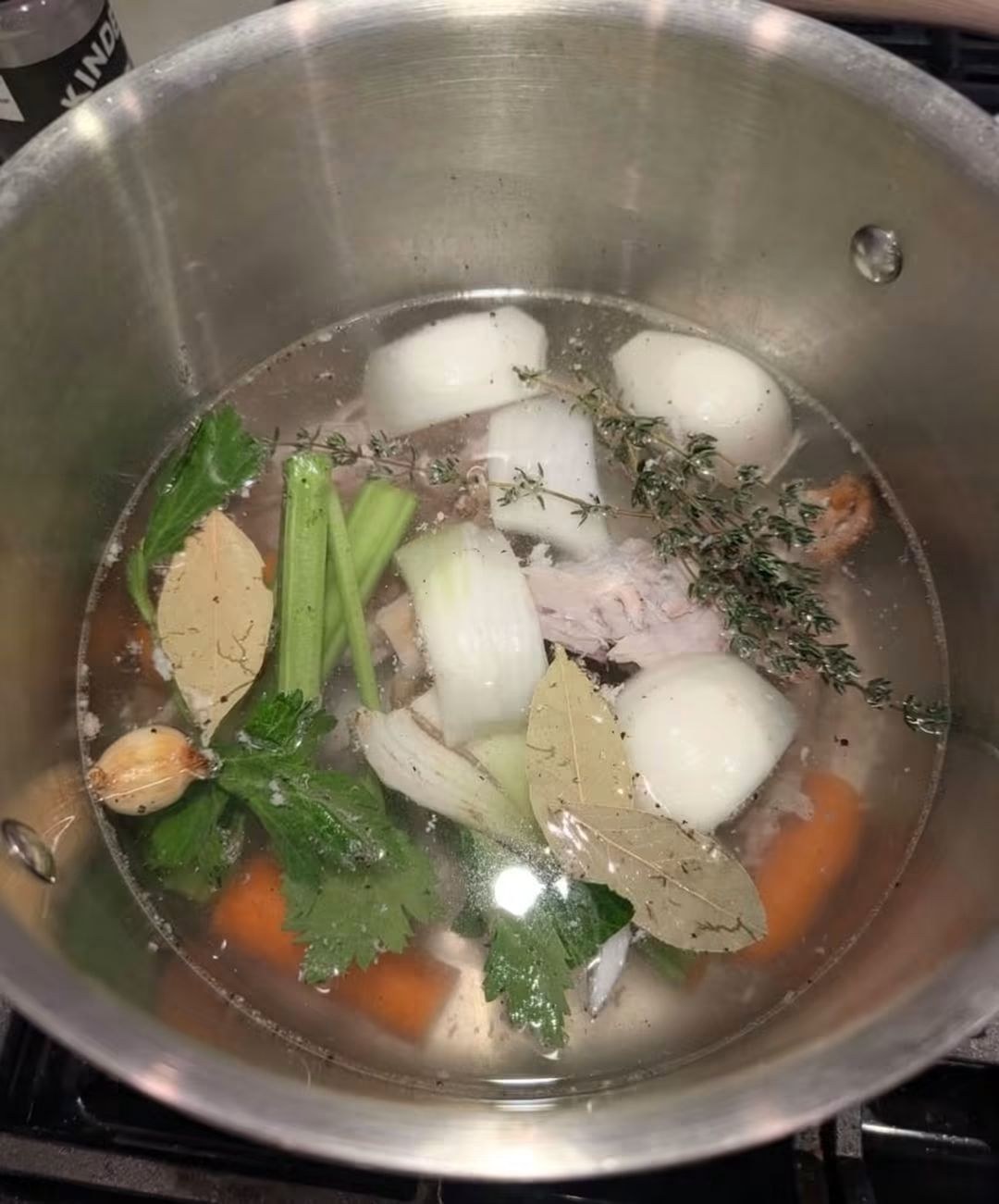
Chicken stock is a fundamental kitchen staple that transforms everyday meals into deeply comforting dishes. This Chicken Stock recipe uses simple, readily available ingredients combined with a slow simmering process to extract rich, savory flavors from chicken bones and fresh vegetables. It is ideal for home cooks who want to elevate their soups, stews, risottos, and sauces with a naturally flavorful, homemade base. The method is approachable, rewarding, and results in a versatile ingredient that adds warmth and depth to countless dishes.
With about 15 minutes of preparation and 3 to 4 hours of slow cooking time, you’ll produce 2 to 2.5 quarts of flavorful stock. The natural gelatin extracted from the bones provides a silky, satisfying mouthfeel, while aromatic herbs and vegetables contribute layers of complexity and sweetness. Whether you plan to use the stock immediately or freeze it for future meals, this recipe offers a flexible, wholesome kitchen essential that enhances your cooking effortlessly.
Why you’ll love this Chicken Stock
- Uses leftover chicken bones and simple vegetables, reducing waste while saving money and resources.
- Slow simmering gently extracts maximum flavor and nutrients, creating a rich, deep-tasting stock.
- Acts as a versatile base for soups, risottos, sauces, and braises, naturally boosting flavor complexity.
- Can be prepared in large batches and frozen in portions for convenient, ready-to-use stock anytime.
- Contains no preservatives or additives, ensuring a natural, wholesome ingredient you can trust.
Ingredients
- 4 to 5 lb chicken bones, backs, necks, wings, or carcasses
- 3 qt cold water
- 2 medium onions, quartered
- 3 carrots, cut into large chunks
- 3 celery stalks, cut into large chunks, with leaves if available
- 1 small bunch parsley
- 6 sprigs fresh thyme
- 2 bay leaves
- 1 tsp black peppercorns
- 1 tsp kosher salt (optional, or leave unsalted)
This recipe yields about 2 to 2.5 quarts of stock after 3 to 4 hours of simmering, with roughly 15 minutes of prep time. The key ingredients are chicken bones, which provide rich gelatin and flavor essential for a full-bodied stock. Fresh aromatic vegetables like onion, carrot, and celery contribute natural sweetness and depth while balancing the savory notes. Selecting fresh herbs such as thyme and parsley adds a delicate, fragrant layer to the final stock. Starting with cold water is crucial—it allows flavors and gelatin to be extracted gradually and evenly as the temperature rises, preventing cloudiness and bitterness.
Instructions
- Prepare the bones: Place the chicken bones in a large stockpot and cover them completely with 3 quarts of cold water. Using cold water ensures a gradual extraction of flavors and gelatin.
- Add vegetables and herbs: Add quartered onions, large chunks of carrots and celery, parsley, thyme sprigs, bay leaves, and black peppercorns to the pot. These aromatics build complexity and balance the richness of the bones.
- Heat to simmer: Slowly bring the mixture to a bare simmer over medium heat. Avoid vigorous boiling, which can emulsify fats and cause cloudiness.
- Skim foam: During the first 20 to 30 minutes, carefully skim off any foam or impurities that rise to the surface. This step is essential to keep the stock clear and clean tasting.
- Simmer gently: Maintain a gentle simmer for 3 to 4 hours. Monitor the water level and add small amounts of water as needed to keep the bones fully submerged, ensuring consistent flavor extraction.
- Strain the stock: Remove the pot from heat and strain the stock through a fine sieve into a clean pot or bowl. Avoid pressing on the solids to preserve clarity and prevent cloudiness.
- Cool and store: Cool the strained stock quickly by placing the container in an ice bath or dividing into smaller portions. Refrigerate promptly. Once chilled, skim off any solidified fat from the surface before using or storing.
Tips for the best results
- Start with cold water: Beginning with cold water allows proteins and gelatin to release slowly, preventing cloudiness and bitterness in the stock.
- Simmer gently without boiling: Keeping the heat low prevents fat emulsification and scum mixing into the liquid, resulting in a cleaner, clearer stock with a smooth texture.
- Skim foam regularly: Removing foam and impurities early in the cooking process ensures a bright flavor and clear appearance by eliminating unwanted solids.
- Add water as needed: Maintaining the proper water level ensures even extraction and prevents the bones from drying out or burning, which can create off-flavors.
- Use a fine mesh sieve: Straining through a fine sieve or cheesecloth removes small particles and sediment, producing a crystal-clear stock perfect for delicate dishes.
- Cool stock quickly: Rapid cooling minimizes bacterial growth and preserves freshness. Use an ice bath or divide stock into smaller containers for faster chilling before refrigeration or freezing.
Variations and substitutions
- Roast the bones first: Roasting chicken bones at 400°F for 30-40 minutes before simmering adds a deeper, caramelized flavor and a darker color to the stock.
- Add garlic or leeks: Incorporate a few garlic cloves or leek sections for added aromatic complexity and a subtle sweetness.
- Use dried herbs: If fresh herbs are unavailable, use dried thyme and parsley but reduce quantities by half to avoid overpowering the stock.
- Substitute other poultry bones: Try turkey or duck bones for a different flavor profile and richness, adjusting cooking time as needed.
- Add white wine: A splash of white wine during simmering introduces subtle acidity and complexity, brightening the overall flavor.
Serving suggestions
Homemade chicken stock is incredibly versatile and elevates many dishes. Use it as a flavorful base for classic soups like chicken noodle, vegetable, or creamy bisques. It enhances risottos by adding depth and richness to the rice, and it creates luscious gravies and pan sauces that complement roasted meats. Braise chicken or vegetables in the stock to infuse them with savory warmth. Additionally, cook grains such as rice, quinoa, or barley in chicken stock instead of water to impart extra flavor and body, making every meal more satisfying and wholesome.
Storage and reheating
Proper storage is key to preserving the quality of your chicken stock. Store it in airtight containers in the refrigerator for up to 4 days. For longer preservation, freeze the stock in portions using ice cube trays or freezer-safe containers, allowing you to thaw only what you need. Frozen stock keeps well for up to 3 months without loss of flavor. When reheating, warm the stock gently over low heat until just simmering to maintain its delicate flavors and silky texture. Avoid boiling during reheating, as it can cause separation and diminish clarity.
Frequently asked questions
Can I use raw chicken meat instead of bones for stock?
While raw chicken meat can be used to make a broth, bones are preferred for making stock because they release gelatin and collagen during slow cooking. These compounds give stock its characteristic body, richness, and mouthfeel. Using only meat results in a lighter, thinner broth that lacks the depth and silky texture of a true stock. For best results, incorporate bones for that full-bodied flavor and texture.
Do I need to add salt to chicken stock?
Adding salt to chicken stock is optional and depends on personal preference. Many cooks choose to leave the stock unsalted so that it can be seasoned precisely when used in recipes. This approach prevents the stock from becoming overly salty, especially if it will be reduced or combined with other salty ingredients. If you prefer, add a small amount of kosher salt during cooking, but keep in mind that the final dish may still require additional seasoning.
Why is my chicken stock cloudy?
Cloudiness in chicken stock typically results from boiling the liquid too vigorously, which emulsifies fats and scum into the stock, creating a murky appearance. Another cause can be stirring the stock too much during cooking, which disturbs the solids. To keep stock clear, maintain a gentle simmer throughout the cooking process, skim foam early and often, and avoid stirring. Using cold water at the start and straining with a fine mesh sieve also helps achieve clarity.
Can I make chicken stock in a slow cooker?
Yes, chicken stock can be made in a slow cooker by combining the bones, vegetables, herbs, and cold water, then cooking on low for 6 to 8 hours. This method is convenient because it requires minimal attention and yields flavorful stock. However, the slower temperature increase and longer cooking time can result in slightly different flavor extraction compared to stovetop simmering. Be sure to strain and cool the stock properly before storing.
How do I remove fat from chicken stock?
After refrigeration, chicken stock fat solidifies on the surface and can be easily removed with a spoon for a leaner, cleaner-tasting stock. Alternatively, use a fat separator, a special pitcher that allows the fat to rise and be poured off separately. Quickly chilling the stock accelerates fat solidification, making removal easier. Removing excess fat results in a lighter stock with improved clarity and flavor balance.
Final thoughts
Making homemade chicken stock is a straightforward yet transformative process that enriches countless recipes. With simple ingredients and a few hours of gentle simmering, you create a rich, flavorful foundation that brings warmth, depth, and natural umami to your cooking. This Chicken Stock recipe invites you to craft your own wholesome, delicious base from scratch and enjoy the satisfying difference it makes in your meals.