
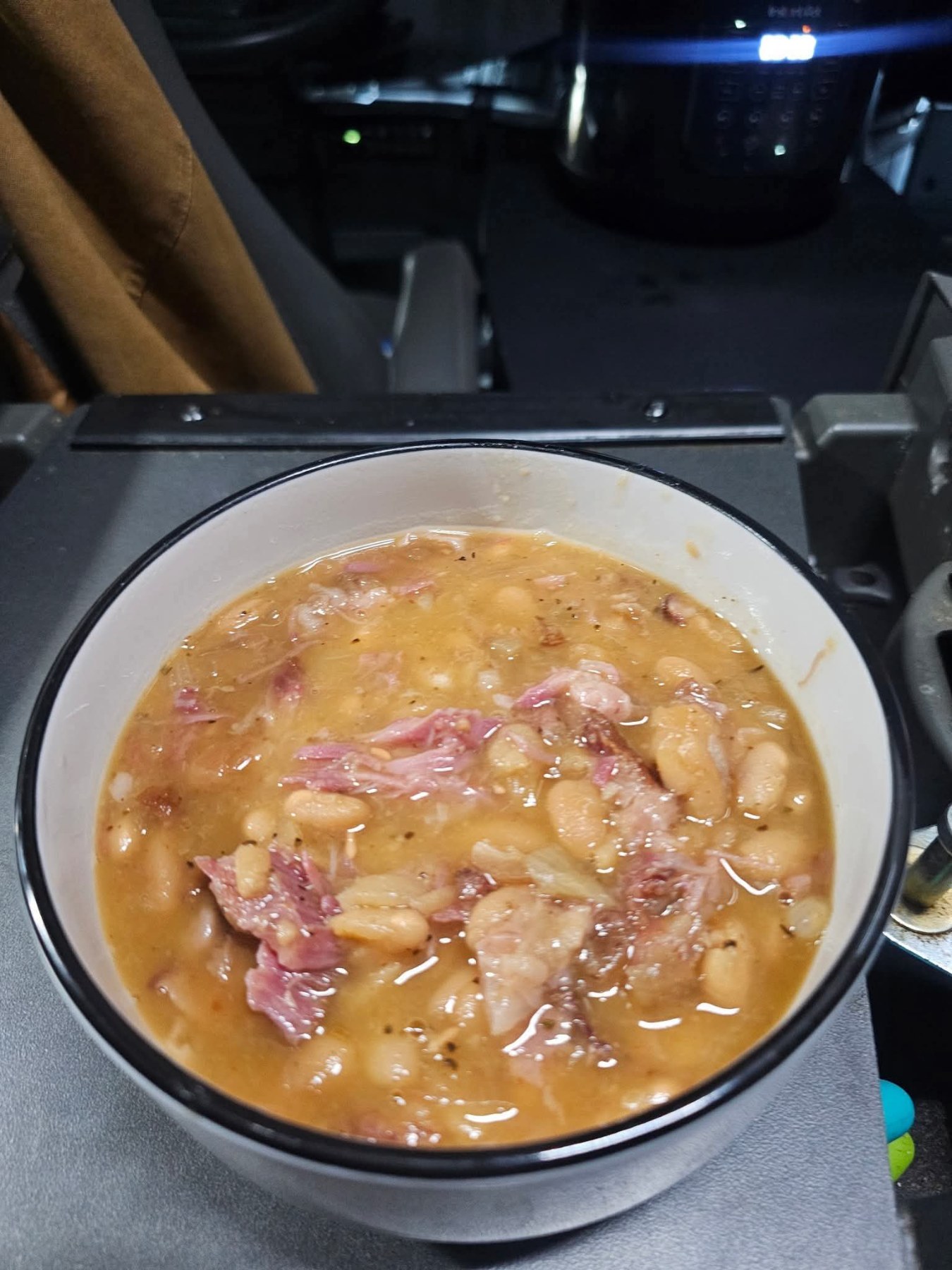
Ham hock and white bean soup is the kind of dish that tastes like it has been simmering all day, even though most of the work is hands-off. A single smoked ham hock slowly releases its savory, smoky flavor into the broth, while dried great northern or cannellini beans turn soft, creamy and satisfying. It is a classic comfort food for cold evenings, and it is a wonderful way to stretch a modest piece of pork into a generous pot for the whole family.
This recipe is designed for home cooks who want rich flavor without complicated techniques. It serves six, and it works just as well on the stovetop as it does in a pressure cooker. Plan ahead by soaking the beans overnight, then spend about 15 minutes preparing the aromatics before letting the pot do the rest. The total time is about 2 hours 20 minutes, including the soaking step.
Why you’ll love this ham hock and white bean soup
- It transforms an inexpensive smoked ham hock into a deeply flavorful, meaty broth without any extra effort.
- The dried beans cook into a naturally thick, creamy texture, so you don’t need cream or flour to thicken the soup.
- It makes a large batch for six servings, which is ideal for family dinners, leftovers and easy lunches the next day.
- The ingredients are pantry staples, so you can make it at any time of year with very little shopping.
- You can make it on the stovetop or in a pressure cooker, so it fits both slow weekend cooking and busy weeknights.
Ingredients
- 1 lb dried great northern or cannellini beans, soaked overnight
- 1 smoked ham hock (about 1 to 1.5 lb) or 2 cups diced leftover ham
- 1 tablespoon olive oil or butter
- 1 medium onion, diced
- 3 cloves garlic, minced
- 6 cups low-sodium chicken broth or water
- 2 bay leaves
- 1 teaspoon dried thyme or Italian seasoning
- 1/2 teaspoon black pepper
- Salt, to taste
- 1 tablespoon apple cider vinegar or lemon juice, to finish
The ham hock is the heart of this soup, so choose one with a good amount of meat and a pleasant smoky aroma. Great northern beans give a soft, slightly nutty result, while cannellini beans are a little creamier and hold their shape well. Use low-sodium broth so you can control the saltiness, since the ham hock already contributes plenty of salt. Fresh garlic and onion add sweetness and depth, and a splash of vinegar at the end brightens the whole pot.
Instructions
- Drain and rinse the beans. Pour off the soaking water, then rinse the soaked beans under cold water until the liquid runs clear.
- Soften the aromatics. In a large pot or pressure cooker, heat the oil or butter over medium heat. Add the diced onion and saute until soft, about 5 minutes. Stir in the garlic and cook for 30 seconds until fragrant, taking care not to let it brown.
- Add the main ingredients. Add the drained beans, ham hock, broth, bay leaves, thyme and black pepper to the pot. Stir gently to combine everything.
- Simmer until tender. Cover and simmer for 1.5 to 2 hours, until the beans are completely tender. For a pressure cooker, cook on high for 35 to 40 minutes and allow a natural release.
- Shred the ham. Carefully remove the ham hock with tongs and set it on a cutting board. Shred the meat, discarding the bone, skin and excess fat, then return the meat to the pot.
- Thicken the broth. Use the back of a spoon to mash a handful of beans against the side of the pot. This releases starch and gives the soup a naturally creamy body.
- Finish and serve. Remove and discard the bay leaves. Season with salt to taste, add the vinegar or lemon juice, stir, and serve hot.
Tips for the best results
- Soak the beans overnight in plenty of cold water, and rinse them well before cooking to reduce any stomach-upsetting compounds and to help them cook evenly.
- Hold off on adding salt until the beans are fully tender, because salt added too early can make the skins toughen and slow the cooking.
- Keep the heat low and steady during simmering; a rolling boil can break the beans apart and make the broth cloudy.
- Taste the broth before salting, since smoked ham hocks vary widely in saltiness and some release a lot more salt than others.
- Trim excess fat from the ham hock before shredding, but leave some connective tissue, which adds body and flavor to the soup.
- Finish with vinegar or lemon juice just before serving; this small step brightens the rich flavors and balances the smokiness.
Variations and substitutions
- Leftover ham: If you don’t have a ham hock, use 2 cups of diced leftover ham and add it in the last 30 minutes so it stays tender.
- Spicy version: Add a pinch of red pepper flakes or a dash of hot sauce to give the soup a gentle, warming kick.
- Vegetable boost: Stir in diced carrots and celery with the onion, or add chopped kale or spinach in the last few minutes for extra color and nutrition.
- Herb swap: Replace the thyme with Italian seasoning or a small sprig of fresh rosemary for a slightly different aromatic profile.
- Vegetarian option: Omit the ham hock, use vegetable broth, and add a teaspoon of smoked paprika to recreate the smoky flavor.
Serving suggestions
Ladle the soup into deep bowls and serve it piping hot, with a generous grind of black pepper on top. A thick slice of crusty bread, such as a country loaf or sourdough, is perfect for dipping and soaking up the broth. For a simple side, try a crisp green salad with a sharp vinaigrette to balance the richness of the soup. Cornbread also pairs beautifully, especially if you like a slightly sweet contrast. A sprinkle of freshly chopped parsley or green onions adds color and a fresh finish. For a heartier meal, serve the soup over a bowl of warm rice or alongside roasted potatoes.
Storage and reheating
Let the soup cool to room temperature, then transfer it to airtight containers and refrigerate for up to four days. The soup thickens as it sits, so you may need to add a splash of broth or water when reheating. For longer storage, freeze it in portions for up to three months. Thaw overnight in the refrigerator, then reheat gently in a saucepan over medium-low heat, stirring occasionally until it is steaming hot throughout. Avoid boiling it vigorously, which can make the beans break down further.
Frequently asked questions
Do I have to soak the beans overnight?
Soaking is strongly recommended because it shortens the cooking time and helps the beans cook evenly. If you are short on time, you can use a quick-soak method by covering the beans with water, bringing them to a boil for two minutes, then letting them stand for an hour before draining. The soup will still be delicious, though the beans may take a little longer to become tender.
Can I make ham hock and white bean soup in a slow cooker?
Yes, a slow cooker works very well for this soup. Combine the soaked beans, ham hock, broth and seasonings, then cook on low for 8 to 10 hours or on high for 4 to 5 hours. Remove the ham hock, shred the meat and return it to the pot before finishing the soup with vinegar and salt.
Why is my soup still watery?
Thin broth usually means not enough starch has been released from the beans. Mash more beans against the side of the pot and simmer uncovered for 10 to 15 minutes, which will reduce the liquid and naturally thicken the soup. You can also blend a small portion of the soup and stir it back in for extra body.
Is it safe to use a ham hock that has been frozen?
Yes, a frozen ham hock is perfectly safe to use. Thaw it completely in the refrigerator before cooking so it cooks evenly. Once thawed, it can be added straight to the pot with the beans and broth as directed in the recipe.
Can I use canned beans instead of dried beans?
You can, but the texture and flavor will be different. Drain and rinse two 15-ounce cans of white beans and add them during the last 20 to 30 minutes of simmering so they don’t break down. Use a little less broth at the start, since canned beans add no extra cooking liquid.
Final thoughts
Ham hock and white bean soup is a simple, honest dish that rewards a little patience and a good pot. With overnight soaking and a gentle simmer, you end up with tender beans, savory smoky broth and a bowl that feels truly homemade. Try it this week, and you may find it becomes a regular favorite for chilly evenings and easy leftovers.