
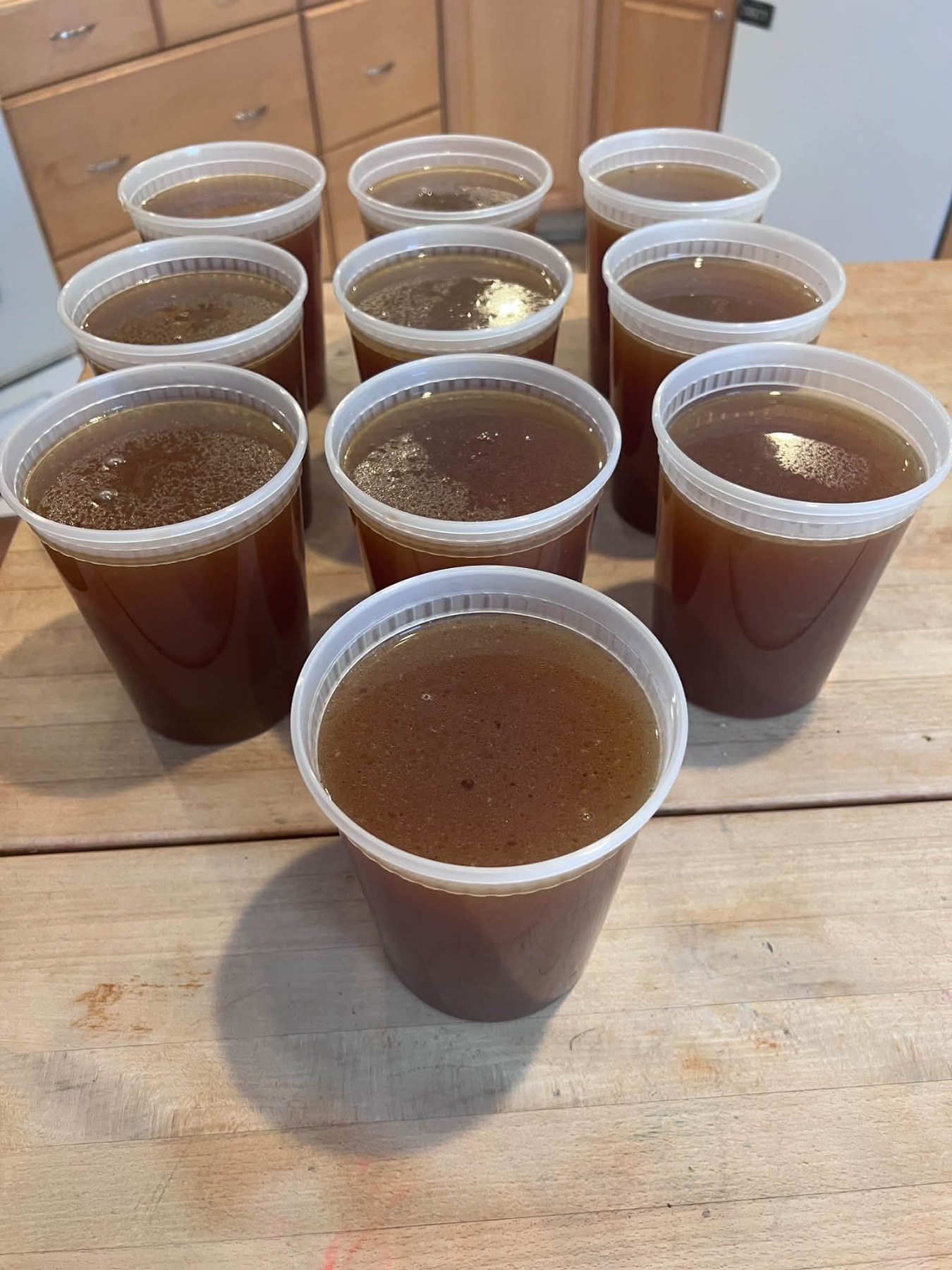
Homemade beef stock is a flavorful and versatile base that enhances soups, stews, and sauces with deep, rich taste. This recipe uses a mix of marrow, knuckle, and meaty beef bones slow-roasted and simmered with vegetables and herbs to extract maximum flavor and nutrients. It’s perfect for home cooks who want to elevate their dishes with a natural, wholesome broth.
Making your own beef stock may seem time-consuming, but the process is largely hands-off, and the result is far superior to store-bought versions. With about 30 minutes of prep and 6 to 8 hours of gentle simmering, you’ll end up with about 3 quarts of liquid gold that can be refrigerated or frozen for later use.
Why you’ll love this homemade beef stock
- It offers a rich, deep flavor that enhances any soup, sauce, or stew.
- Using roasted bones and vegetables adds complexity and a beautiful color to the stock.
- It’s a natural, preservative-free alternative to store-bought stocks and broths.
- Making it yourself allows control over ingredients, especially salt and seasoning.
- Large batches can be stored easily, saving time on future cooking projects.
Ingredients
- 10 lb beef bones (mix of marrow, knuckle, and meaty bones)
- 2 large onions, roughly chopped
- 3 carrots, roughly chopped
- 3 celery stalks, roughly chopped
- 3 tbsp tomato paste
- 2 tbsp neutral oil
- 16 cups cold water, or enough to cover
- 2 bay leaves
- 1 tsp black peppercorns
- 4 parsley stems
- 2 thyme sprigs
Prep time: 30 minutes | Cook time: 8 hours | Yields about 3 quarts of stock
The key ingredients in this homemade beef stock are the variety of beef bones, which provide gelatin and flavor, and the classic aromatic vegetables—onion, carrot, and celery—known as mirepoix. Roasting the bones and vegetables first intensifies their flavors and gives the stock a rich color. Tomato paste adds a subtle umami boost and helps with caramelization during roasting. Fresh herbs like parsley and thyme add brightness and complexity. Choosing fresh, high-quality bones with some meat attached will yield the best results.
Instructions
- Preheat the oven. Heat your oven to 425°F (220°C) to prepare for roasting the bones and vegetables.
- Roast the beef bones. Spread the beef bones on roasting pans and lightly brush with neutral oil. Roast for about 45 to 60 minutes, turning the bones once during cooking until they develop a deep brown color.
- Add vegetables to roast. For the last 20 to 25 minutes of roasting, add the roughly chopped onions, carrots, and celery to the pans so they brown alongside the bones.
- Transfer to stockpot. Move the roasted bones and vegetables to a large stockpot. Carefully spoon off any excess fat remaining in the roasting pans.
- Deglaze the roasting pans. Stir the tomato paste into the hot roasting pans and cook briefly to caramelize it. Then add a small amount of water to deglaze, scraping up all the browned bits, and pour this flavorful liquid into the stockpot.
- Add herbs and water. Add the bay leaves, black peppercorns, parsley stems, thyme sprigs, and enough cold water to cover the bones by about 2 inches.
- Simmer gently. Slowly bring the liquid just to a bare simmer over medium-low heat. Avoid boiling as it can cause cloudiness. Skim off foam and impurities as they rise to the surface.
- Cook low and slow. Let the stock simmer gently for 6 to 8 hours, adding a little water if needed to keep the bones submerged throughout the cooking time.
- Strain the stock. Carefully strain the liquid through a fine-mesh sieve or cheesecloth without pressing on the solids to keep the stock clear.
- Cool and store. Cool the stock quickly by placing the pot in an ice bath or dividing into smaller containers. Refrigerate and remove the solidified fat cap once chilled, if desired.
Tips for the best results
- Use a mix of bone types including marrow and knuckle for a rich, gelatinous stock.
- Roast the bones and vegetables well to develop deep color and flavor.
- Simmer gently without boiling to keep the stock clear and tasty.
- Skim regularly to remove impurities that cause cloudiness.
- Add cold water during simmering to maintain the correct liquid level.
- Cool the stock rapidly to prevent bacterial growth and preserve freshness.
Variations and substitutions
- Replace parsley and thyme with rosemary or sage for a different herbal note.
- Add garlic cloves during roasting for added aroma and flavor.
- Include a few whole black peppercorns or star anise for subtle spice variations.
- Use vegetable scraps or mushrooms to create a vegetarian stock alternative.
- Try adding a splash of red wine during deglazing for a richer taste.
Serving suggestions
Homemade beef stock is a fantastic base for hearty soups like French onion or beef barley. Use it to enrich sauces, gravies, or braises for meats and vegetables. It also works beautifully as a cooking liquid for grains such as rice or quinoa, adding depth to simple dishes. Warm a cup as a nourishing broth on its own or add fresh herbs and a squeeze of lemon for a comforting sip.
Storage and reheating
Store homemade beef stock in airtight containers in the refrigerator for up to 5 days. For longer storage, freeze the stock in portioned containers or ice cube trays for up to several months. When reheating, gently warm the stock on the stove over low heat to preserve its delicate flavors. Avoid boiling the stock again to maintain clarity and richness.
Frequently asked questions
Can I use beef stock as a substitute for broth?
Yes, beef stock can be used in place of broth in recipes. Stock has a richer, more gelatinous texture since it’s made primarily from bones, while broth is usually lighter and made from meat. Using stock can add more depth of flavor to soups, stews, and sauces.
Why do I need to roast the bones before making stock?
Roasting the bones caramelizes their natural sugars and browns the proteins, which enhances the flavor and color of the stock. It creates a deeper, more savory taste compared to simmering raw bones.
How long can homemade beef stock be stored safely?
When refrigerated in a sealed container, homemade beef stock stays good for up to 5 days. For longer storage, freezing is recommended and can keep the stock fresh for several months.
Should I remove the fat from the stock?
Removing the fat cap after chilling is optional. Some cooks prefer to keep it for added richness when reheating, while others skim it off for a leaner stock. It’s a matter of personal preference.
Can I use the leftover bones after making stock?
After long simmering, the bones have given up most of their flavor and nutrients, so they are usually discarded. However, some use the softened bones for making bone marrow dishes or composting in the garden.
Final thoughts
Making homemade beef stock is a rewarding kitchen project that fills your home with wonderful aromas and results in a rich, flavorful base for countless dishes. With simple ingredients and a bit of patience, you can create a natural stock that enhances your cooking and elevates everyday meals. Give this recipe a try and discover the difference a homemade stock can make in your culinary creations.