
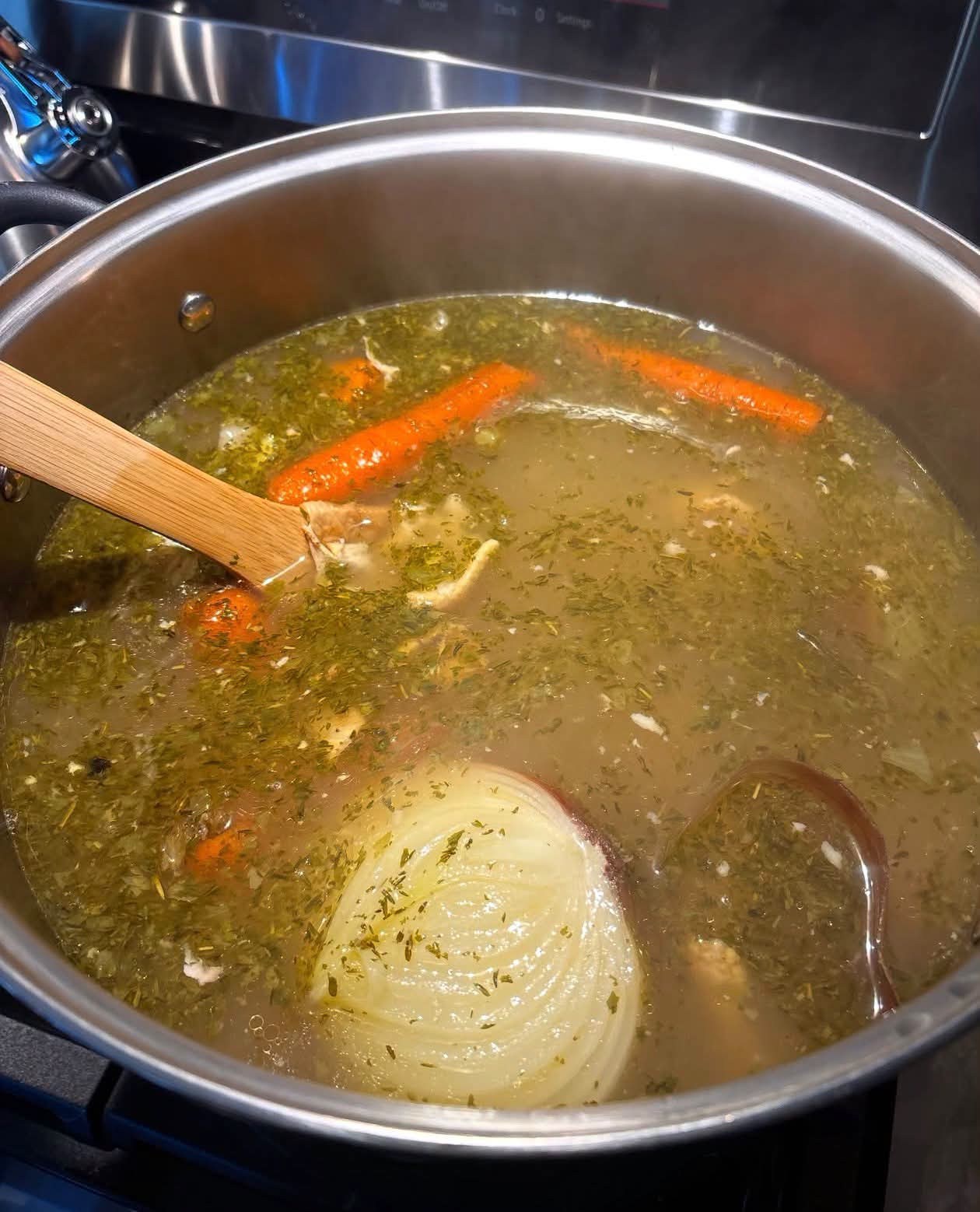
Homemade Chicken Broth (Chicken Stock) is a kitchen staple that adds rich flavor and depth to countless dishes. This easy recipe uses simple ingredients like chicken carcass, vegetables, and herbs to create a nourishing, versatile broth that’s perfect for soups, stews, and sauces. Whether you’re a beginner or an experienced cook, making your own chicken broth is rewarding and cost-effective.
With just a few hours of simmering, you can transform basic pantry staples into a golden, flavorful broth that enhances any recipe. This recipe yields about 10 cups, making enough to store or use immediately in your favorite meals. The process is straightforward and requires minimal prep time, making it ideal for home cooks looking to elevate their dishes naturally.
Why you’ll love this Homemade Chicken Broth (Chicken Stock)
- It delivers rich, deep flavor that store-bought broths often lack, enhancing any dish you add it to.
- Using leftover chicken carcass or backs is a great way to reduce waste and save money.
- The recipe is simple and requires minimal hands-on time, allowing you to multitask while it simmers.
- This broth is all-natural, free from additives and preservatives commonly found in commercial broths.
- It’s incredibly versatile, perfect as a base for soups, sauces, gravies, or cooking grains and vegetables.
Ingredients
- 1 whole chicken carcass or 2 to 3 lb chicken backs/wings
- 12 cups water
- 1 large onion, halved
- 3 carrots, cut into large pieces
- 2 celery stalks, cut into large pieces
- 4 garlic cloves
- 2 bay leaves
- 1 tsp whole black peppercorns
- 1 tbsp dried parsley or a small handful fresh parsley
- 1 tsp dried thyme or 4 sprigs fresh thyme
- 1 to 2 tsp salt, optional
Preparation time: 15 minutes | Cooking time: 3 hours | Yield: About 10 cups
The key to a flavorful chicken broth lies in using a good quality chicken carcass or backs and fresh vegetables. The chicken bones provide collagen and richness, while onions, carrots, and celery add sweetness and depth. Fresh herbs like parsley and thyme brighten the broth’s flavor, but dried herbs work well too. Choose firm vegetables and fresh herbs for the best results.
Instructions
- Combine ingredients: Place the chicken carcass or backs, water, halved onion, carrots, celery, garlic, bay leaves, peppercorns, parsley, thyme, and salt (if using) into a large stockpot.
- Bring to a boil: Heat the pot over medium-high heat until the liquid just reaches a boil, then immediately reduce to a very gentle simmer to avoid cloudiness.
- Skim foam: During the first 20 to 30 minutes of simmering, carefully skim off any foam or impurities that rise to the surface with a spoon or ladle.
- Simmer: Let the broth simmer uncovered or partially covered for 2 1/2 to 4 hours. This slow cooking extracts maximum flavor and nutrients, resulting in a golden, rich broth.
- Remove solids: Use tongs or a slotted spoon to remove the large solids like bones and vegetables from the broth.
- Strain: Pour the broth through a fine-mesh sieve into a clean pot or large bowl to remove smaller particles, ensuring a clear broth.
- Cool and refrigerate: Allow the broth to cool slightly, then refrigerate. Once chilled, you can skim off any fat that solidifies on top before using or storing.
Tips for the best results
- Use a gentle simmer rather than a rolling boil to keep the broth clear and prevent cloudiness.
- Skim the foam regularly during the first half hour to remove impurities for a cleaner taste.
- Don’t rush the cooking time; longer simmering extracts more flavor and gelatin from the bones.
- Cool broth quickly after cooking to reduce bacterial growth and preserve freshness.
- Strain the broth twice if you want an extra-clear stock without any sediment.
- Adjust salt at the end of cooking or before using to control seasoning precisely.
Variations and substitutions
- Add herbs: Incorporate rosemary, sage, or a small piece of kombu for unique flavor notes.
- Vegetable broth base: Omit the chicken and increase vegetables for a vegetarian broth alternative.
- Roast the bones: Roast the chicken carcass in the oven beforehand for a deeper, richer flavor.
- Spiced broth: Add whole cloves or star anise for a warming aromatic twist.
- Use different chicken parts: Try wings, necks, or drumsticks if carcass is not available; adjust cooking time slightly.
Serving suggestions
Homemade chicken broth is incredibly versatile and can be served as a warm, comforting drink on its own or used as a flavorful base for countless recipes. Use it to make classic chicken soup with noodles or vegetables, or as the cooking liquid for risotto, casseroles, and sauces. It also works well to cook grains like rice or quinoa, adding a subtle savory note. Enjoy it as a nourishing broth to sip before meals or incorporate into your favorite dishes.
Storage and reheating
Store cooled chicken broth in airtight containers in the refrigerator for up to 4 days. For longer storage, freeze the broth in portioned containers or ice cube trays for up to 3 months. To reheat, gently warm the broth on the stove over medium heat until hot, stirring occasionally. Avoid boiling the broth again to preserve its delicate flavors. Skim off any solidified fat after refrigeration if you prefer a leaner broth.
Frequently asked questions
What is the difference between chicken broth and chicken stock?
Chicken broth is typically made by simmering meat and some bones, resulting in a lighter flavor and clearer liquid. Chicken stock is made primarily from bones and often cooks longer to extract collagen and gelatin, giving it a richer, thicker texture. This recipe leans toward a classic chicken stock but can be called broth since it uses a whole carcass or backs.
Can I use raw chicken instead of a carcass?
You can use raw chicken pieces, but the flavor will be lighter and less rich compared to using bones or a carcass. For a deeper flavor and gelatinous texture, bones are essential. Combining meat and bones is a great way to enhance taste.
How long can I simmer chicken broth?
Simmering chicken broth between 2 1/2 to 4 hours is ideal. Shorter times produce lighter broth, while longer simmering extracts more flavor and gelatin. Avoid exceeding 4 hours as it may cause bitterness or cloudy broth.
Should I add salt during cooking?
Adding salt is optional and depends on your taste preferences. Many cooks prefer to add salt after cooking so they can better control seasoning when using the broth in various dishes.
Can I freeze homemade chicken broth?
Yes, homemade chicken broth freezes very well. Freeze in airtight containers or ice cube trays for easy portioning. Thawed broth may separate slightly but will regain consistency when reheated.
Final thoughts
Making your own Homemade Chicken Broth (Chicken Stock) is a simple way to enhance the flavor of your home-cooked meals naturally. With basic ingredients and a little patience, you’ll have a versatile, nutritious broth that elevates soups, sauces, and more. Try this recipe to enjoy the comforting taste of homemade stock anytime and experience the satisfying difference it makes in your cooking.