
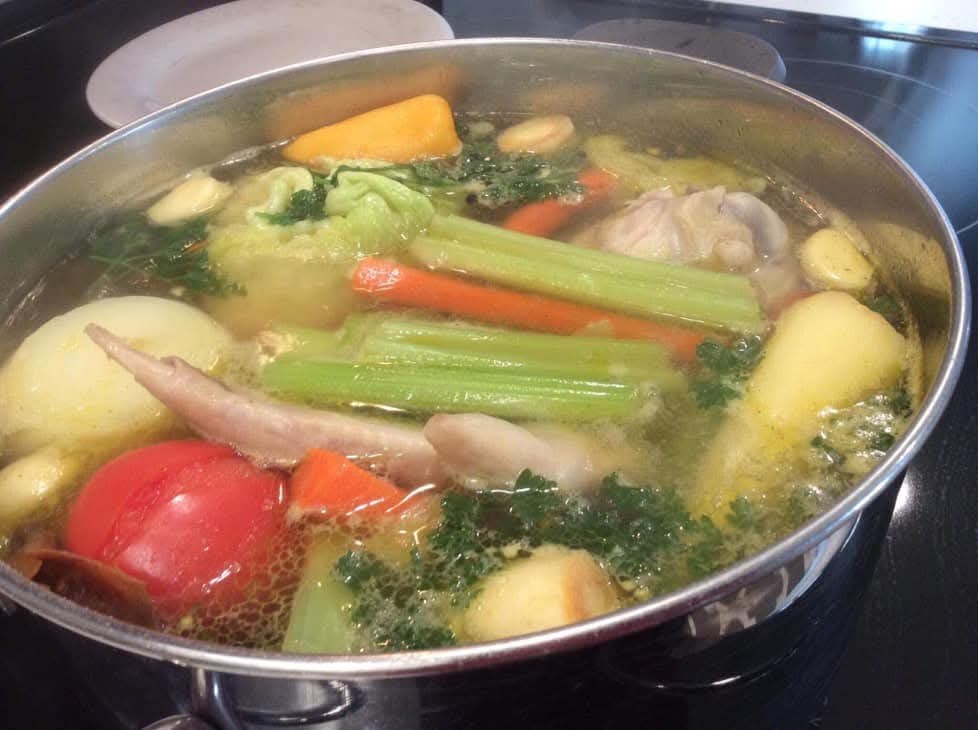
Homemade Chicken Stock is a fundamental kitchen staple that adds deep flavor and richness to countless dishes. This classic recipe transforms simple chicken parts and vegetables into a nourishing, aromatic broth that serves as an excellent base for soups, sauces, and stews. Whether you’re an experienced cook or a home kitchen enthusiast, making your own chicken stock is both satisfying and practical, giving you control over ingredients and flavor.
This recipe yields 6 to 8 cups of golden, flavorful stock with minimal prep time and about 1 hour and 45 minutes of simmering. It’s perfect for those who want to avoid store-bought stock with additives and control the taste and quality of their cooking foundation. With just a handful of ingredients and straightforward steps, you can elevate your meals effortlessly and have a versatile homemade broth ready whenever needed.
Why you’ll love this Homemade Chicken Stock
- It provides a rich, natural flavor that enhances soups, risottos, and sauces without artificial additives or preservatives.
- Using bony chicken pieces and feet ensures a gelatinous, full-bodied stock with great mouthfeel and texture.
- Making stock from scratch is cost-effective and a great way to use leftover chicken parts and reduce waste.
- The recipe is simple and forgiving, perfect for cooks of all skill levels who want reliable results.
- You can customize the stock by adding or omitting vegetables and herbs to suit your personal taste and recipe needs.
Ingredients
- 2 lb chicken backs, necks, wings, or other bony chicken pieces
- 2 chicken feet
- 10 cups water
- 3 celery stalks, cut in large lengths
- 3 carrots, cut in large chunks
- 2 medium potatoes, peeled
- 1 tomato, halved or left whole
- 4 garlic cloves
- 1 small onion, halved
- 1 small leek or a piece of cabbage (optional)
- 1 small bunch parsley
- 1 bay leaf
- 1 tsp black peppercorns
- 2 tsp salt, or to taste
This recipe makes about 6 to 8 cups of stock and requires 15 minutes of prep time plus 1 hour and 45 minutes of cooking. The key ingredients include bony chicken parts and chicken feet, which are essential for extracting collagen and gelatin that give the stock body and a silky texture. Fresh vegetables like celery and carrots add natural sweetness and aromatic depth, while potatoes contribute a mild earthiness that balances the flavor. Choose fresh, firm vegetables free from blemishes and clean the chicken parts thoroughly to ensure a clear, clean-tasting broth. Using cold water to start helps to extract flavors gently and maintain clarity.
Instructions
- Prepare chicken pieces: Rinse the chicken backs, necks, wings, and chicken feet under cold water to remove any impurities and blood clots. This step helps prevent cloudiness and unwanted flavors in the stock.
- Combine with water: Place all the chicken parts in a large stockpot and cover them with 10 cups of cold water. Starting with cold water allows the flavors and gelatin to extract gradually as the temperature rises.
- Bring to boil: Heat over medium-high until the water just reaches a boil, then immediately reduce to a gentle simmer. Rapid boiling can break down the proteins too aggressively, causing cloudiness and bitter flavors.
- Skim foam: Use a ladle to skim off any foam or scum that rises to the surface during the first 30 minutes. Removing these impurities is crucial for a clear and clean-tasting stock.
- Add vegetables and seasonings: Add celery stalks, carrot chunks, peeled potatoes, tomato, garlic cloves, halved onion, parsley, bay leaf, black peppercorns, and optional leek or cabbage. These aromatics provide layers of flavor and subtle sweetness.
- Simmer gently: Cover partially and let the stock simmer gently for 1 1/2 to 2 hours, allowing maximum flavor extraction while maintaining clarity.
- Season with salt: In the last 30 minutes of cooking, add 2 teaspoons of salt or adjust to your taste. Adding salt late prevents over-seasoning as the stock reduces and concentrates.
- Strain the stock: Remove from heat and strain through a fine sieve or cheesecloth for a clear broth. For rustic soups, you can return some vegetables and picked chicken meat to the broth instead of discarding them.
- Remove excess fat: Let the stock sit briefly so fat rises to the top, then skim off the fat with a spoon. Alternatively, chill the stock in the refrigerator and remove the solidified fat before use. This step improves flavor and mouthfeel.
Tips for the best results
- Use cold water to start: This ensures a slow, even extraction of flavors and gelatin, preventing cloudy stock and bitterness.
- Simmer gently rather than boiling vigorously: Vigorous boiling breaks down proteins harshly and emulsifies fat, causing cloudy and greasy stock.
- Skim foam regularly during the first 30 minutes: This removes coagulated proteins and impurities, resulting in a cleaner, more visually appealing broth.
- Add salt only towards the end: Salt concentrates as the stock reduces, so adding it late allows better control over seasoning and avoids over-salting.
- Include chicken feet if possible: Chicken feet contribute high levels of collagen, which converts to gelatin, giving the stock a rich, silky mouthfeel.
- Cool the stock quickly if not using immediately: Prompt cooling prevents bacterial growth. Use an ice bath or divide into smaller containers to speed cooling.
Variations and substitutions
- Use leftover roasted chicken carcasses: This adds a deeper, roasted flavor and a richer color to the stock.
- Replace potatoes with parsnips or turnips: These root vegetables add a different subtle sweetness and complexity.
- Add herbs like thyme or rosemary: For a more aromatic and herbaceous profile, add fresh or dried herbs during simmering.
- Skip the tomato: Omitting tomato results in a clearer, less tangy stock, ideal for delicate recipes.
- Use vegetable scraps for a vegetarian version: Omit chicken parts and simmer vegetable trimmings with herbs for a light, flavorful broth.
Serving suggestions
Homemade chicken stock is incredibly versatile and enhances a wide range of dishes. Use it as the flavorful base for hearty chicken noodle soup or as a cooking liquid for grains like rice, quinoa, or barley, which absorb the rich flavors beautifully. It also elevates sauces, gravies, and braises by adding natural depth and moisture. Serve it warm as a nourishing broth seasoned with fresh herbs or a squeeze of lemon for comfort and warmth. Its mild, comforting flavor pairs excellently with simple seasonings and fresh vegetables, making it a perfect foundation for countless recipes.
Storage and reheating
Store homemade chicken stock in airtight containers in the refrigerator for up to 4 days to maintain freshness and prevent spoilage. For longer storage, freeze the stock in portion-sized containers or ice cube trays for up to 3 months, allowing easy use in small amounts. When reheating, warm the stock gently over low heat on the stove to preserve its delicate flavors and silky texture. Avoid boiling again, as excessive heat can break down gelatin and cause cloudiness and flavor loss.
Frequently asked questions
Can I use other chicken parts instead of backs and feet?
Yes, you can use necks, wings, or carcasses as alternatives. The key is to use bones with connective tissue and some cartilage, which release collagen during simmering to produce a rich, gelatinous stock. Avoid using large amounts of breast meat, as it can cloud the broth and dilute the flavor.
Why is it important to skim the foam during cooking?
Skimming removes coagulated proteins, blood, and impurities that rise to the surface as foam. This process prevents these particles from breaking down in the stock, which could cause cloudiness and off-flavors. Regular skimming results in a clearer, cleaner-tasting broth with a more appealing appearance.
Can I make this stock in a slow cooker?
Absolutely. Using a slow cooker is a convenient method that allows gentle, prolonged simmering without constant attention. Combine all ingredients in the slow cooker and cook on low for 6 to 8 hours. This slow extraction produces a rich, flavorful, and clear stock ideal for many recipes.
How do I store chicken stock safely?
After cooking, cool the stock quickly by placing the pot in an ice bath or dividing the stock into smaller containers. Store it in sealed containers in the refrigerator and use within 4 days to prevent bacterial growth. For longer storage, freeze the stock in airtight containers to maintain quality and safety.
Can I freeze homemade chicken stock?
Yes, freezing is an excellent option for preserving homemade stock. Freeze in freezer-safe containers or ice cube trays to portion it conveniently. Frozen stock maintains its flavor and texture for up to 3 months. Thaw in the refrigerator before reheating gently for best results.
Final thoughts
Making Homemade Chicken Stock is a rewarding kitchen project that enhances your cooking with rich, natural flavor and satisfying texture. It’s economical, simple, and endlessly adaptable, making it a perfect staple for any home cook aiming to elevate meals effortlessly. Give this recipe a try and discover how a good stock can transform everyday dishes into comforting, delicious experiences that your family and guests will appreciate.