
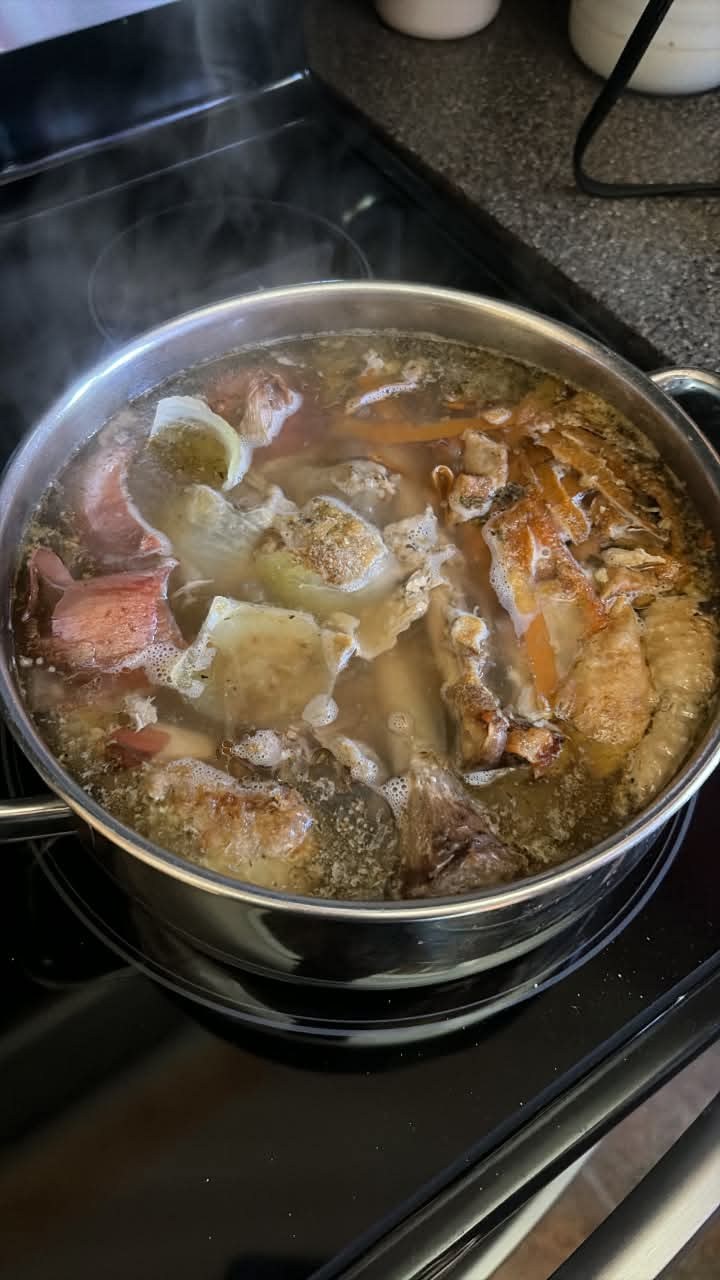
Introduction
Homemade turkey stock is a flavorful and nourishing base made by simmering leftover roasted turkey bones with aromatic vegetables and herbs. This recipe transforms turkey carcass and extra bones into a rich, versatile stock that enhances soups, stews, sauces, and gravies.
Ideal for home cooks looking to reduce waste and maximize flavor, this stock requires minimal hands-on time but simmers gently for hours to extract deep savory notes. Whether you’re using turkey leftovers after a holiday meal or preparing stock from fresh bones, this recipe delivers a delicious foundation for countless dishes.
Why you’ll love this Homemade Turkey Stock
- Uses leftover turkey carcass and bones, reducing food waste while creating rich flavor.
- Contains simple, natural ingredients for a wholesome, homemade base free of additives.
- Slow simmering extracts maximum taste and nutrients for a deeply savory stock.
- Versatile for use in soups, gravies, sauces, and braises to enhance any meal.
- Easy to prepare with hands-on time under 20 minutes and mostly unattended cooking.
Ingredients
- 1 roasted turkey carcass, broken into pieces
- 2 lb extra turkey bones or wings if available
- 2 large onions, quartered
- 3 carrots, cut into large chunks
- 3 celery stalks, cut into large chunks
- 4 garlic cloves, crushed
- 2 bay leaves
- 1 tsp black peppercorns
- 1 small bunch parsley stems
- 12-16 cups cold water
- 1 tbsp apple cider vinegar (optional)
- Salt to taste only after straining (optional)
Servings: About 3 quarts
Prep time: 15 minutes
Cook time: 4 hours
The key ingredients for this homemade turkey stock are the roasted turkey carcass and extra bones, which provide rich flavor and gelatin that gives the stock body. Fresh vegetables like onions, carrots, and celery add natural sweetness and aroma, while garlic, bay leaves, peppercorns, and parsley stems boost complexity. Using cold water and optionally apple cider vinegar helps extract minerals and collagen during the long simmer. Choosing fresh, high-quality vegetables and leftover turkey bones will ensure the best tasting stock.
Instructions
- Prepare the carcass: Break the roasted turkey carcass into pieces that fit comfortably into a large stockpot to ensure even simmering.
- Add bones and aromatics: Place the extra turkey bones or wings, onions, carrots, celery, garlic, bay leaves, black peppercorns, parsley stems, and optional apple cider vinegar into the pot with the carcass.
- Pour in water: Add 12 to 16 cups of cold water, enough to cover the ingredients by about 1 to 2 inches for full submersion.
- Bring to a simmer: Heat the pot slowly over medium heat until it reaches a bare simmer—small bubbles gently rising—not a rolling boil.
- Skim impurities: During the first 20 to 30 minutes, skim off any foam or impurities that rise to the surface to keep the stock clear.
- Simmer gently: Maintain a low simmer for 3 to 4 hours, partially covered. Check occasionally and add a little water if needed to keep bones submerged.
- Strain the stock: Remove from heat and strain through a fine-mesh sieve into a clean pot or large bowl to separate solids from the liquid.
- Cool and refrigerate: Cool the stock quickly to prevent spoilage, then refrigerate. Once chilled, remove the hardened fat from the surface if desired.
- Use or reduce: Use the stock as is for soups or gravies, or simmer longer to reduce and intensify the flavor. Add salt only when using the stock in recipes.
Tips for the best results
- Start with cold water to extract maximum flavor and gelatin from the bones and vegetables.
- Keep the heat low to maintain a gentle simmer; boiling can cloud the stock and break down delicate flavors.
- Skim foam regularly during the first 30 minutes to ensure a clear, clean-tasting stock.
- Partially cover the pot to retain moisture while allowing some evaporation for flavor concentration.
- Add apple cider vinegar to help release minerals and collagen from the bones for richer texture.
- Cool the stock quickly after cooking to prevent bacterial growth and preserve freshness.
Variations and substitutions
- Substitute leftover raw turkey wings or necks if you don’t have a roasted carcass for a lighter stock.
- Add a few whole peppercorns or a small piece of fresh ginger for a different aromatic profile.
- Use fresh thyme or rosemary instead of parsley stems for a more herbal note.
- Include mushroom stems or dried mushrooms to add umami depth to the stock.
- For a vegetarian alternative, omit the turkey and simmer vegetables and herbs alone for a flavorful vegetable stock.
Serving suggestions
Homemade turkey stock is a wonderful base for classic turkey soup with noodles or rice, creamy mashed potatoes, and rich gravies perfect for holiday meals. You can use it to braise vegetables or cook grains for added flavor. It also serves as a great foundation for sauces that accompany roasted or grilled meats. Warm a cup to sip as a nourishing broth anytime.
Storage and reheating
Store homemade turkey stock in airtight containers in the refrigerator for up to 4 days or freeze in portions for up to 3 months. When reheating, warm gently over low heat until steaming but not boiling to preserve flavor. If refrigerated, remove the solidified fat layer before reheating if you prefer a leaner stock.
Frequently asked questions
Can I use raw turkey bones instead of a roasted carcass?
Yes, raw turkey bones can be used to make stock, but roasted bones provide deeper, richer flavor due to caramelization. Roasting raw bones before simmering enhances the taste and color of your stock.
Why should I add apple cider vinegar to the stock?
Apple cider vinegar helps break down the bones and connective tissues, releasing minerals and collagen that give the stock body and a silky texture. It’s optional but recommended for a richer stock.
How long can I store homemade turkey stock?
In the refrigerator, turkey stock safely keeps for about 4 days. For longer storage, freeze it in airtight containers for up to 3 months. Always cool the stock quickly before storing to reduce bacterial growth.
Should I salt the stock during cooking?
It’s best to wait to add salt until you use the stock in a recipe. This prevents the stock from becoming too salty after reducing or combining with other salted ingredients.
Can I freeze homemade turkey stock?
Absolutely! Freeze the stock in portion-sized containers or ice cube trays. This makes it easy to thaw only what you need for soups or sauces without waste.
Final thoughts
Making homemade turkey stock is a simple yet rewarding way to create a flavorful and nutritious base from turkey leftovers. With minimal prep and mostly hands-off simmering, you can enhance countless dishes with this rich stock. Give this recipe a try and enjoy the comforting depth of flavor it brings to your cooking.