
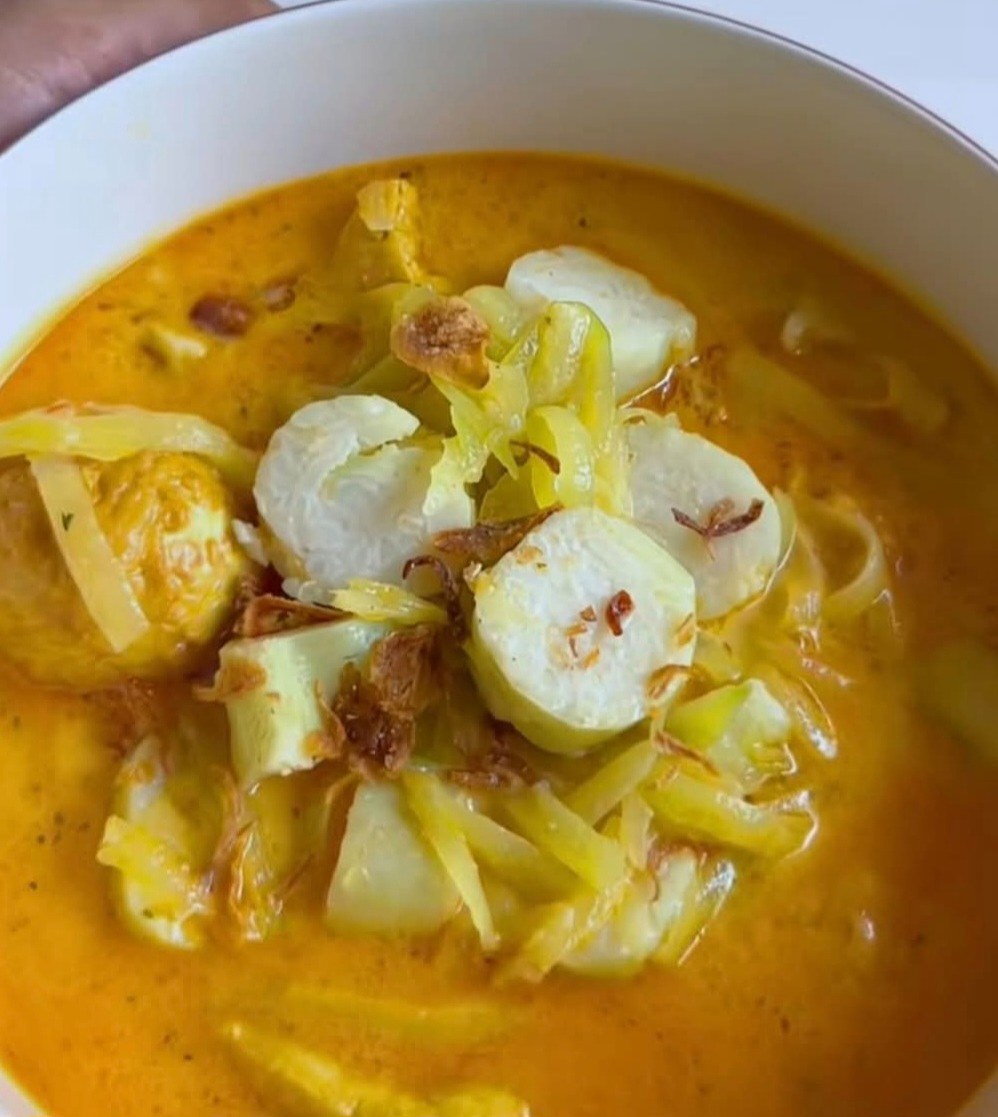
Lontong Sayur is a traditional Indonesian dish that combines fragrant coconut milk curry with compressed rice cakes, known as lontong. This comforting vegetable curry is perfect for anyone looking to enjoy a rich and savory meal that blends textures and flavors beautifully. It’s especially great for vegetarians or those seeking a hearty, plant-based dish with authentic Southeast Asian flair.
This recipe serves 4 and can be prepared in about 45 minutes, including 20 minutes of prep and 25 minutes of cooking. You’ll find the balance of creamy coconut milk, tender vegetables like chayote and cabbage, and the satisfying chew of sliced lontong makes this meal a favorite for family dinners or special occasions.
Why you’ll love this Lontong Sayur
- This dish offers a rich and creamy coconut milk base that perfectly complements the mild flavors of vegetables and tofu.
- The combination of aromatic spices and fresh ingredients creates a uniquely fragrant and appetizing curry.
- Lontong rice cakes provide a pleasant, chewy texture that absorbs the flavorful curry sauce wonderfully.
- It’s a versatile and filling vegetarian meal suitable for various dietary preferences.
- Easy to prepare with simple ingredients, making it accessible for cooking at home any day of the week.
Ingredients
- 500 g lontong, sliced into rounds
- 2 tbsp vegetable oil
- 6 shallots, sliced
- 3 cloves garlic
- 3 candlenuts or 2 tbsp cashews
- 2 cm fresh turmeric
- 2 cm galangal
- 1 stalk lemongrass, bruised
- 2 bay leaves or Indonesian daun salam if available
- 400 ml thick coconut milk
- 500 ml water or light stock
- 1 tsp ground coriander
- 1/2 tsp ground cumin
- 1/2 tsp salt, plus more to taste
- 1 tsp sugar
- 250 g chayote, peeled and diced or julienned
- 200 g cabbage, roughly shredded
- 150 g firm tofu, fried or lightly pan-fried, cubed
- 2 boiled eggs, halved (optional)
- 2 tbsp fried shallots, for garnish
- sambal, optional for serving
This recipe uses key ingredients like lontong, a compressed rice cake that provides a unique chewy texture and mild flavor perfect for soaking up the coconut curry. Fresh turmeric and galangal add vibrant earthiness and warmth, while chayote and cabbage contribute mild sweetness and crunch. Choose firm tofu that holds its shape well when fried, and use thick coconut milk for a creamy, luscious sauce. If fresh ingredients like Indonesian daun salam are unavailable, bay leaves make a fine substitute.
Instructions
- Prepare the spice paste: Blend or pound the shallots, garlic, candlenuts, and fresh turmeric into a smooth paste to build the curry’s flavor base.
- Fry the spice paste: Heat vegetable oil in a pot over medium heat. Fry the spice paste until fragrant and its color deepens slightly, about 3 to 5 minutes, to release the aromas.
- Add aromatics and spices: Stir in galangal, bruised lemongrass stalk, bay leaves, ground coriander, and ground cumin. Cook briefly to combine the flavors.
- Simmer the vegetables: Pour in water or light stock and bring to a simmer. Add the diced chayote and cook until just tender, about 8 minutes, ensuring the vegetables remain firm.
- Add cabbage and tofu: Stir in shredded cabbage and fried tofu cubes. Then carefully pour in the thick coconut milk, gently simmering over low heat to prevent boiling.
- Season the curry: Add salt and sugar. Taste and adjust the seasoning until the broth is savory, mildly sweet, and rich, balancing the flavors.
- Assemble and serve: Place sliced lontong in individual serving bowls. Ladle the hot vegetable coconut curry over the lontong slices.
- Garnish and finish: Top with fried shallots for crunch and flavor. Add halved boiled eggs and sambal if desired for extra richness and heat.
Tips for the best results
- Use fresh turmeric for the most vibrant color and authentic flavor; if unavailable, substitute with turmeric powder but reduce the amount.
- Do not let the coconut milk boil vigorously after adding to avoid curdling and separation.
- Fry the spice paste gently to develop deep, aromatic flavors without burning it.
- Choose firm tofu that holds shape when cooked; pressing out excess water before frying improves texture.
- Adjust the water or stock quantity to control curry thickness according to your preference.
- Slice lontong evenly to ensure consistent texture and easy serving.
Variations and substitutions
- Replace chayote with green beans or carrots for different vegetable textures and flavors.
- Use tempeh instead of tofu for a nuttier protein option common in Indonesian cuisine.
- Substitute coconut milk with light coconut cream for a lighter curry without compromising creaminess.
- Add sliced bird’s eye chili or a spoonful of sambal for extra heat if you like spicy dishes.
- Use jasmine or sticky rice as an alternative to lontong, though the texture will differ.
Serving suggestions
Serve Lontong Sayur hot as a complete meal on its own, perfect for lunch or dinner. Accompany it with extra sambal for those who enjoy spicier flavors. A side of fresh cucumber slices or kerupuk (Indonesian crackers) provides a refreshing contrast to the creamy curry. This dish pairs wonderfully with a simple iced tea or a light, crisp white wine.
Storage and reheating
Store leftover Lontong Sayur in an airtight container in the refrigerator for up to 2 days. Reheat gently over low heat to avoid curdling the coconut milk, adding a splash of water or stock if the curry thickens too much. Lontong rice cakes can become firmer when refrigerated, so slicing them before storing helps with even reheating.
Frequently asked questions
What is lontong?
Lontong is an Indonesian compressed rice cake made by boiling rice tightly packed in banana leaves or plastic bags. It has a dense, chewy texture and is commonly served with savory dishes like curries and stews.
Can I make Lontong Sayur without tofu?
Yes, tofu adds protein and texture but can be omitted or replaced with tempeh, boiled eggs, or simply extra vegetables for a lighter version of the dish.
Is Lontong Sayur spicy?
The traditional recipe is mildly spiced and not very hot, but you can add sambal or fresh chilies to increase the heat according to your taste.
How do I store lontong if I want to prepare it in advance?
Lontong can be made ahead by cooking and compressing the rice, then refrigerating it in a sealed container. Slice it when ready to serve with the curry.
Can I freeze Lontong Sayur?
While it is possible to freeze the curry without the lontong, freezing may alter the texture of the coconut milk and vegetables. It’s best to freeze components separately if needed.
Final thoughts
Lontong Sayur is a delicious and comforting Indonesian coconut vegetable curry that’s both easy to prepare and satisfying to eat. Its blend of aromatic spices, creamy coconut broth, and chewy rice cake makes it a unique dish worth trying at home. Whether for a family meal or to explore new flavors, this recipe offers a wonderful taste of Indonesia’s rich culinary heritage. Give it a try and enjoy the vibrant flavors and textures that make Lontong Sayur so special.