
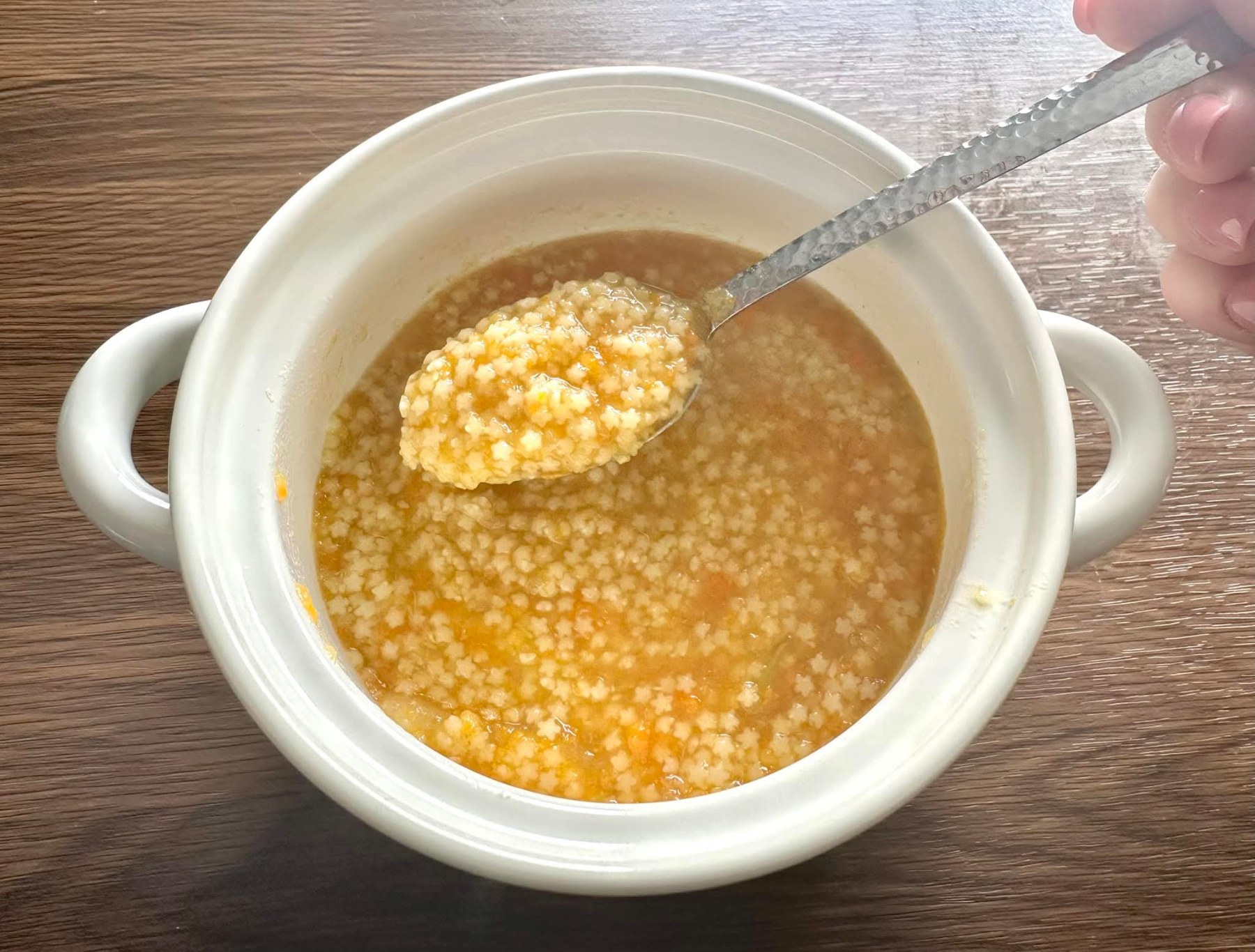
Pastina in brodo is one of the most comforting dishes in Italian home cooking: tiny star-shaped pasta simmered gently in a fragrant, golden broth flavored with a little carrot, onion and celery. If you are looking for a cozy Italian star pasta soup that comes together in about 25 minutes, this is the recipe for you. It is the soup many Italian families make for children, for someone feeling under the weather, or simply for a quiet weeknight supper.
What makes this dish work so well is its simplicity. A soffritto of finely minced vegetables builds a gentle base of flavor, the broth carries it all, and the pastina cooks right in the pot, releasing a little starch that gives the soup a silky, lightly thickened body. The recipe serves four, needs only about 10 minutes of prep and 15 minutes of cooking, and uses pantry staples you probably already have on hand.
Why you’ll love this Italian star pasta soup
- It is ready in about 25 minutes, making it one of the fastest homemade soups you can prepare on a busy evening.
- It uses only a handful of inexpensive ingredients, so you can make a satisfying pot of soup without a special shopping trip.
- The tiny stelline pasta is fun to eat, especially for children, and cooks to a soft, spoonable texture.
- It is endlessly adaptable, so you can make it lighter, richer or more herbaceous depending on your mood.
- It is a gentle, mild soup that suits all ages and fits easily into a larger Italian meal as a first course.
Ingredients
- 1 tablespoon olive oil or butter
- 1 small carrot, finely grated or minced
- 1/4 small onion, finely minced
- 1 small celery stalk, finely minced
- 4 cups chicken or vegetable broth
- 1/2 cup stelline (star) pastina
- 1/2 teaspoon salt, to taste
- Freshly ground black pepper
- Grated Parmigiano-Reggiano, to serve (optional)
Serves 4. Prep time: 10 minutes. Cook time: 15 minutes.
The broth is the heart of this soup, so choose one you would happily drink on its own. A good homemade chicken stock gives the richest result, but a quality low-sodium store-bought broth works well, and you can adjust the salt at the end. For the vegetables, finely mincing or grating the carrot, onion and celery is important, because it lets them melt into the broth and gives the soup a smooth, cohesive flavor. Look for stelline, the tiny star shapes sold as pastina in most supermarkets, and choose a good-quality Parmigiano-Reggiano if you plan to add cheese, since its nutty flavor makes a real difference.
Instructions
- Heat the fat. Warm the olive oil or butter in a medium pot over medium heat.
- Soften the vegetables. Add the carrot, onion and celery and cook gently for 4-5 minutes, stirring occasionally, until softened but not browned.
- Bring the broth to a boil. Pour in the broth and raise the heat until the liquid comes to a boil.
- Add the pasta. Stir in the stelline and lower the heat to a gentle simmer so the pasta cooks without breaking apart.
- Simmer until tender. Cook for 6-8 minutes, stirring often, until the pasta is very tender and the soup has slightly thickened.
- Season to taste. Add the salt and a few grinds of black pepper, then add a little more broth if you prefer a thinner soup.
- Serve. Ladle into warm bowls, top with grated Parmigiano if desired, and serve hot.
Tips for the best results
- Mince the vegetables as finely as you can, since larger pieces will not soften in the short cooking time and can make the soup feel rustic rather than delicate.
- Cook the vegetables slowly over gentle heat so they become sweet and soft without taking on color, which keeps the broth light and clean.
- Taste the broth before adding salt, because store-bought broths vary widely in sodium and the Parmesan will add more salt at the table.
- Keep the simmer gentle once the pasta goes in; a hard boil can break up the tiny stars and make the soup cloudy.
- Stir the pot every so often so the pastina does not stick to the bottom, especially in the last few minutes when the soup thickens.
- Serve immediately, because pastina keeps absorbing liquid and will become very thick if left to sit in the pot.
Variations and substitutions
- Richer version: Stir in a beaten egg at the very end, off the heat, for a silky, slightly custardy texture that is traditional in many Italian homes.
- Herb-forward version: Add a sprig of parsley or a bay leaf to the broth while it simmers, then remove it before serving for a fresher flavor.
- Vegetarian version: Use a good-quality vegetable broth and check that your Parmigiano is made with vegetarian rennet, or use a plant-based hard cheese instead.
- Different pasta: Any small pasta shape such as acini di pepe, ditalini or orzo can take the place of stelline, though cooking times may vary slightly.
- Extra vegetables: Finely diced zucchini or a handful of spinach stirred in during the last minute adds color and a gentle green note.
Serving suggestions
Pastina in brodo is traditionally served as a first course or as a light meal on its own, often with a warm slice of crusty Italian bread for dipping. It pairs nicely with a simple green salad dressed with lemon and olive oil, which adds brightness to the mellow soup. For a fuller meal, serve it before a plate of roasted chicken or a light frittata. A final drizzle of good olive oil and a generous snowfall of freshly grated Parmigiano turn a simple bowl into something special, and a few cracks of black pepper add a welcome bite.
Storage and reheating
Store leftover soup in an airtight container in the refrigerator for up to three days. Because pastina keeps absorbing liquid as it sits, the soup will become quite thick overnight. When reheating, warm it gently over low heat and stir in a splash of hot broth or water until it reaches your preferred consistency. Avoid boiling it hard, which can make the pasta mushy. The soup does not freeze especially well because the pasta softens too much, so it is best made fresh and eaten within a day or two.
Frequently asked questions
What is pastina in brodo?
Pastina in brodo is a classic Italian soup made with tiny pasta shapes cooked in a flavorful broth, usually with a small amount of finely minced carrot, onion and celery. It is considered a comfort food in Italy and is often one of the first solid foods given to young children. The dish is valued for being gentle, warm and quick to make.
What kind of pasta is best for this soup?
Stelline, the small star shapes sold as pastina, are the most traditional and most fun choice. Other tiny shapes such as acini di pepe, ditalini or orzo also work well. Choose a small pasta so it cooks through in about the same time as the vegetables.
Can I make pastina in brodo ahead of time?
It is best made fresh, because the pasta continues to absorb liquid and thickens considerably as it rests. If you need to prepare it in advance, cook the broth and vegetables ahead, then add the pasta and cook it shortly before serving. Leftovers can be reheated with a splash of extra broth.
Is pastina in brodo good for a light meal?
Yes, this soup is light, low in fuss and gentle on the palate, which is why it is so often served as a simple supper or a first course before a larger Italian meal. Adding a green salad or a piece of bread turns it into a satisfying lunch or dinner.
Can I use homemade broth?
Homemade chicken or vegetable broth is ideal and gives the soup a deeper, more natural flavor. If you use homemade broth, taste it before adding salt, since it may be less salty than store-bought versions.
Final thoughts
Pastina in brodo proves that the simplest dishes are often the most satisfying. With a few minced vegetables, a good broth and a handful of tiny star pasta, you can make a warm, comforting bowl in about 25 minutes. Try this recipe on your next quiet evening, and enjoy how something so humble can feel so much like home.