
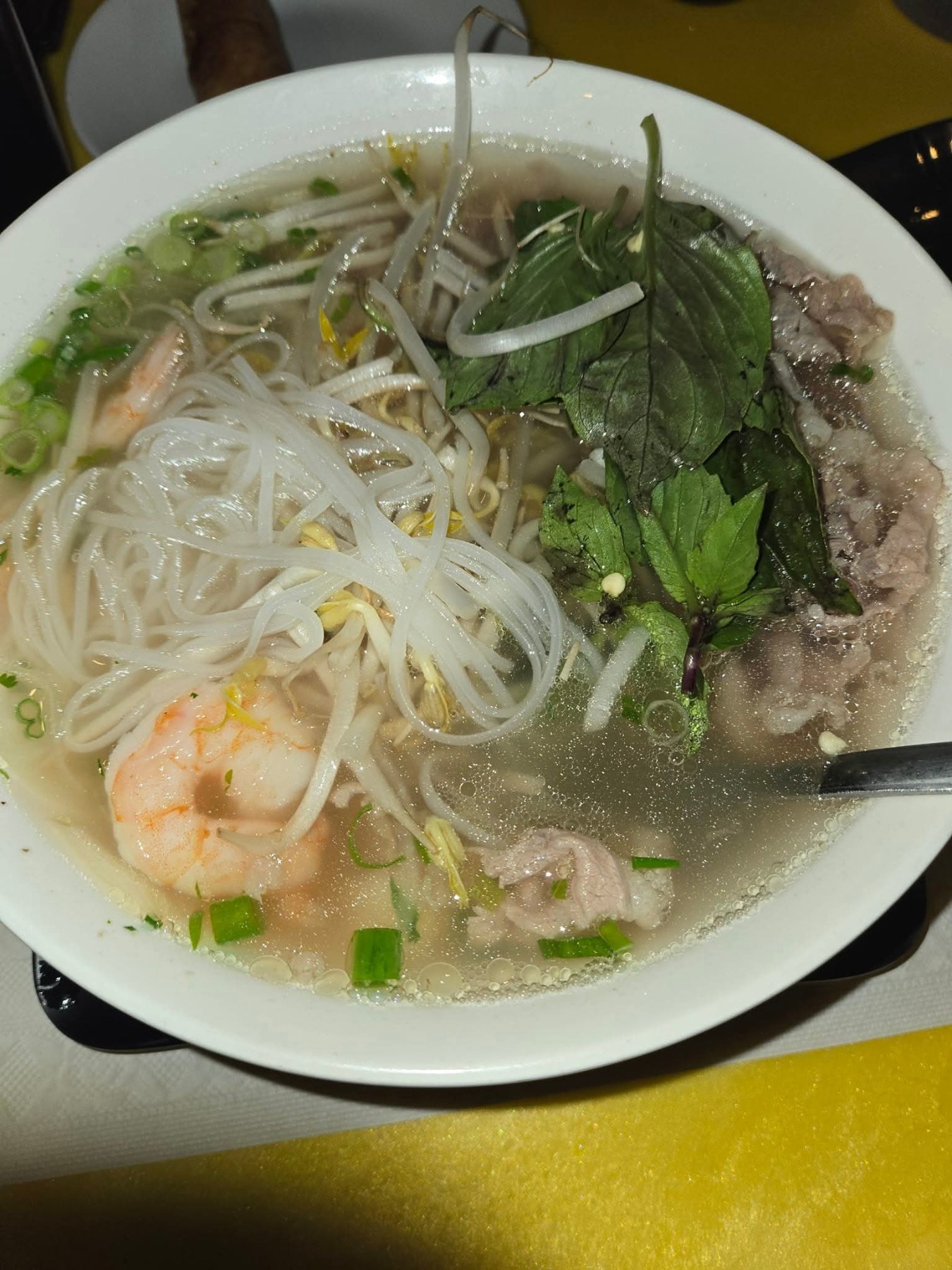
Pho with shrimp and rare beef, known in Vietnamese as Phở Tôm Tái, is a bowl of aromatic beef broth ladled over silky rice noodles, paper-thin raw beef and sweet, tender shrimp. The beef cooks gently in the boiling broth right at the table, so every bite arrives warm, soft and fresh. It is a wonderful dish for weekend cooks who enjoy a slow-simmered broth and want to bring a little Hanoi-style street food into their own kitchen.
This recipe makes four generous servings and takes about 3 hours and 20 minutes in total, including roughly 30 minutes of preparation and 4 hours of gentle simmering. Most of the time is hands-off, so the broth can quietly develop its depth while you prepare the garnishes. The result is a clear, deeply flavored pho that tastes like it came from a family kitchen.
Why you’ll love this pho with shrimp and rare beef
- The charred onion and ginger give the broth a smoky, rounded sweetness that you simply cannot get from raw aromatics.
- Shrimp and beef together offer two textures and flavors in one bowl, making the dish feel special without being complicated.
- Thin slices of raw beef cook instantly in the boiling broth, so the meat stays tender and never chewy.
- The fresh garnishes of Thai basil, bean sprouts and lime let everyone customize each bowl to their own taste.
- Once the broth is made, assembling a bowl takes only minutes, which makes it a satisfying dish for sharing with friends.
Ingredients
- 2 lbs beef bones (knuckle and marrow bones)
- 1 lb beef brisket or chuck (optional, for the broth)
- 1 large yellow onion, halved and charred
- 1 piece ginger (about 4 inches), halved and charred
- 3 star anise
- 1 cinnamon stick
- 4 cloves
- 1 tsp coriander seeds
- 1 tbsp fish sauce, plus more to taste
- 1 tbsp rock sugar or white sugar
- 2 tsp salt
- 14 oz dried flat rice noodles (bánh phở)
- 8 oz beef sirloin or eye of round, sliced paper-thin
- 8 large shrimp, peeled and deveined
- 2 cups bean sprouts
- 1 bunch Thai basil
- 2 green onions, thinly sliced
- 1 lime, cut into wedges
- Hoisin sauce and sriracha for serving
Good pho starts with good bones. Knuckle and marrow bones release collagen and richness into the broth, while the optional brisket adds meaty flavor you can enjoy as a snack or slice into the bowl. For the beef topping, choose sirloin or eye of round that is very fresh and firm, because it is easier to slice paper-thin when it is partly frozen. Look for shrimp that are firm and translucent, and pick Thai basil with bright green leaves and purple-tinged stems for the best aroma.
Instructions
- Parboil the bones. Place the beef bones in a large pot of boiling water and cook for 10 minutes. Drain them and rinse each bone well under running water to remove the scum and impurities that would cloud the broth.
- Char the aromatics. Hold the onion halves and ginger over an open flame or set them under a hot broiler until they are blackened in spots. This step adds a smoky sweetness that gives pho its signature flavor.
- Toast the spices. In a dry pan over medium heat, toast the star anise, cinnamon stick, cloves and coriander seeds for a few minutes until they are fragrant. Stir often so they do not scorch.
- Simmer the broth. Return the cleaned bones to a clean pot and add about 4 quarts of water, the charred onion and ginger, and the toasted spices. Bring to a simmer and cook gently for 3 to 6 hours, skimming off the foam that rises to the surface.
- Season and strain. Stir in the fish sauce, sugar and salt, then strain the broth through a fine sieve to remove the solids. Keep the broth at a rolling simmer until you are ready to serve.
- Soak and cook the noodles. Soak the dried rice noodles in warm water for about 30 minutes until pliable. Cook them in boiling water for 1 to 2 minutes until tender, then drain well.
- Poach the shrimp. Add the peeled shrimp to the simmering broth and poach for about 2 minutes, until they turn pink and are just cooked through. Remove them with a slotted spoon.
- Assemble the bowls. Divide the cooked noodles among large bowls. Arrange the raw paper-thin beef slices and the poached shrimp on top of the noodles.
- Add the boiling broth. Ladle the boiling broth generously over the top of each bowl. The heat will cook the beef to a tender rare-to-medium doneness in seconds.
- Garnish and serve. Scatter sliced green onion over each bowl and serve immediately with bean sprouts, Thai basil, lime wedges, hoisin and sriracha on the side.
Tips for the best results
- Slice the beef as thinly as possible, or freeze it for 20 to 30 minutes first, so it firms up and slices cleanly.
- Keep the broth at a rolling boil when you ladle it over the raw ingredients, since a lukewarm broth will not cook the beef properly.
- Skim the broth patiently during the first hour of simmering to keep it clear and clean-tasting.
- Season gradually and taste as you go, adding more fish sauce or salt only after the broth has reduced slightly.
- Avoid overcooking the noodles, which can become mushy in the hot broth; rinse them briefly in cold water after draining if they stick together.
- If you prefer tender shrimp, add them raw to the bowl and let the hot broth cook them, or poach them briefly as described above.
Variations and substitutions
- Chicken pho: Replace the beef bones with chicken bones and a whole chicken for a lighter broth, and use sliced chicken breast in place of the raw beef.
- Vegetarian version: Simmer dried shiitake mushrooms, daikon radish and the charred aromatics in water, then add tofu and extra vegetables for a fragrant meat-free bowl.
- Different beef cuts: Use flank steak or tenderloin in place of sirloin if that is what you have, as long as the slices are very thin.
- Seafood boost: Add squid or scallops alongside the shrimp for a richer seafood bowl with more variety in texture.
- Spice level: Add sliced fresh chilies or a spoonful of chili oil to the bowl for extra heat if you enjoy a spicier broth.
Serving suggestions
Serve this pho as a complete, satisfying meal in large deep bowls so the noodles have room to soak up the broth. Set out the bean sprouts, Thai basil, lime wedges, hoisin and sriracha in small dishes so everyone can add their own touches. A simple cucumber salad or a plate of fresh herbs makes a lovely light side, and hot jasmine tea pairs nicely with the fragrant broth. Because the beef is served raw and cooks in the bowl, guests should eat promptly after the broth is ladled, while everything is still steaming hot.
Storage and reheating
Let any leftover broth cool quickly, then refrigerate it in an airtight container for up to three days or freeze it for up to three months. Store the cooked noodles, shrimp and fresh herbs separately, since they lose their texture when stored together with the broth. To reheat, bring the broth to a full rolling boil on the stove, then assemble fresh bowls with newly cooked noodles and freshly sliced raw beef. Leftover cooked brisket can be sliced and added to a bowl for a quick, flavorful topping.
Frequently asked questions
Can I make pho broth ahead of time?
Yes, pho broth tastes even better after resting, because the flavors have time to meld together. Make it a day ahead, chill it so the fat solidifies on top, and skim off the fat before reheating. The broth also freezes well, making it an excellent make-ahead base for quick weeknight bowls.
Is it safe to eat raw beef in pho?
The raw beef is cooked by the boiling broth when it is ladled over the bowl, which is how traditional phở tái is served. Choose fresh, high-quality beef from a trusted butcher and slice it just before serving. If you are concerned about raw meat, you can let the beef sit in the hot broth for a little longer or substitute cooked beef.
Why is my pho broth cloudy?
Cloudiness usually comes from boiling the broth too hard or from not parboiling and rinsing the bones first. Keep the broth at a gentle simmer and skim the foam regularly during cooking. Straining through a fine sieve at the end will also help produce a clearer, more refined broth.
Can I use beef stock instead of making broth from bones?
You can use good-quality beef stock to save time, though the result will be less rich than a broth simmered from bones. Warm the stock with the charred onion, ginger and toasted spices for about 30 minutes to add aromatic depth. Season with fish sauce, sugar and salt to taste before serving.
What kind of noodles should I use for pho?
Dried flat rice noodles, often labeled bánh phở, are the traditional choice for this dish. Look for noodles that are white, translucent and about the width of linguine. Soak them until pliable and cook them just until tender so they hold their shape in the hot broth.
Final thoughts
Pho with shrimp and rare beef is a rewarding dish that brings together a fragrant, slow-simmered broth, delicate noodles and fresh garnishes in every bowl. Once you have made the broth a few times, you will find it easy to adjust the spices and toppings to suit your taste. Gather your ingredients, set aside an afternoon, and try this recipe at home; your kitchen will smell wonderful, and your family or friends will be glad you did.