
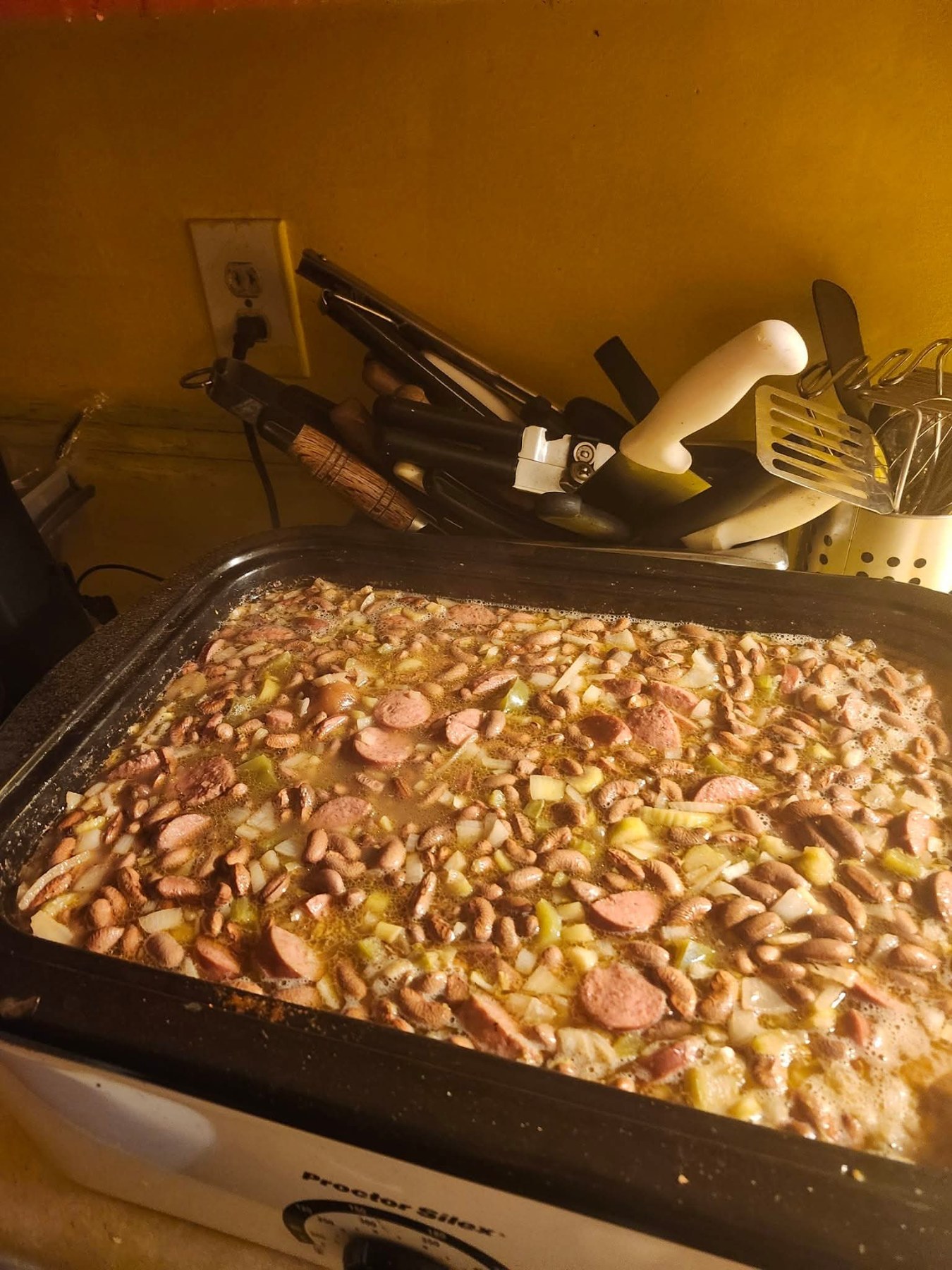
Pinto beans with smoked sausage slow-cooked in a roaster oven is one of the most comforting, budget-friendly dishes you can make for a crowd. Tender pinto beans simmer for hours with savory smoked sausage, the holy trinity of onion, bell pepper and celery, and a handful of simple seasonings until the broth turns creamy and rich. It is a classic bean stew with deep Southern roots, and it is perfect for family dinners, potlucks, game days or any time you want a pot of food that feeds a big group.
This recipe is designed for a large roaster oven, which makes it ideal for 12 to 16 servings. The active prep takes about 20 minutes, plus an optional overnight soak, and the beans then cook low and slow for 4 to 6 hours. Because the roaster holds steady heat, you can set it, stir it now and then, and let it do the work. The result is a pot of beans that tastes like it has been simmering all day, because it has.
Why you’ll love this pinto beans with smoked sausage recipe
- It is a true one-pot meal that combines protein, vegetables and starch in a single dish, so there is very little to juggle.
- The roaster oven keeps the heat gentle and even, which means the beans cook evenly without scorching on the bottom of the pan.
- It makes a generous batch that stretches a modest grocery budget, and the leftovers taste even better the next day.
- The smoked sausage adds built-in flavor, so you do not need a long list of seasonings to get a deep, satisfying taste.
- It is easy to adjust for a smaller group or to change the heat level, making it a flexible recipe you will return to again and again.
Ingredients
- 2 lb dry pinto beans, rinsed and sorted
- 1.5 lb smoked sausage (kielbasa or Andouille), sliced into coins
- 2 large yellow onions, diced
- 2 green bell peppers, diced
- 3 stalks celery, diced
- 6 cloves garlic, minced
- 2 tbsp bacon grease or vegetable oil
- 10-12 cups water or chicken broth
- 2 tsp salt, adjusted to taste
- 1 tsp black pepper
- 1 tsp smoked paprika
- 1 tsp garlic powder
- 1 bay leaf
- Hot sauce and cooked rice or cornbread, to serve
Choosing good ingredients makes a noticeable difference here. Look for dry pinto beans that are uniform in color and free of cracked skins or small stones, and always sort and rinse them before cooking. For the sausage, kielbasa gives a mild, garlicky flavor that suits a family crowd, while Andouille brings more heat and a bold smoky punch for those who like a little kick. Bacon grease adds an extra layer of richness that vegetable oil cannot match, but either works well. Use chicken broth instead of water if you want a fuller, more savory base, and taste before adding the full amount of salt, since smoked sausage is often quite salty on its own.
Instructions
- Sort and soak the beans. Sort and rinse the beans to remove any debris, then soak them overnight in cold water if you want a shorter cooking time. Drain the beans before adding them to the roaster.
- Preheat the roaster. Preheat the roaster oven to 325°F, or set it to a low, steady heat if your model has no temperature dial. Add the oil or bacon grease to the pan and let it warm for a minute.
- Add the vegetables and beans. Add the beans, diced onion, green bell pepper, celery and minced garlic to the roaster pan. Stir briefly so the vegetables are distributed evenly among the beans.
- Add the sausage and seasonings. Stir in the sliced smoked sausage, black pepper, smoked paprika, garlic powder and the bay leaf. Pour in enough water or broth to cover the beans by about 2 inches.
- Cook low and slow. Cover the roaster and cook for 4 to 6 hours, stirring occasionally. Unsoaked beans may need the longer end of that range. Add hot water as needed so the beans stay fully submerged the whole time.
- Create a creamy broth. When the beans are tender and the broth has thickened slightly, use the back of a spoon to mash a few beans against the side of the pan. This releases starch and gives the stew a naturally creamy body.
- Season and serve. Taste the beans and season with salt and pepper as needed. Remove the bay leaf, then serve the beans hot over rice or alongside a warm pan of cornbread, with hot sauce on the side.
Tips for the best results
- Keep the beans submerged at all times. If the liquid drops below the beans, add hot water rather than cold, which can keep the cooking process steady and even.
- Hold off on salt until the beans are nearly tender if you did not soak them, since salt added too early can toughen the skins and slow softening.
- Mash some beans against the pot for a creamy texture, but do not mash them all, or the stew will turn pasty instead of silky.
- Stir every hour or so to prevent sticking at the bottom, especially in the final stretch when the liquid has reduced.
- Taste the sausage before seasoning, since different brands vary a lot in salt and smokiness, and adjust the salt accordingly.
- Let the pot rest for 10 to 15 minutes before serving so the broth thickens a little more and the flavors settle.
Variations and substitutions
- Use a different smoked meat: Ham hocks or smoked turkey wings give a deeper, more traditional flavor and add body to the broth.
- Make it spicier: Add a diced jalapeño or a pinch of cayenne pepper, and choose Andouille for the sausage to bring more heat.
- Go vegetarian: Replace the sausage with smoked paprika, a splash of liquid smoke and extra vegetable broth, or use a plant-based smoked sausage.
- Swap the beans: Kidney beans or great northern beans work well, though they may cook a little faster or slower, so check them early.
- Add greens: Stir in chopped collard greens or kale during the last hour for extra color and nutrition in the pot.
Serving suggestions
These beans are wonderful served over a generous scoop of fluffy white rice, which soaks up the creamy broth and makes the dish feel like a complete meal. Cornbread is the classic partner, and a slice of warm, slightly sweet cornbread on the side is perfect for mopping up every last spoonful. For a lighter plate, pair the beans with a crisp green salad dressed with vinegar or serve them with sliced raw onion and pickled jalapeños. Set out bottles of hot sauce so everyone can adjust the heat to their taste, and offer shredded cheese or chopped green onions as optional toppings for a fresh finish.
Storage and reheating
Let the beans cool to room temperature, then transfer them to airtight containers and refrigerate for up to 4 days. For longer storage, portion the beans into freezer-safe containers or bags, leaving a little headspace, and freeze for up to 3 months. To reheat, warm the beans gently in a saucepan over medium-low heat, adding a splash of water or broth if they have thickened too much. Stir occasionally until heated through, and taste again for salt before serving, since flavors can become more concentrated after a day or two.
Frequently asked questions
Do I need to soak pinto beans before cooking them?
Soaking is optional but helpful. An overnight soak shortens the cooking time and helps the beans cook more evenly, while unsoaked beans will simply need a longer simmer in the roaster. Either way, sort and rinse the beans first to remove any debris before you begin.
Can I cook these beans in a slow cooker instead of a roaster oven?
Yes, a large slow cooker works well for this recipe. Follow the same steps, keep the beans fully covered with liquid, and cook on low for 6 to 8 hours or until tender. Check the liquid level now and then and add hot water as needed.
Why are my pinto beans still hard after several hours?
Older dry beans can take longer to soften, and acidic ingredients or salt added too early can slow the process. Keep cooking and add hot water as needed, and wait to add salt until the beans are nearly tender if you have not soaked them.
What is the best sausage to use in pinto beans?
Kielbasa is the most popular choice because it is mild, garlicky and widely available. Andouille gives a spicier, more intensely smoky flavor, so choose it if you enjoy a bit of heat.
How do I thicken the broth without adding flour or cornstarch?
Mash a portion of the cooked beans against the side of the pot with a spoon. The starch released from the beans naturally thickens the broth into a creamy, rich consistency without any extra thickener.
Final thoughts
Pinto beans with smoked sausage slow-cooked in a roaster oven is a simple, generous dish that rewards a little patience with deep flavor and a comforting, creamy texture. It feeds a crowd affordably, fills the kitchen with a wonderful aroma, and tastes even better as leftovers. We hope you will try this recipe for your next family dinner or gathering, and feel free to make it your own with the variations above. Happy cooking!