
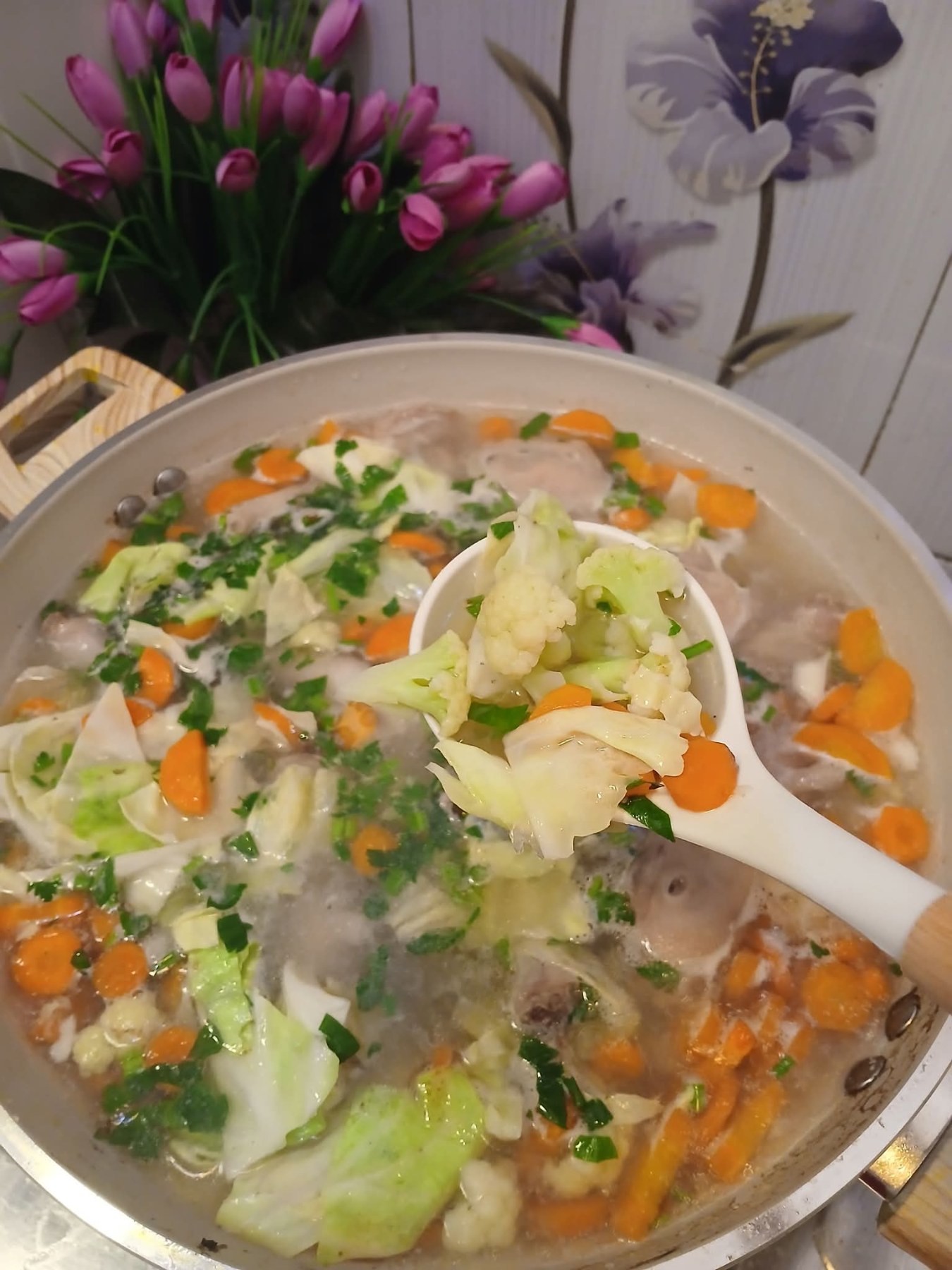
Pork Nilaga-Style Vegetable Soup is a classic Filipino comfort dish that combines tender pork with a variety of fresh vegetables simmered in a clear, flavorful broth. This hearty soup is perfect for family dinners, especially on cool or rainy days when you crave something warm, wholesome, and deeply satisfying. It offers a beautiful balance of meaty richness and fresh vegetable textures, making it a beloved staple in Filipino households and a great introduction to traditional Filipino cooking for beginners.
With a prep time of just 15 minutes and a cook time of about 1 hour and 10 minutes, this recipe yields 4 to 6 generous servings of rich, aromatic soup. The secret to its comforting flavor lies in slowly simmering bone-in pork ribs or neck pieces until meltingly tender, while layering in fresh carrots, cabbage, and cauliflower to add vibrant color and subtle sweetness. This method ensures a broth that is both nourishing and deeply flavorful, perfect for sharing with loved ones.
Why you’ll love this Pork Nilaga-Style Vegetable Soup
- This soup provides a delicious harmony of tender pork and fresh, nutritious vegetables in every spoonful, making it both satisfying and wholesome.
- The slow simmering technique gently extracts rich flavors from the pork bones and meat, resulting in a comforting broth that warms you from the inside out.
- It’s a flexible recipe that can be customized with different vegetables or seasonings, allowing you to tailor it to your personal taste or seasonal produce.
- Ideal for family meals, it serves 4 to 6 people, making it perfect for sharing and gatherings without requiring complex preparation.
- The recipe uses simple, everyday ingredients and straightforward cooking steps, making it accessible and rewarding for cooks at any skill level.
Ingredients
- 2 lb bone-in pork ribs or pork neck pieces
- 10 cups water
- 1 medium onion, quartered
- 4 cloves garlic, smashed
- 1 tbsp whole black peppercorns
- 1 tbsp fish sauce or 2 tsp salt, plus more to taste
- 3 medium carrots, sliced into rounds
- 1/2 small green cabbage, cut into rough squares
- 1 small head cauliflower, cut into florets
- 2 tbsp chopped parsley or scallions
- 1 tsp ground black pepper
Optional garnish: additional chopped scallions or freshly ground black pepper for serving.
The key ingredients in this soup include bone-in pork ribs or neck pieces, which contribute essential collagen and flavor to create a rich, silky broth. Selecting fresh, firm pork with good marbling will ensure tenderness and depth of taste. The vegetables—carrots, green cabbage, and cauliflower—add color, texture, and subtle sweetness, balancing the savory pork. When choosing vegetables, look for crisp, unblemished produce to maintain their shape and freshness through cooking. The fish sauce or salt provides the necessary umami seasoning, enhancing the natural flavors without overpowering the dish.
Instructions
- Combine main ingredients: Place the pork ribs or neck pieces, water, quartered onion, smashed garlic, and whole black peppercorns into a large pot.
- Bring to a boil and skim: Heat the pot over medium-high heat until it boils, then skim off any foam or impurities that rise to the surface to keep the broth clear.
- Simmer gently: Reduce the heat to low, partially cover the pot, and simmer for 45 to 60 minutes until the pork is tender and the broth is flavorful.
- Season the broth: Add fish sauce or salt to taste, stirring gently to distribute the seasoning.
- Add carrots: Introduce the sliced carrots and simmer for 8 to 10 minutes until they begin to soften but still retain some bite.
- Add cabbage and cauliflower: Add the chopped cabbage and cauliflower florets, cooking for another 4 to 6 minutes until tender but not mushy.
- Adjust seasoning: Taste the soup and add more salt or fish sauce and ground black pepper as needed.
- Finish with herbs: Turn off the heat and stir in the chopped parsley or scallions for a fresh, vibrant finish.
- Serve hot: Ladle the soup with broth, vegetables, and meat into bowls and enjoy immediately.
Tips for the best results
- Use bone-in pork cuts: Bones release gelatin and marrow during simmering, enriching the broth with body and a velvety texture, while also imparting deeper flavor to the meat.
- Skim foam and impurities early: Removing scum as it forms keeps the broth clear and prevents off-flavors, resulting in a cleaner, more appealing soup.
- Simmer gently: Maintaining a low simmer avoids toughening the pork fibers and allows collagen to slowly break down, producing tender meat and a flavorful broth.
- Don’t overcook vegetables: Adding vegetables at the right time and cooking just until tender preserves their texture, color, and natural sweetness, preventing a mushy outcome.
- Season gradually and taste often: Carefully adjusting salt or fish sauce ensures the broth is balanced and not overly salty, allowing the natural flavors to shine.
- Add fresh herbs last: Stirring in parsley or scallions at the end preserves their bright color and fresh aroma, enhancing the overall flavor profile.
Variations and substitutions
- Pork belly or shoulder: These cuts offer different textures, with belly providing richness and shoulder a slightly leaner option, both lending great flavor to the broth.
- Potatoes or green beans: Adding these vegetables increases heartiness and introduces new textures and flavors that complement the existing ingredients.
- Napa cabbage instead of green cabbage: Napa cabbage has a milder, sweeter flavor and softer texture, which some prefer for a more delicate soup.
- Soy sauce in place of fish sauce: For a different umami note and less pungent aroma, soy sauce can substitute fish sauce, but adjust saltiness carefully.
- Corn cobs: Adding chunks of corn introduces a subtle sweetness that balances the savory broth beautifully.
Serving suggestions
Pork Nilaga-Style Vegetable Soup is traditionally served piping hot, accompanied by steamed white rice that soaks up the flavorful broth perfectly. For an authentic touch, offer a small side of soy sauce mixed with calamansi or lemon wedges, which adds a bright, tangy contrast that cuts through the richness. Pickled vegetables or a crisp, light salad also make excellent accompaniments, providing a refreshing counterpoint to the warm, hearty soup. This combination creates a balanced, satisfying meal that’s both comforting and vibrant.
Storage and reheating
Store any leftover soup in an airtight container in the refrigerator for up to 3 days to maintain freshness. When reheating, warm the soup gently over medium heat, stirring occasionally to ensure even heating without boiling aggressively, which can toughen the meat and overcook the vegetables. For longer storage, freeze the soup in suitable containers for up to 2 months. When ready to eat, thaw it overnight in the refrigerator before reheating gently to preserve texture and flavor.
Frequently asked questions
What cut of pork is best for Nilaga soup?
Bone-in pork ribs or pork neck pieces are the best choices because they release flavorful collagen and marrow into the broth, enriching its taste and texture. These cuts also remain tender through slow simmering without falling apart, giving you succulent meat and a hearty broth.
Can I use chicken instead of pork?
Yes, chicken is a lighter alternative that works well. Use bone-in chicken pieces like thighs or drumsticks to develop flavor and maintain tenderness. Adjust cooking time to about 30 to 40 minutes, as chicken cooks faster than pork, ensuring it remains juicy without drying out.
How do I keep the vegetables from becoming mushy?
To preserve vegetable texture, add them toward the end of the cooking process and simmer just until tender. Overcooking causes vegetables to break down and lose their pleasant bite, so timing is crucial for a soup with vibrant, slightly crisp vegetables.
Is fish sauce necessary for authentic flavor?
Fish sauce is traditional and adds a distinctive umami depth typical in Filipino cuisine, enhancing the broth’s complexity. However, if you prefer, you can substitute with salt or soy sauce. Just adjust the seasoning carefully to maintain a balanced flavor without overpowering the natural tastes of the pork and vegetables.
Can I prepare this soup in a slow cooker?
Absolutely. Using a slow cooker allows the pork to simmer gently over several hours, intensifying the broth’s flavor. Cook on low for 6 to 8 hours, then add the vegetables during the last 30 minutes to prevent them from becoming too soft. This method is convenient and yields tender meat with rich broth.
Final thoughts
Pork Nilaga-Style Vegetable Soup is a timeless Filipino dish that combines simplicity with deep, comforting flavors. Its straightforward recipe and wholesome ingredients make it a perfect choice for cooks of all levels wanting to create a nourishing meal. Try this recipe to experience the warmth and heartiness of classic Filipino cooking, and enjoy every spoonful of this delicious, soul-satisfying soup.