
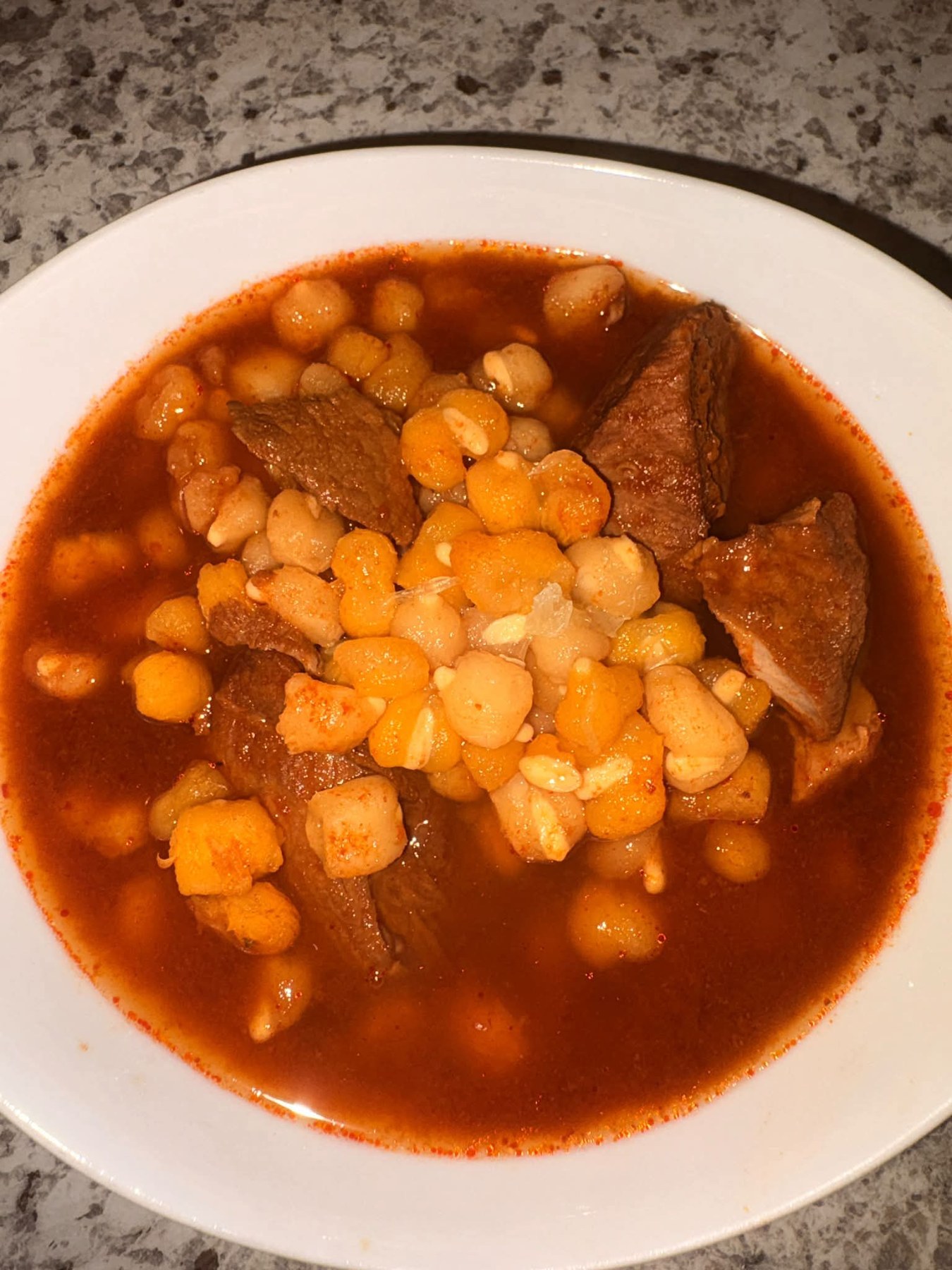
Pozole Rojo de Puerco is a classic Mexican soup that features tender pork simmered in a rich, flavorful red chile broth with hominy. This traditional dish is perfect for family gatherings or special occasions, offering a comforting and hearty meal that warms both body and soul. Whether you’re new to Mexican cuisine or a longtime fan, this recipe is straightforward and rewarding to prepare.
With a total cook time of about 2 hours and 40 minutes, including prep and simmering, this recipe serves 6 to 8 people, making it ideal for sharing. The combination of dried guajillo, ancho, and árbol chiles creates a deep, smoky flavor that defines Pozole Rojo, while the pork shoulder and ribs provide tender, juicy meat. Let’s dive into how to make this satisfying soup step by step.
Why you’ll love this Pozole Rojo de Puerco recipe
- It delivers authentic Mexican flavors with a perfect balance of smoky, savory, and slightly spicy notes.
- The tender pork and hominy combination creates a hearty texture that satisfies hunger and comforts the soul.
- The recipe is flexible and approachable, suitable for home cooks of all skill levels.
- It’s a great dish for gatherings, feeding 6 to 8 people with ease.
- Homemade pozole broth made from dried chiles enhances the depth and richness unmatched by store-bought versions.
Ingredients
- 2 lb pork shoulder, cut in 1 1/2-inch chunks
- 1 lb pork ribs or additional shoulder chunks
- 1 tbsp kosher salt, plus more to taste
- 1/2 white onion
- 4 garlic cloves
- 10 cups water or light pork/chicken stock
- 2 cans (25 oz each) hominy, drained and rinsed
- 4 dried guajillo chiles, stemmed and seeded
- 3 dried ancho chiles, stemmed and seeded
- 2 dried chiles de árbol
- 1 tsp dried Mexican oregano
- 1/2 tsp ground cumin
- 1 tbsp neutral oil
- Freshly ground black pepper to taste
- Optional for serving: chopped onion, shredded cabbage, radish, lime wedges, oregano
This recipe uses traditional ingredients essential for authentic Pozole Rojo de Puerco. Pork shoulder and ribs provide a rich, tender meat base, while hominy adds a unique texture and mild flavor that complements the savory broth. Dried guajillo, ancho, and chiles de árbol are key to creating the deep red color and smoky, spicy complexity. When selecting chiles, look for vibrant, dry, and unblemished pods for the best flavor. Fresh garlic and onion enhance the broth’s aroma, and Mexican oregano adds a subtle herbal note.
Instructions
- Cook the pork: Place pork shoulder chunks, pork ribs, kosher salt, half the white onion, and garlic cloves into a large pot. Add 10 cups of water or light pork/chicken stock. Bring the mixture to a boil over high heat, skimming off any foam that rises to the surface to keep the broth clear.
- Simmer until tender: Reduce the heat to a gentle simmer and cook the pork until tender, about 1 1/2 to 2 hours. This slow cooking will create a flavorful base and tender meat.
- Prepare the chiles: While the pork cooks, toast guajillo, ancho, and chiles de árbol in a dry skillet over medium heat. Toast each side for 10 to 20 seconds until fragrant, being careful not to burn them.
- Soak the chiles: Transfer toasted chiles to a bowl and cover them with hot water. Let them soak for 15 minutes until softened.
- Make the chile puree: Drain the chiles, reserving about 1 cup of the soaking liquid. Blend the softened chiles with the soaking liquid, the remaining half onion, dried Mexican oregano, ground cumin, and a pinch of freshly ground black pepper until smooth. For a smoother broth, strain the puree through a fine sieve.
- Cook the chile sauce: Heat the neutral oil in a saucepan over medium heat. Add the chile puree and fry, stirring frequently, for 5 to 7 minutes until slightly thickened and the color deepens.
- Combine chile sauce and pork: Pour the chile sauce into the pot with the cooked pork. Stir well to combine.
- Add the hominy: Stir in the drained and rinsed hominy. Simmer the soup for another 20 to 30 minutes to allow the flavors to meld and the broth to turn a deep red.
- Season to taste: Taste the pozole and adjust salt and black pepper as desired.
- Serve: Ladle hot pozole into bowls and offer optional garnishes like chopped onion, shredded cabbage, sliced radish, lime wedges, and extra oregano for guests to customize their bowls.
Tips for the best results
- Use a good quality pork shoulder with some marbling for juicy, tender meat.
- Toast the dried chiles carefully to avoid bitterness; a quick toast is enough to release their aroma.
- Skim foam from the broth during boiling to keep it clear and flavorful.
- Simmer gently rather than boiling aggressively to achieve tender pork without toughening the meat.
- Soak chiles in hot water until fully softened to ensure a smooth puree.
- Adjust seasoning gradually, especially salt, to balance the rich flavors perfectly.
Variations and substitutions
- Substitute pork ribs with pork neck bones or a mix of pork cuts for varied texture and flavor.
- Use chicken instead of pork for a lighter version; cook chicken thighs similarly but reduce cooking time.
- Add dried chipotle chiles for a smoky, spicy twist on the broth.
- For a vegetarian option, omit pork and use vegetable stock with mushrooms to add umami.
- Include hominy from scratch by soaking dried hominy overnight and cooking it until tender, enhancing authenticity.
Serving suggestions
Pozole Rojo de Puerco is traditionally served hot in deep bowls with a variety of fresh garnishes to customize each serving. Offer chopped white onion, shredded cabbage, thinly sliced radishes, fresh lime wedges, and a sprinkle of oregano on the side. Warm corn or flour tortillas complement the dish perfectly, allowing guests to scoop up the meat and broth. This soup pairs well with a simple green salad or Mexican rice for a complete meal.
Storage and reheating
Store leftover pozole in an airtight container in the refrigerator for up to 3 days. The flavors often deepen after resting. To reheat, warm the soup gently on the stove over medium-low heat until heated through, stirring occasionally. If the broth thickens too much, add a splash of water or stock to loosen it. Pozole can also be frozen for up to 2 months; thaw overnight in the refrigerator before reheating.
Frequently asked questions
What is the difference between Pozole Rojo and other types of pozole?
Pozole Rojo uses red chiles like guajillo and ancho to create a vibrant red broth with smoky and spicy flavors. In contrast, Pozole Blanco is a white, clear broth without chiles, and Pozole Verde incorporates green tomatillos and green chiles for a fresh, tangy flavor.
Can I make pozole without dried chiles?
While dried chiles are essential for authentic flavor and color in Pozole Rojo, you can substitute with prepared red chile sauces or powders. However, the depth and smokiness will not be quite the same as using whole dried chiles toasted and blended fresh.
Is hominy the same as corn?
Hominy is dried corn kernels treated with an alkaline solution (nixtamalized) that makes them puff up and gives them a chewy texture and unique flavor. It’s different from regular corn and is a key ingredient in pozole.
Can I prepare pozole in a slow cooker?
Yes, you can cook the pork and broth in a slow cooker on low for 6 to 8 hours until the meat is tender. Add the chile sauce and hominy in the last 30 to 45 minutes to preserve their flavors.
What garnishes are traditional for Pozole Rojo?
Traditional garnishes include chopped white onion, shredded cabbage, sliced radishes, fresh lime wedges, and oregano. These add crunch, freshness, and acidity that balance the rich soup.
Final thoughts
Making Pozole Rojo de Puerco at home is a rewarding way to enjoy authentic Mexican cuisine. With its rich broth, tender pork, and flavorful chiles, this dish brings warmth and celebration to any table. Gather your ingredients and try this recipe for a memorable, comforting meal that’s perfect for sharing with family and friends.