
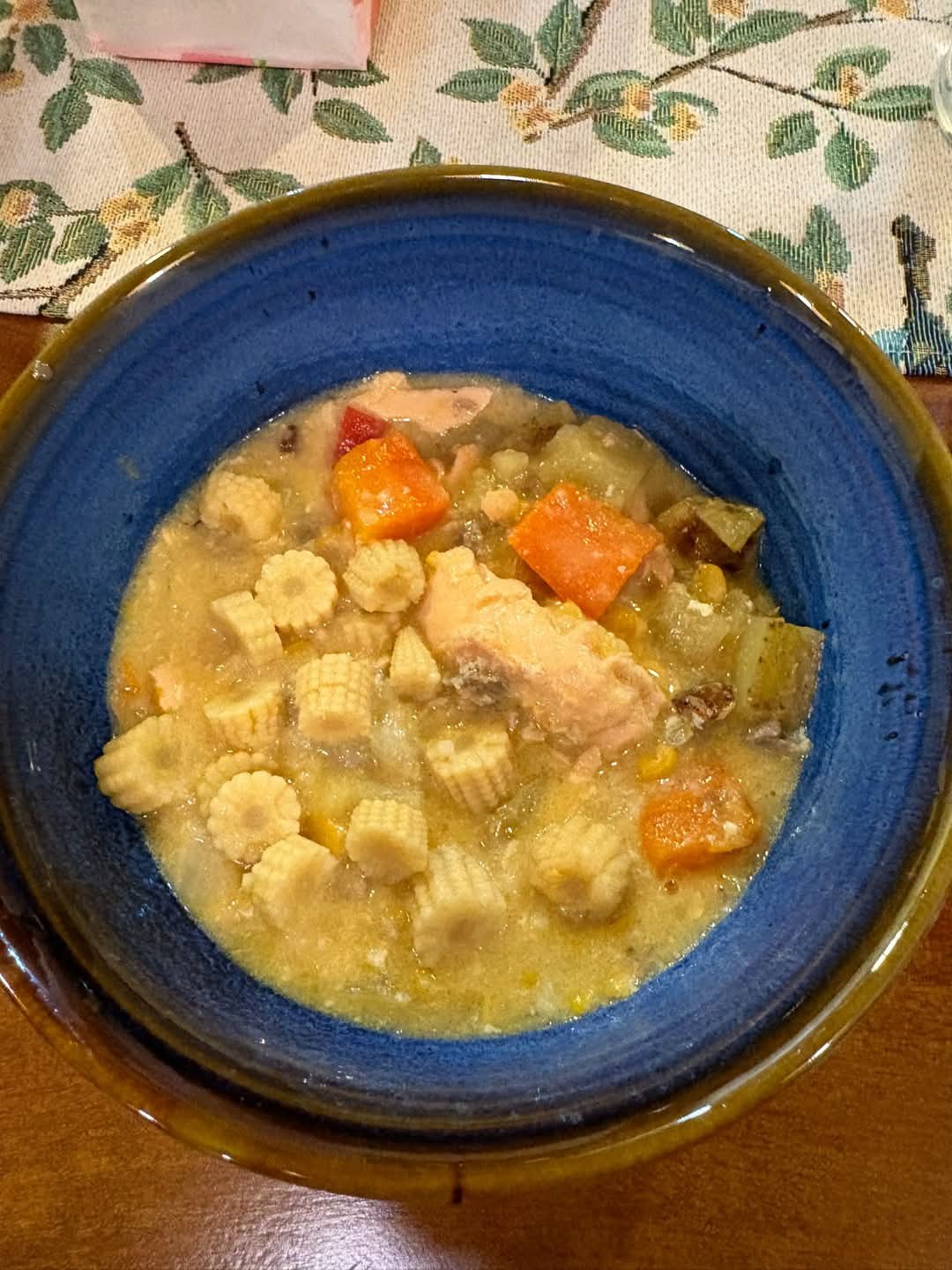
Salmon Chowder is a comforting, creamy soup that combines tender salmon chunks with fresh vegetables and a rich, velvety broth. This classic dish is perfect for anyone seeking a hearty meal with balanced flavors and satisfying textures. Whether you’re cooking for family or guests, this chowder offers warmth and nutrition in every spoonful, making it an ideal choice for cooler days or anytime you crave a filling, flavorful soup.
With just 15 minutes of preparation and about 30 minutes of cooking, this Salmon Chowder recipe is ideal for busy weeknights or leisurely weekend dinners. Its combination of creamy milk and cream with hearty potatoes, carrots, and baby corn makes it a wholesome and delicious soup that everyone will love. The straightforward method ensures even novice cooks can create a restaurant-quality chowder at home, while the nourishing ingredients provide a balanced and satisfying meal.
Why you’ll love this Salmon Chowder
- This chowder offers a rich and creamy texture that feels indulgent but remains light enough for any season, making it versatile year-round.
- The use of fresh salmon chunks provides a tender, flaky protein that complements the vegetables perfectly, enhancing both flavor and nutrition.
- Simple ingredients like potatoes, carrots, and baby corn create a balanced and nutritious base, delivering a variety of textures and natural sweetness.
- It’s easy to prepare with straightforward steps, ideal for cooks of all skill levels who want a satisfying homemade meal.
- The soup can be served as a main dish or a starter, making it versatile for many occasions from casual dinners to special gatherings.
Ingredients
- 1 lb salmon fillet, cut into chunks
- 2 tablespoons butter
- 1 medium onion, diced
- 2 celery stalks, diced
- 1 medium carrot, peeled and diced
- 2 medium potatoes, peeled and diced
- 1 cup sliced baby corn
- 3 cups fish stock or chicken stock
- 1 cup milk
- 1 cup heavy cream
- 1 tablespoon flour
- 1 bay leaf
- 1/2 teaspoon dried thyme
- salt, to taste
- black pepper, to taste
This recipe serves 4 people and requires about 15 minutes of prep time and 30 minutes of cooking time. The key ingredients include fresh salmon fillet and a mix of vegetables like baby corn, carrots, and potatoes that add texture and sweetness. Choosing fresh, firm salmon will ensure the fish remains tender when poached, as fresher fish has a firmer flesh that holds together well without falling apart. Opt for good-quality stock to enhance the chowder’s flavor; homemade or low-sodium stocks work best as they provide depth without overpowering the delicate fish. Using whole milk and heavy cream creates the rich, creamy consistency this chowder is known for, producing a velvety mouthfeel that balances the hearty vegetables and salmon perfectly.
Instructions
- Cook the aromatics: Melt the butter in a large pot over medium heat. Add the diced onion, celery, and carrot, cooking until they soften and become fragrant, about 5 minutes. This step builds the flavor base by gently releasing the sweetness and aroma of the vegetables.
- Create a light roux: Sprinkle the flour over the softened vegetables and stir continuously for 1 minute to cook the flour and form a subtle thickening base. This ensures the chowder has a smooth, slightly thickened texture without any raw flour taste.
- Add vegetables and stock: Mix in the diced potatoes and sliced baby corn, then pour in the fish or chicken stock. Add the bay leaf and dried thyme for fragrance. Bring the mixture to a gentle simmer and cook until the potatoes are tender, about 12 to 15 minutes. Simmering gently allows the flavors to meld and the vegetables to cook evenly without breaking down too much.
- Add dairy and simmer: Stir in the milk and heavy cream, returning the chowder to a gentle simmer. This step enriches the soup’s texture without curdling the dairy, so keeping the heat moderate is important.
- Poach the salmon: Gently add the salmon chunks to the simmering chowder. Poach them carefully until just cooked through, about 4 to 6 minutes, to keep the fish tender and flaky. Overcooking will make the salmon tough, so watch closely.
- Season and finish: Remove the bay leaf. Season the chowder with salt and black pepper according to your taste. Serve the chowder hot for best flavor, allowing the seasoning to enhance the natural ingredients.
Tips for the best results
- Use fresh salmon with firm flesh for the best texture and flavor. Fresh fish retains moisture and flakes delicately when cooked gently.
- Don’t overcook the salmon; poach it gently to keep it tender and avoid dryness. Salmon cooks quickly, so careful timing is key to perfect texture.
- Cook the vegetables until just tender to maintain some bite and prevent mushiness, which preserves texture contrast in the chowder.
- Stir the flour into the butter and vegetables well to avoid lumps in the chowder, ensuring a smooth, creamy consistency.
- Simmer the chowder gently after adding milk and cream to prevent curdling, as high heat can cause dairy to separate.
- Adjust seasoning at the end to balance the flavors perfectly, as the saltiness can vary depending on the stock used.
Variations and substitutions
- Substitute salmon with cod or halibut for a different white fish chowder that offers a milder flavor but similar texture.
- Use vegetable stock to make a pescatarian-friendly version without chicken stock, keeping the flavor lighter and suitable for vegetarians who eat fish.
- Add corn kernels or sweet corn for extra sweetness and texture, enhancing the chowder’s natural vegetable sweetness.
- Replace heavy cream with coconut milk for a dairy-free alternative with a subtle tropical flavor, perfect for those with lactose intolerance.
- Include fresh herbs like dill or parsley for a bright, fresh finish that complements the richness of the chowder.
Serving suggestions
Serve your Salmon Chowder hot in deep bowls alongside crusty bread or buttery garlic toast for dipping, which adds a satisfying crunch and helps soak up the creamy broth. A simple green salad dressed with a light vinaigrette pairs well to cut through the chowder’s richness and add a refreshing contrast. For an extra touch of flavor and color, garnish with chopped fresh chives or parsley, which brighten the dish visually and aromatically. This chowder works well as a standalone meal for lunch or dinner, or as part of a multi-course seafood-themed menu.
Storage and reheating
Store leftover Salmon Chowder in an airtight container in the refrigerator for up to 2 days to maintain freshness and prevent spoilage. When reheating, warm it gently on the stove over low heat to avoid curdling the cream; stirring occasionally helps distribute heat evenly. Avoid boiling the chowder as this can cause the dairy to separate and the fish to become tough. If the chowder thickens too much during storage, add a splash of milk or stock to loosen the texture before reheating, restoring its creamy consistency.
Frequently asked questions
Can I use frozen salmon for this chowder?
Yes, you can use frozen salmon, but be sure to thaw it completely in the refrigerator overnight or under cold running water before cooking. This ensures even poaching and maintains the salmon’s texture. Fresh salmon is preferable for the best flavor and firmness, but properly thawed frozen salmon can still yield delicious results.
What can I substitute for baby corn?
If baby corn isn’t available, fresh or frozen regular corn kernels make a great substitute, adding similar sweetness and a pleasant crunch. Alternatively, diced zucchini or green beans provide a different but enjoyable vegetable texture and absorb the chowder’s flavors well.
Is it possible to make this chowder dairy-free?
Absolutely, you can replace the milk and heavy cream with coconut milk or other plant-based cream alternatives like oat or cashew cream. Using vegetable stock instead of chicken stock keeps the chowder fully dairy-free and vegetarian-friendly. These substitutions maintain a creamy texture and add unique flavor notes that complement the salmon and vegetables.
How do I prevent the chowder from curdling?
To prevent curdling, add dairy products such as milk and cream only after the soup has cooled slightly from boiling, then return it to a gentle simmer rather than a rolling boil. Stir the chowder gently and keep the heat low during this stage. High heat or rapid boiling can cause the proteins in dairy to separate, resulting in an undesirable texture.
Can I prepare this chowder in advance?
You can prepare the chowder base ahead of time and refrigerate it before adding the salmon. Poach the salmon fresh just before serving to maintain its delicate texture and prevent it from becoming overcooked or mushy. This approach helps save time while preserving the quality of the fish in the final dish.
Final thoughts
This Salmon Chowder recipe is a delicious and comforting way to enjoy fresh fish and seasonal vegetables in a creamy, satisfying soup. Its easy preparation and rich flavors make it a reliable favorite for any home cook seeking a wholesome meal. Whether for a busy weeknight or a relaxed weekend dinner, give this chowder a try—you’ll appreciate the perfect balance of textures and tastes in every bowl.