
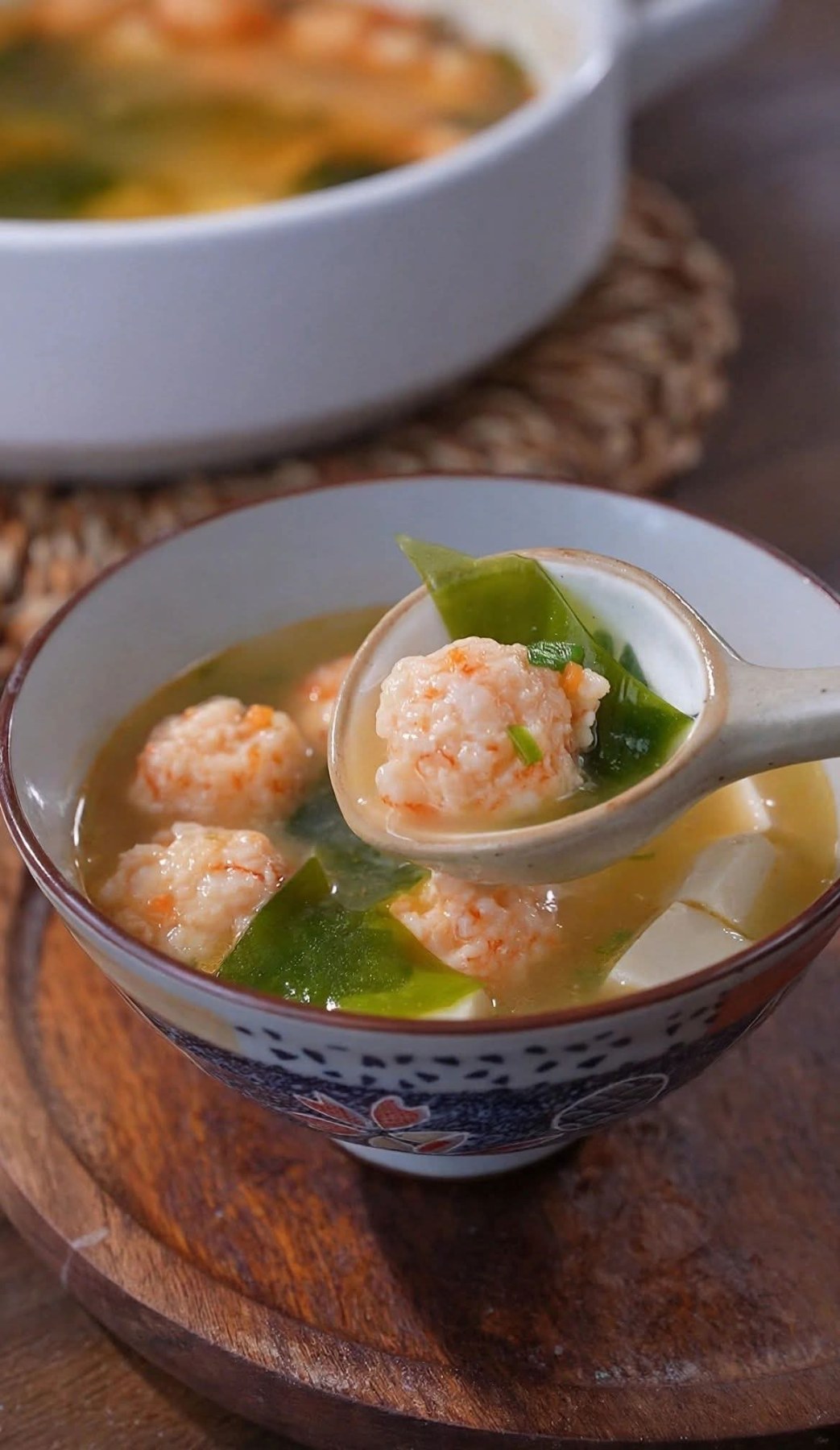
Shrimp Ball Miso Soup is a delicious and comforting Japanese-inspired dish that combines tender shrimp balls with rich miso broth, soft tofu, and nutritious wakame seaweed. This soup is perfect for seafood lovers and those wanting a light yet satisfying meal that comes together quickly.
With just 15 minutes of prep and 10 minutes of cooking, this recipe is ideal for busy weeknights or a cozy lunch. The combination of flavors and textures—from the delicate shrimp to the umami-packed miso and dashi stock—makes this soup a standout option for anyone looking to enjoy authentic taste and wholesome ingredients.
Why you’ll love this Shrimp Ball Miso Soup
- It offers a delicate balance of seafood and traditional Japanese flavors with tender shrimp and savory miso broth.
- The soup is quick and easy to prepare, perfect for busy days or last-minute meals.
- Contains nutritious ingredients like tofu and wakame seaweed that add protein and minerals.
- The shrimp balls have a light, fluffy texture that pairs wonderfully with the smooth tofu.
- This recipe is versatile and can be adjusted to suit different tastes and dietary preferences.
Ingredients
- 300 g raw shrimp, peeled and deveined
- 1 tsp grated ginger
- 1 tsp soy sauce
- 1 tsp sake or rice wine
- 1 tsp cornstarch
- 1 egg white
- 4 cups dashi stock
- 3 tbsp white miso paste
- 200 g soft or medium tofu, cubed
- 1/4 cup dried wakame seaweed or 1 cup rehydrated wakame
- 2 scallions, thinly sliced
This recipe yields 4 servings and requires about 15 minutes of preparation and 10 minutes of cooking. The key ingredients of this soup include fresh shrimp for the meatballs, white miso paste for a mild umami flavor, and dashi stock which forms the flavorful base. When selecting shrimp, choose firm, fresh shrimp for the best texture. For the miso paste, white miso offers a sweeter, less salty profile that complements the delicate shrimp. The tofu should be soft or medium firmness to absorb the soup’s flavors without breaking apart. Lastly, wakame seaweed adds a pleasant oceanic taste and texture.
Instructions
- Prepare the shrimp mixture: Chop or pulse the raw shrimp into a coarse paste, leaving some texture. In a bowl, combine the shrimp with grated ginger, soy sauce, sake, cornstarch, and egg white. Mix until just combined, being careful not to overwork.
- Heat the dashi stock: Pour the dashi stock into a pot and bring it to a gentle simmer over medium heat.
- Form and cook shrimp balls: Wet a spoon to prevent sticking, then shape the shrimp mixture into small balls. Drop them directly into the simmering stock. Cook for 3 to 4 minutes until the shrimp balls turn opaque and float to the surface.
- Add tofu and wakame: Gently add the cubed tofu and wakame seaweed to the pot. Let the soup simmer for an additional 1 minute to warm the ingredients through.
- Dissolve the miso paste: Place the white miso paste in a small bowl. Ladle a few spoonfuls of hot broth into the bowl and stir until the miso is fully dissolved.
- Combine and finish: Return the dissolved miso mixture to the pot. Stir gently and avoid boiling the soup after adding miso to preserve its delicate flavors.
- Season and serve: Taste the soup and add a little more miso if desired. Sprinkle with thinly sliced scallions and serve the soup hot.
Tips for the best results
- Use fresh shrimp with a firm texture to ensure the shrimp balls hold together well.
- Pulse the shrimp just enough to retain some texture for a more satisfying bite.
- Do not boil the soup after adding miso paste to prevent bitterness and preserve nutrients.
- Wet your spoon before shaping shrimp balls to avoid sticking and achieve uniform size.
- Gently stir when adding tofu and wakame to prevent breaking the tofu cubes.
- Adjust miso quantity gradually to balance saltiness according to your taste.
Variations and substitutions
- Replace shrimp with finely chopped white fish or crab meat for a different seafood flavor.
- Use red or mixed miso paste for a deeper, earthier taste instead of white miso.
- Swap tofu for silken tofu for an even softer texture or firm tofu for a chewier bite.
- Add vegetables like thinly sliced mushrooms or spinach for extra nutrition and color.
- Use homemade vegetable broth in place of dashi for a vegetarian-friendly version (omit shrimp or use plant-based alternatives).
Serving suggestions
Shrimp Ball Miso Soup is best served hot as a starter or light main course. Pair it with steamed white rice or a simple cucumber salad for a refreshing contrast. Complement the meal with pickled vegetables or a side of edamame for added texture and flavor. This soup also works well alongside sushi or tempura dishes, enhancing a Japanese-inspired menu with its comforting yet delicate taste.
Storage and reheating
Store any leftover Shrimp Ball Miso Soup in an airtight container in the refrigerator for up to 2 days. When reheating, warm the soup gently on the stove over low heat without bringing it to a boil to preserve the miso’s flavor and the shrimp balls’ texture. Avoid reheating in the microwave to prevent uneven heating and breaking down the tofu.
Frequently asked questions
Can I use frozen shrimp for the shrimp balls?
Yes, you can use frozen shrimp as long as it is fully thawed and well-drained before chopping. Using fresh shrimp is preferred for the best texture and flavor, but properly thawed frozen shrimp works well in this recipe.
What is dashi stock and can I substitute it?
Dashi is a traditional Japanese broth made from kombu (kelp) and bonito flakes, providing a savory umami base. You can substitute it with vegetable stock or chicken broth, though the flavor will be less authentic. For vegetarian versions, use kombu and shiitake mushroom broth.
Why shouldn’t I boil the soup after adding miso paste?
Boiling miso soup can cause the miso to lose its delicate flavor and can introduce bitterness. It also reduces the beneficial compounds in miso. Stir the miso in gently and keep the soup at a gentle heat without boiling.
Can I prepare the shrimp balls ahead of time?
You can prepare the shrimp mixture in advance and store it in the refrigerator for up to 24 hours. However, it’s best to form the balls and cook them fresh to maintain their texture and taste.
Is this soup gluten-free?
This recipe can be gluten-free if you use gluten-free soy sauce and ensure your dashi stock contains no gluten ingredients. Always check labels to confirm if you have gluten sensitivities.
Final thoughts
Shrimp Ball Miso Soup is a delightful and nourishing dish that brings together the best of Japanese flavors with ease and speed. Its combination of tender shrimp, silky tofu, and flavorful miso broth makes it a comforting meal that’s perfect for any occasion. Give this recipe a try to enjoy a warm bowl of authentic taste that’s both satisfying and wholesome.