
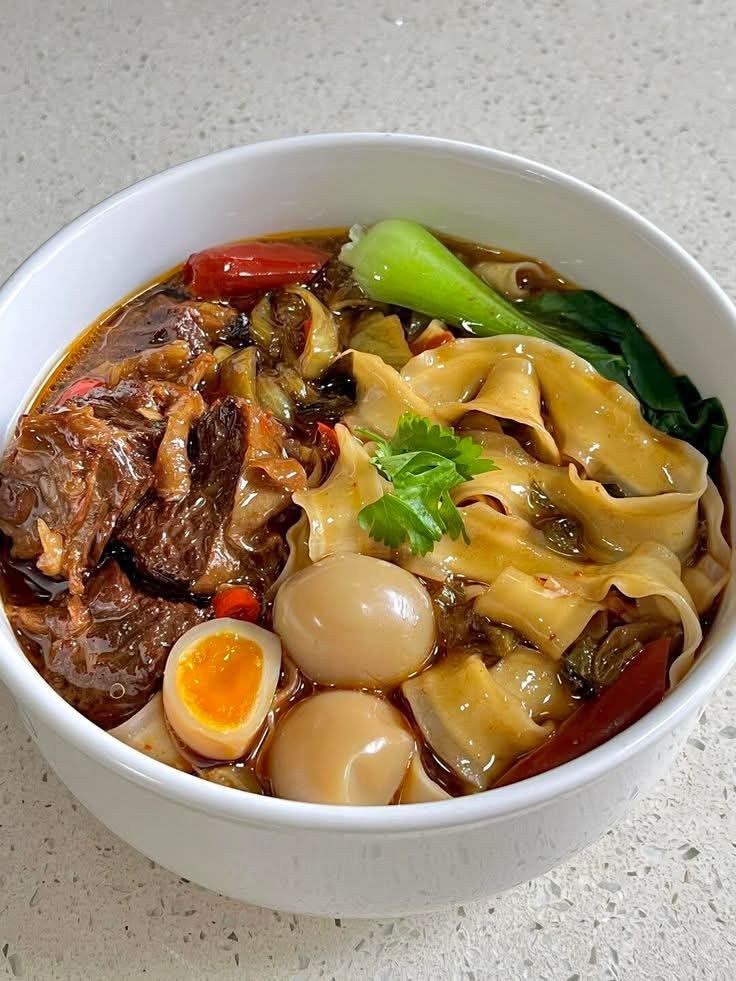
Taiwanese Braised Beef Noodle Soup is a beloved comfort food with tender beef chunks simmered in a flavorful, soy-braised broth paired with wide wheat noodles. This hearty noodle soup is perfect for anyone craving a deeply satisfying, warming dish that combines fragrant spices, savory meat, and fresh vegetables.
Ideal for family dinners or special occasions, this recipe takes about 2 hours and 40 minutes including prep and slow cooking. It’s approachable for home cooks who enjoy layering flavors and creating a rich, balanced soup from scratch. The soy-braised eggs and pickled mustard greens add unique texture and taste, making this a standout noodle soup recipe you’ll want to make again and again.
Why you’ll love this Taiwanese Braised Beef Noodle Soup
- The beef becomes incredibly tender and flavorful thanks to slow braising with aromatic spices and soy sauces.
- The broth balances savory, spicy, and slightly sweet notes, creating a rich and comforting soup base.
- Wide wheat noodles soak up the flavorful broth while maintaining a chewy, satisfying texture.
- The addition of soy-braised eggs and pickled mustard greens adds layers of texture and umami complexity.
- This dish is perfect for meal prep as the flavors deepen overnight, improving taste the next day.
Ingredients
- 2 lb beef shank or chuck, cut in large chunks
- 2 tbsp neutral oil
- 1 large onion, sliced
- 6 cloves garlic, smashed
- 1 2-inch piece ginger, sliced
- 2 scallions, cut in lengths
- 2 tomatoes, cut in wedges
- 3 tbsp doubanjiang or chile bean paste
- 1/4 cup soy sauce
- 2 tbsp dark soy sauce
- 2 tbsp Shaoxing wine
- 1 tbsp rock sugar or brown sugar
- 2 star anise
- 1 small cinnamon stick
- 1 dried chile or 1 tsp chile flakes
- 8 cups beef stock or water
- 1/2 cup pickled mustard greens, chopped
- 1 lb fresh wide wheat noodles
- 4 small bok choy
- 4 eggs
- Cilantro for garnish
- Salt to taste
Prep Time: 25 minutes | Cook Time: 2 hours 15 minutes | Servings: 4
This recipe features beef shank or chuck, known for their rich marbling and connective tissue that melt into tender, flavorful meat during braising. Wide wheat noodles are traditional for their chewy texture that complements the broth. Doubanjiang provides a spicy, savory depth, while Shaoxing wine and star anise add aromatic complexity. Pickled mustard greens contribute tangy brightness, balancing the rich broth beautifully.
Instructions
- Prepare soy-braised eggs: Boil the eggs for 6 to 7 minutes for jammy centers or longer if you prefer fully set yolks. Cool and peel them. Simmer the peeled eggs for 20 minutes in a small pot with a mixture of soy sauce, water, and a pinch of sugar. Set aside to soak up flavor.
- Blanch beef chunks: Briefly boil the beef in water for 2 minutes to remove impurities. Drain and set aside.
- Sauté aromatics: Heat neutral oil in a heavy pot over medium heat. Add sliced onion, smashed garlic, sliced ginger, and scallions. Cook until fragrant and softened.
- Add tomatoes and doubanjiang: Stir in the tomato wedges and chile bean paste. Cook until the tomatoes break down slightly and the oil turns reddish and fragrant.
- Combine beef and seasonings: Add the blanched beef chunks to the pot. Pour in soy sauce, dark soy sauce, Shaoxing wine, and sprinkle in rock sugar. Toss to coat evenly.
- Add spices and liquid: Add star anise, cinnamon stick, and dried chile or chile flakes. Pour in beef stock or water until the beef is just covered. Bring to a boil.
- Simmer beef: Lower heat to a gentle simmer. Cover and cook for 1 1/2 to 2 hours until the beef is tender and flavorful.
- Add pickled mustard greens: Stir in the chopped pickled mustard greens during the last 15 minutes of simmering. Taste and adjust salt as needed.
- Cook noodles and vegetables: Meanwhile, cook the wide wheat noodles separately according to package instructions. Blanch the bok choy in boiling water until just tender, then drain.
- Assemble and serve: Divide noodles among bowls. Ladle over the braised beef and rich broth. Add bok choy and soy-braised eggs, halved if desired. Garnish with fresh cilantro and serve hot.
Tips for the best results
- Use a heavy-bottomed pot or Dutch oven for even heat distribution during braising.
- Don’t rush the simmering step; low and slow cooking breaks down collagen for tender beef.
- Adjust the spice level by varying the amount of doubanjiang and dried chile according to your taste.
- Soak the soy-braised eggs longer if you want a stronger soy flavor.
- Cook noodles separately to prevent them from becoming soggy in the broth.
- Store leftovers in an airtight container; flavors improve after resting overnight.
Variations and substitutions
- Substitute beef shank with beef brisket or short ribs for different textures and flavors.
- Use dried wheat noodles or fresh ramen noodles if wide wheat noodles are unavailable.
- Replace pickled mustard greens with fresh spinach or bok choy for a milder green.
- Swap Shaoxing wine with dry sherry or omit for a non-alcoholic version.
- Add mushrooms such as shiitake or oyster to enrich the broth.
Serving suggestions
Serve Taiwanese Braised Beef Noodle Soup hot in deep bowls for a satisfying meal. Complement the dish with side plates of pickled vegetables or chili oil for extra heat. A light cucumber salad or steamed greens balance the richness of the broth. Pair with jasmine tea or a light lager to refresh the palate. This soup works wonderfully as a main course for lunch or dinner.
Storage and reheating
Store leftover soup in an airtight container in the refrigerator for up to 3 days. The flavors deepen with time, making reheated portions even more delicious. Reheat gently on the stovetop over low heat, stirring occasionally. Cooked noodles are best stored separately to avoid becoming mushy. Add fresh noodles when reheating if preferred.
Frequently asked questions
What cut of beef is best for Taiwanese Braised Beef Noodle Soup?
Beef shank or chuck are ideal due to their balance of meat and connective tissue. These cuts become tender after slow braising and impart rich flavor to the broth. Avoid lean cuts that may dry out during long cooking.
Can I use dried noodles instead of fresh wide wheat noodles?
Yes, dried wheat noodles or even ramen noodles can be used. Cook them according to package instructions and add to the soup just before serving. Fresh noodles offer a chewier texture but dried noodles are a convenient alternative.
How spicy is this soup?
The soup has a mild to moderate spiciness depending on the amount of doubanjiang and dried chile used. You can adjust the chili paste and flakes to suit your heat preference. For less spice, reduce or omit the dried chile.
Can I make this soup ahead of time?
Absolutely. The soup tastes even better after resting for several hours or overnight as the flavors meld. Store the soup and noodles separately and reheat gently before serving.
What can I use if I don’t have Shaoxing wine?
Dry sherry is a good substitute for Shaoxing wine in this recipe. If you prefer a non-alcoholic option, you can omit it and add a splash of beef broth or water to maintain the liquid balance.
Final thoughts
Taiwanese Braised Beef Noodle Soup is a wonderfully comforting dish that brings together tender beef, rich broth, and chewy noodles in a harmonious bowl. Its complex flavors and textures make it a rewarding recipe to master. Give this step-by-step recipe a try and enjoy a taste of Taiwan’s iconic noodle soup at home.