
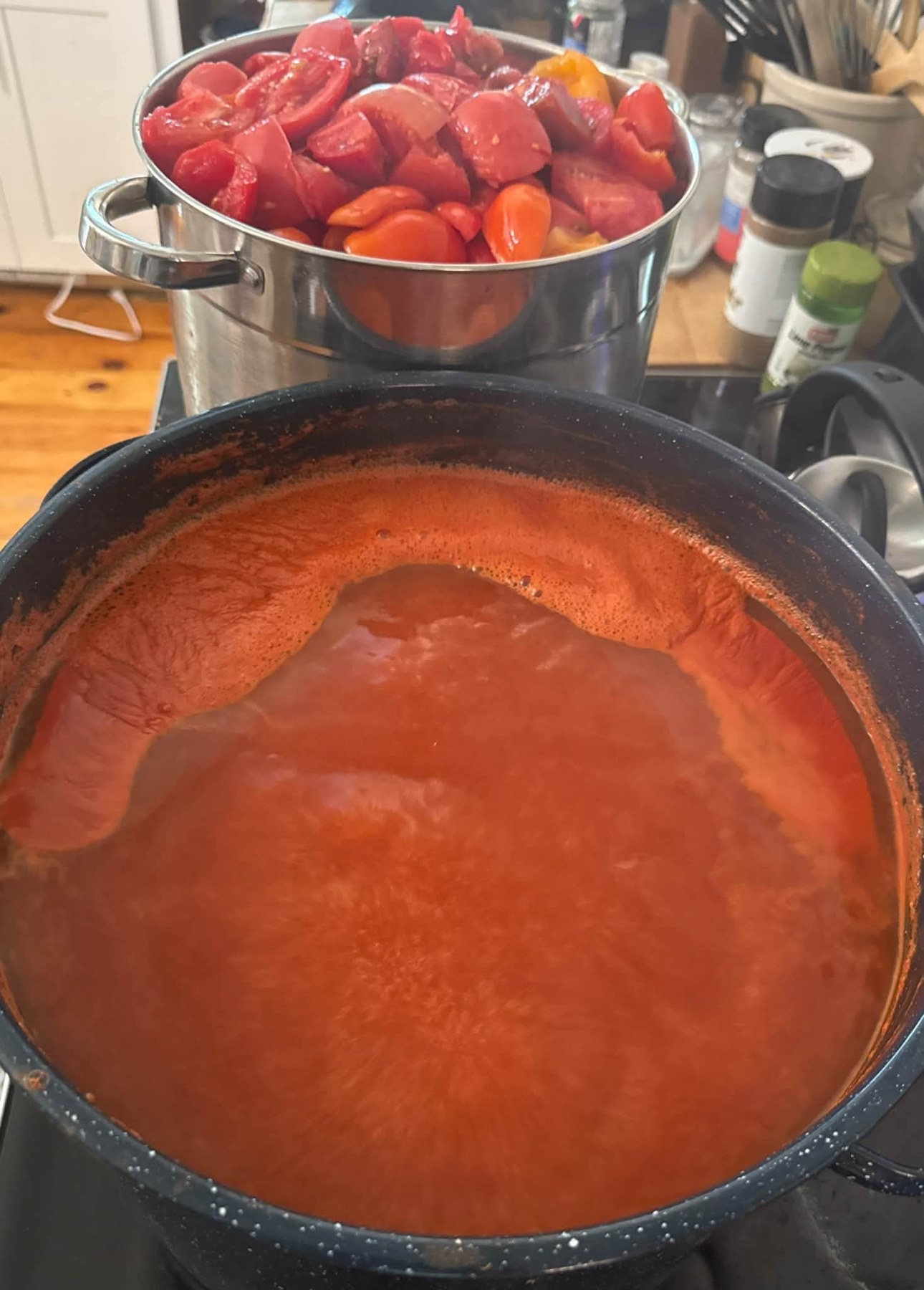
Tomato Passata is a classic Italian sauce base made from fresh ripe tomatoes that are cooked, pureed, and strained to create a smooth, vibrant puree. This homemade Tomato Passata is ideal for cooks seeking a fresh, preservative-free tomato sauce base that captures the pure essence of tomatoes. It works wonderfully as a versatile foundation for a wide range of dishes, from pasta sauces and soups to stews and casseroles.
Making Tomato Passata at home is straightforward and highly rewarding. This recipe yields about 10 cups of sauce and requires about 20 minutes of prep time and 50 minutes of simmering. The process involves simmering fresh tomatoes to release their juices, passing them through a food mill to remove skins and seeds, then simmering the puree to achieve your preferred thickness. Whether you plan to use it immediately or preserve it for later, this method ensures a rich, fresh tomato flavor without any additives.
Why you’ll love this Tomato Passata recipe
- This recipe uses only simple, fresh ingredients, allowing the natural sweetness and acidity of ripe tomatoes to shine through.
- The smooth, seedless texture created by the food mill makes it perfect for sauces, soups, and stews, providing a silky mouthfeel.
- Homemade passata contains no preservatives or additives, giving you complete control over the quality and freshness of your sauce base.
- You can easily customize the thickness by simmering the puree longer or shorter, adapting it to your specific recipe needs.
- This passata is excellent for preserving, so you can enjoy the vibrant taste of fresh tomatoes year-round without relying on store-bought canned products.
Ingredients
- 5 kg ripe plum or mixed tomatoes, roughly chopped
- 2 tsp kosher salt, or to taste
- 4 tbsp bottled lemon juice (for acidity, especially if bottling)
This recipe calls for ripe plum or mixed tomatoes, which are ideal because they tend to have a rich flavor and fewer seeds, making the passata smoother. When selecting tomatoes, opt for those that are firm yet fully ripe to ensure maximum flavor and a balanced texture. Kosher salt is preferred because it enhances the natural sweetness of the tomatoes without overwhelming them, thanks to its coarse grains and pure saltiness. Bottled lemon juice is added particularly when preserving the passata, as it provides consistent, reliable acidity needed for food safety and helps maintain the bright, fresh flavor during storage.
Instructions
- Prepare the tomatoes: Wash the tomatoes thoroughly, removing any blemishes or bad spots. Roughly chop them into manageable pieces to help them cook evenly.
- Simmer the tomatoes: Place the chopped tomatoes in a large pot over medium heat. Bring them to a gentle simmer, stirring occasionally, until they release their juices and collapse, about 20 to 30 minutes.
- Pass through a food mill: Use a food mill or sieve to strain the softened tomatoes, separating out the skins and seeds. Collect the smooth tomato puree in a clean container.
- Reduce to desired thickness: Return the tomato puree to a clean pot and simmer over medium-low heat. Stir occasionally and skim off any foam. Continue cooking until the passata thickens to your preferred consistency, usually 20 to 45 minutes.
- Season and add acidity: Stir in the kosher salt to taste. If you plan to bottle or preserve the passata, add 4 tablespoons of bottled lemon juice to ensure proper acidity for safe storage.
- Use or preserve: Use the passata immediately as a base for sauces and soups, or ladle it into sterilized jars and process according to your safe canning guidelines for long-term storage.
Tips for the best results
- Choose ripe, firm tomatoes: Using tomatoes that are fully ripe but still firm helps concentrate flavor and reduces excess water content, which can dilute your passata.
- Simmer gently: A gentle simmer prevents scorching and allows the tomatoes to break down slowly, enhancing the depth of flavor through gradual caramelization and concentration.
- Use a food mill: A food mill effectively removes skins and seeds without losing the pulp, resulting in a smooth, velvety texture that’s ideal for sauces and soups.
- Skim off foam: Foam contains impurities and can affect the clarity and taste of the passata; removing it during simmering helps keep the sauce bright and fresh-tasting.
- Add lemon juice only when preserving: Lemon juice provides the necessary acidity to prevent bacterial growth during bottling, but it’s unnecessary if you’re using the passata fresh.
- Cool passata completely before bottling: Bottling hot passata can cause condensation and spoilage; cooling it ensures a safe seal and longer shelf life.
Variations and substitutions
- Use different tomato varieties: Experiment with San Marzano tomatoes for a sweeter, less acidic passata or heirlooms for unique colors and complex flavors.
- Add garlic or herbs: Infuse flavors like garlic, basil, or oregano during the simmering step for added depth, but omit these if you plan to preserve the passata to maintain purity and safety.
- Adjust thickness: For a thicker passata, simmer longer to reduce water content; for a lighter sauce, add a little water or broth after cooking.
- Use fresh lemon juice: Freshly squeezed lemon juice can replace bottled if you use the passata immediately, but bottled is recommended for consistent acidity in canning.
- Make spicy passata: Add a pinch of chili flakes or fresh chili during simmering to introduce a subtle heat that complements many dishes.
Serving suggestions
Tomato Passata is incredibly versatile and can be the foundation for countless culinary creations. Use it as the base for classic Italian pasta sauces by sautéing garlic and onions before adding the passata and fresh herbs like basil or oregano. It’s excellent in hearty soups such as minestrone or tomato bisque, where its smooth texture enriches the broth. You can also incorporate passata into stews or braises to add acidity and depth. Additionally, spread it on homemade pizza dough before adding toppings for a fresh, vibrant tomato flavor that outshines store-bought sauces. The bright color and natural sweetness of fresh passata elevate any dish it touches.
Storage and reheating
Fresh Tomato Passata should be stored in an airtight container in the refrigerator and will stay fresh for up to 5 days. For longer storage, preserve the passata by canning it in sterilized jars following safe home canning procedures, which can keep it for up to a year when stored in a cool, dark place. When reheating, warm the passata gently on the stove over low heat to prevent scorching and to maintain the sauce’s fresh flavor and silky texture. Avoid boiling passata once bottled, as this can degrade the taste and consistency.
Frequently asked questions
What is the difference between passata and tomato sauce?
Tomato passata is a smooth, pure tomato puree that is typically uncooked or lightly cooked without added seasonings, herbs, or oils. In contrast, tomato sauce usually contains additional ingredients like garlic, onions, herbs, spices, and sometimes fats, making it a ready-to-use sauce. Passata serves as a fresh, neutral base that can be customized into various sauces or dishes according to your preference.
Can I use canned tomatoes to make passata?
While fresh tomatoes yield the best flavor and texture for passata, canned tomatoes can be used if fresh ones are unavailable. However, canned tomatoes often have a softer texture and may contain added salt or preservatives, which can affect the final taste and thickness of the passata. The end result may be less vibrant and slightly thinner compared to using fresh tomatoes.
How long does homemade passata last?
Freshly made passata stored in the refrigerator typically stays good for about 5 days. When properly canned using sterilized jars and safe canning methods, passata can last up to a year if stored in a cool, dark place. Always inspect the passata for any signs of spoilage such as off smells, mold, or discoloration before use.
Do I need to add lemon juice when making passata?
Lemon juice is essential if you plan to bottle or can the passata because it ensures the acidity level is high enough to prevent harmful bacterial growth during storage. This step is crucial for food safety. If you intend to use the passata immediately and refrigerate it for a few days, adding lemon juice is optional and based on personal taste.
Can I freeze Tomato Passata?
Yes, Tomato Passata freezes very well. Divide it into freezer-safe containers or bags, leaving some headspace for expansion. Use it within 3 to 6 months for optimal flavor and texture. When ready to use, thaw the passata in the refrigerator overnight and warm gently before incorporating into your recipes.
Final thoughts
Homemade Tomato Passata is a simple yet rewarding recipe that brings the fresh, vibrant taste of ripe tomatoes into your kitchen. This versatile puree can be used immediately as a foundation for countless dishes or preserved to enjoy all year long. By making your own passata, you control the ingredients and quality, ensuring a flavorful, natural tomato base without additives. Give this recipe a try and experience the wholesome goodness and rich flavor of homemade tomato sauce.