
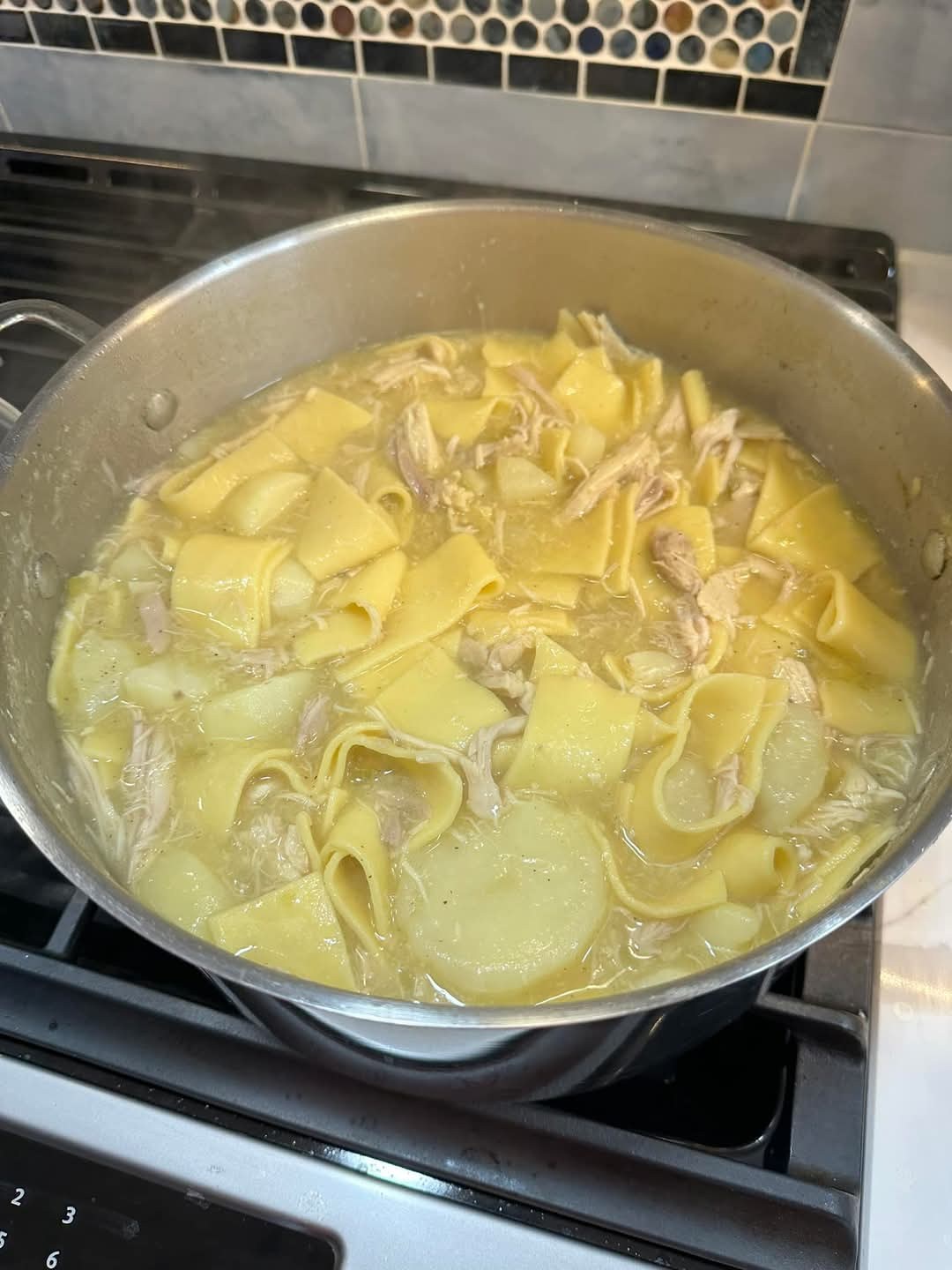
Amish-style chicken and noodles with potatoes is the kind of humble, soul-warming dish that tastes like a Sunday dinner even on a busy weeknight. Tender shredded chicken simmers in a golden broth alongside soft potato rounds and wide, hearty egg noodles that thicken the broth as they cook. It is a classic one-pot main course that has been passed down through generations of home cooks in Pennsylvania Dutch country and beyond.
This recipe is made for anyone who loves simple, honest comfort food. It serves 6 to 8 people, takes about 15 minutes of hands-on preparation and roughly 1 hour and 10 minutes of cooking time, and needs nothing more exotic than a large pot and a handful of pantry staples. If you have ever wanted a dish that feeds a crowd, uses inexpensive ingredients and gets better as it sits, this Amish-style chicken and noodles recipe is for you.
Why you’ll love this Amish-style chicken and noodles with potatoes
- It is a true one-pot meal, so you wash fewer dishes and spend less time juggling pans while the chicken simmers.
- Simmering bone-in chicken builds a rich, deeply flavored broth without needing any special stock or hard-to-find ingredients.
- The starch from the noodles and potatoes naturally thickens the broth, giving you a cozy, gravy-like texture without any flour or cornstarch.
- It stretches generously, so one pot comfortably feeds a large family or a group of guests with plenty of leftovers.
- The ingredients are affordable and easy to find at any grocery store, which makes this a dependable recipe for budget-friendly cooking.
Ingredients
- 2 lb bone-in chicken thighs or breasts (or 1 whole small chicken)
- 10 cups water or chicken broth
- 1 small onion, halved (optional, for simmering)
- 3 medium potatoes, peeled and sliced into thick rounds
- 12 oz wide egg noodles (or homemade, cut wide)
- 2 tsp salt, or to taste
- 1/2 tsp black pepper
- 2 Tbsp butter
- 1 chicken bouillon cube or 1 tsp chicken base (optional)
- Chopped fresh parsley for serving (optional)
The success of this dish depends on a few key ingredients. Bone-in chicken thighs are the most forgiving choice because they stay juicy during the long simmer and add extra flavor from the bones and skin, but bone-in breasts or a whole small chicken work just as well. Choose wide egg noodles, sometimes labeled extra-wide or noodles for chicken and noodles, since their sturdy texture holds up in the broth. Waxy or all-purpose potatoes such as Yukon Gold hold their shape better than starchy russets. If you have time, homemade noodles cut into wide strips give the most authentic result, but good store-bought egg noodles are perfectly reliable.
Instructions
- Simmer the chicken. Place the chicken, water or broth, onion, salt and pepper in a large pot. Bring to a boil, then reduce the heat and simmer for 40 to 45 minutes, until the chicken is cooked through and tender.
- Shred the meat. Remove the chicken and onion from the pot. Shred the meat with two forks, discarding the skin and bones, then return the shredded meat to the pot.
- Cook the potatoes. Add the sliced potatoes to the simmering broth and cook for about 10 minutes, until they are just starting to soften but still hold their shape.
- Enrich the broth. Stir in the butter and the bouillon or chicken base if using. Bring the broth back to a steady simmer so the flavors blend.
- Add the noodles. Drop the wide egg noodles into the pot a handful at a time, stirring as you go so they don’t clump together.
- Finish cooking. Simmer for 8 to 10 minutes, until the noodles and potatoes are tender and the broth has thickened slightly from the noodle starch.
- Season and serve. Taste the broth and adjust the salt and pepper as needed. Serve hot, topped with chopped parsley if you like.
Tips for the best results
- Keep the broth at a gentle simmer rather than a hard boil once the noodles go in, so they cook evenly without breaking apart.
- Cut the potato rounds to a similar thickness so they become tender at the same time.
- Add the noodles in small batches to prevent them from sticking together in a solid mass.
- Taste the broth before serving, since bouillon and broth vary in saltiness and the noodles can absorb some seasoning.
- Shred the chicken while it is still warm, as it is much easier to pull into tender pieces.
- Avoid overcooking the noodles; they continue to soften in the hot broth, so serve promptly once they are tender.
Variations and substitutions
- Use boneless chicken: Boneless thighs or breasts cook faster, so reduce the simmering time to about 20 to 25 minutes and check for doneness.
- Add vegetables: Diced carrots and celery can be simmered with the potatoes for extra color and sweetness.
- Make it creamier: Stir in a splash of heavy cream or an extra tablespoon of butter at the end for a richer, silkier broth.
- Try different noodles: Broad egg noodles or homemade pasta cut into strips work well, though cooking times may vary slightly.
- Swap the potatoes: Sweet potatoes or parsnips add a pleasant earthy sweetness and hold their shape nicely in the broth.
Serving suggestions
Serve Amish-style chicken and noodles in deep bowls while the noodles are still hot and the broth is glossy. A crisp green salad with a tangy vinaigrette balances the richness of the dish beautifully. Warm dinner rolls or buttered bread are perfect for mopping up every last drop of broth. For a complete family-style spread, add steamed green beans, pickled beets or a simple coleslaw on the side. Sprinkle each bowl with fresh parsley or a few cracks of black pepper just before serving for a bright, fresh finish.
Storage and reheating
Store leftovers in an airtight container in the refrigerator for up to three to four days. The noodles will absorb more liquid as they sit, so the dish will look thicker than when it was fresh. To reheat, place the portion in a saucepan over medium-low heat and add a splash of broth or water to loosen the texture. Stir gently until heated through. This dish does not freeze especially well because the noodles can become soft and mushy after thawing, so it is best enjoyed within a few days.
Frequently asked questions
Can I use a whole chicken instead of pieces?
Yes, a whole small chicken works beautifully and gives a richer broth thanks to the extra bones and skin. Simmer it whole until the meat is tender, then remove it, shred the meat and discard the skin and bones before returning the meat to the pot. Plan for a little extra simmering time for a larger bird.
Do I need to make homemade noodles?
Homemade noodles are traditional and delicious, but store-bought wide egg noodles give excellent results with much less effort. Look for noodles labeled extra-wide or for chicken and noodles. The sturdy texture of these noodles holds up well in the broth and produces the same comforting dish.
Why is my broth so thick?
The starch released from the noodles and potatoes naturally thickens the broth as it simmers and sits. If it becomes thicker than you like, stir in a little extra broth or water while reheating until it reaches your preferred consistency. This is normal and part of what makes the dish so satisfying.
Can I make this dish ahead of time?
Yes, you can cook the chicken and broth a day ahead and refrigerate them separately. When you are ready to serve, bring the broth to a simmer, add the potatoes and noodles, and cook until tender. Cooking the noodles fresh gives the best texture, though the completed dish also keeps well for a few days.
Is this recipe suitable for a crowd?
This recipe is ideal for feeding a crowd because it serves six to eight people from a single pot. You can easily double the ingredients in a very large stockpot. Keep the finished dish warm over low heat and stir occasionally so the noodles stay tender without sticking.
Final thoughts
Amish-style chicken and noodles with potatoes is proof that simple ingredients, patient simmering and a little care can produce something truly special. It is hearty, budget-friendly and comforting enough to become a regular favorite in your kitchen. Gather your ingredients, put the pot on the stove and try this recipe for your family this week. Once you taste that rich, thickened broth and tender noodles, you will understand why this classic has earned a place at tables for generations.