
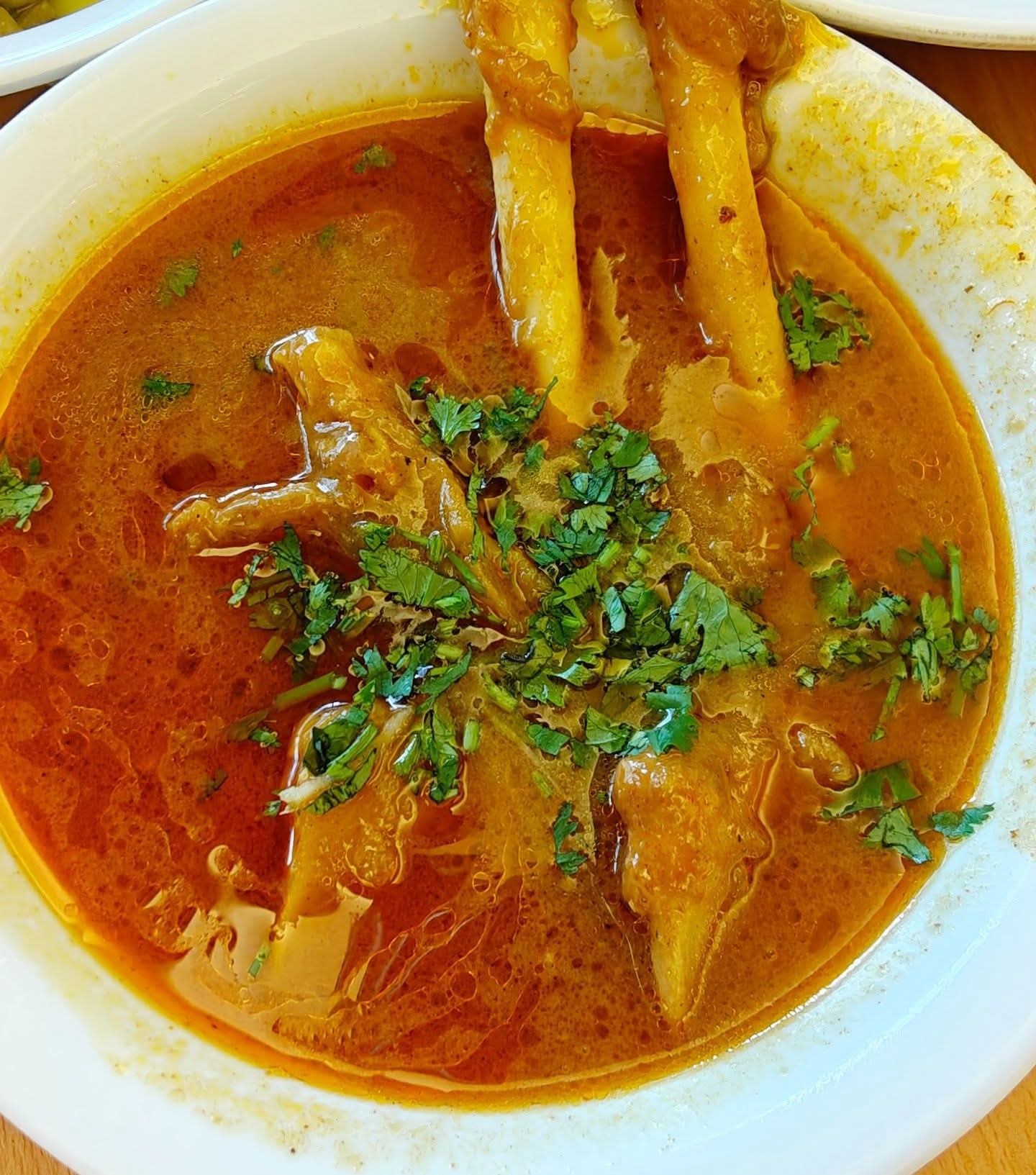
Paya (goat trotter curry) is one of the most comforting and deeply flavored dishes in South Asian home cooking. Made by simmering goat or lamb trotters slowly in a spiced onion, ginger and yogurt gravy, it produces tender meat and a broth that is rich, silky and slightly thick. It is traditionally a weekend or winter dish, often eaten early in the morning in many households, and it is loved by anyone who enjoys slow-cooked, bone-in meat.
This recipe is written for home cooks who have never worked with trotters before. Don’t let the ingredient look intimidating: once cleaned properly, trotters are simply a rich, gelatin-packed cut that rewards patience. With a clear method, some pantry spices and a heavy pot, you can make a truly impressive curry that serves four to six people.
Why you’ll love this Paya (Goat Trotter Curry)
- The long, slow simmer turns tough trotters into meat that is soft enough to fall off the bone.
- The natural collagen in the trotters gives the gravy a luxurious, velvety body without any cream or flour.
- Whole spices bloomed in ghee create an aromatic base that tastes layered and complete.
- The dish is very economical, since trotters are an affordable cut that delivers far more flavor than many premium meats.
- It is a crowd-pleasing centerpiece that scales easily and tastes even better when reheated the next day.
Ingredients
Prep time: 30 minutes | Cook time: 4-5 hours | Total time: 3 hours 30 minutes | Servings: 4-6
- 1 kg goat (or lamb) trotters, cleaned and cut
- 3 tbsp ghee or oil
- 2 large onions, finely sliced
- 2 tbsp ginger-garlic paste
- 1/2 cup plain yogurt, whisked
- 2 tsp red chili powder
- 1 tsp turmeric powder
- 2 tsp coriander powder
- 1 tsp cumin powder
- 1 tsp garam masala
- 4 green cardamom pods
- 1 black cardamom pod
- 1 cinnamon stick
- 4 cloves
- 1 bay leaf
- 1 tsp black peppercorns
- 2 tsp salt, or to taste
- 6-7 cups water
- 2 green chilies, slit
- 2 tbsp chopped fresh coriander
- 1 inch ginger, julienned, for garnish
- Lemon wedges, to serve
When buying trotters, look for pieces that are clean, pale and free of dark patches, and ask your butcher to singe off the hair and split them for you if possible. Choose plain, full-fat yogurt, as it is less likely to split than low-fat versions when whisked into the hot pot. Ghee gives the most authentic flavor, but a neutral oil works well too. Whole spices should smell fragrant when you open the packet; if they smell dusty, replace them, because they are the backbone of this curry.
Instructions
- Clean the trotters. Singe off any remaining hair over a flame, scrub them well under running water, then blanch them in boiling water for 10 minutes. Drain and rinse thoroughly to remove scum and any unpleasant smell.
- Bloom the whole spices. Heat the ghee in a large, heavy pot over medium heat. Add the cinnamon stick, cloves, green and black cardamom, bay leaf and black peppercorns, and fry for 30 seconds until they become fragrant.
- Caramelize the onions. Add the sliced onions and fry, stirring often, until they turn a deep golden brown, which takes about 12-15 minutes. Patience here builds the sweetness and color of the gravy.
- Add the ginger-garlic paste. Stir in the ginger-garlic paste and cook for 2 minutes, until the raw smell disappears and the paste looks fragrant.
- Sear the trotters. Add the cleaned trotters and sear for 5-6 minutes, stirring so that they pick up the onion and spice base and begin to brown lightly.
- Build the masala. Lower the heat and add the whisked yogurt gradually, stirring constantly so it does not split. Then add the red chili, turmeric, coriander, cumin and salt, and cook until the oil starts to separate from the masala.
- Simmer slowly. Pour in the water and bring the pot to a boil. Cover, reduce the heat to low and simmer for 4-5 hours until the trotters are very tender and the broth is rich and slightly thickened. If you prefer a faster method, pressure cook for 50-60 minutes, then simmer uncovered for about 1 hour.
- Finish the curry. Stir in the garam masala and the slit green chilies, and simmer for 10 more minutes. Skim off some excess oil if you like, but leave a glossy layer on top for flavor.
- Serve hot. Ladle the paya into bowls and top with fresh coriander, julienned ginger and a squeeze of lemon. Serve with naan or kulcha for soaking up the broth.
Tips for the best results
- Clean the trotters very well at the start; any leftover hair or odor will be impossible to hide once the curry is cooking.
- Do not rush the onions. Properly deep golden onions add a natural sweetness that balances the spices.
- Whisk the yogurt until smooth and add it slowly over low heat to prevent curdling.
- Keep the simmer gentle. A rolling boil makes the meat tough and can break the gravy.
- Check the water level during the long simmer and add a little hot water if the gravy becomes too thick before the trotters are tender.
- Taste and adjust the salt only near the end, since the broth reduces and concentrates as it cooks.
Variations and substitutions
- Lamb trotters: Use lamb trotters for a milder, slightly sweeter flavor while keeping the same method and cooking time.
- Lighter gravy: Reduce the ghee to 2 tbsp and skim the oil at the end for a cleaner, less rich curry.
- Extra heat: Add more green chilies or a pinch of crushed dried red chilies for a spicier version.
- Vegetarian-friendly base: Use the same spice and onion method with chunks of potato and cauliflower for a meat-free curry, though the texture and richness will differ.
- Quicker option: Use a pressure cooker, as described in the instructions, to reduce the cooking time to a little over an hour.
Serving suggestions
Paya is traditionally served piping hot in deep bowls, and the broth is as much a part of the experience as the meat. Serve it with fresh naan, kulcha or warm roti to soak up every drop of gravy. A simple side of sliced red onions, extra lemon wedges and a crisp cucumber salad helps cut through the richness. Many families also enjoy it with a cup of hot tea on a cold morning. For a relaxed dinner, serve it in the center of the table with bowls of extra coriander and ginger so everyone can garnish their own portion.
Storage and reheating
Let the paya cool to room temperature for no more than an hour, then transfer it to airtight containers and refrigerate for up to three days. The gravy will thicken and the flavors will deepen overnight, so many cooks consider it even better the next day. To reheat, warm it gently in a pot over low heat, adding a splash of water if the gravy has become too thick. Avoid vigorous boiling when reheating. Paya can also be frozen for up to two months; thaw it fully in the refrigerator before warming it through.
Frequently asked questions
Can I make paya in a pressure cooker?
Yes, a pressure cooker is a convenient shortcut. Pressure cook the trotters with the sautéed base and water for about 50-60 minutes, then open the lid and simmer for another hour to thicken the gravy. The result is very tender and much faster than the stovetop method.
Why are my trotters still tough after cooking?
Trotters need a long, slow cook to break down their collagen. If they are still firm, continue simmering on low heat and add a little hot water as needed. Boiling too hard can also make the meat tighten, so keep the heat gentle.
What does paya taste like?
Paya has a rich, savory flavor from the goat or lamb, balanced by sweet caramelized onions, warm whole spices and a tangy note from the yogurt. The gravy is thick and silky because of the natural gelatin released by the trotters.
Can I use chicken instead of goat trotters?
Goat and lamb trotters give paya its distinctive character, so chicken will produce a different dish. If you want a similar curry, you can use bone-in chicken pieces and reduce the simmering time considerably, but the gelatinous body of the gravy will be lighter.
How do I stop the yogurt from splitting?
Whisk the yogurt until smooth, lower the heat before adding it, and stir constantly as you pour it in slowly. Adding a tablespoon of gram flour to the yogurt before whisking also helps keep it stable during cooking.
Final thoughts
Making paya takes time, but the reward is a deeply satisfying bowl of tender meat and aromatic gravy that feels like a true celebration of slow cooking. Once you have cleaned the trotters and built the spiced onion base, the long simmer does most of the work for you. Gather your spices, set aside an afternoon, and try this goat trotter curry at home. Your kitchen will smell wonderful, and your family will be glad you did.