
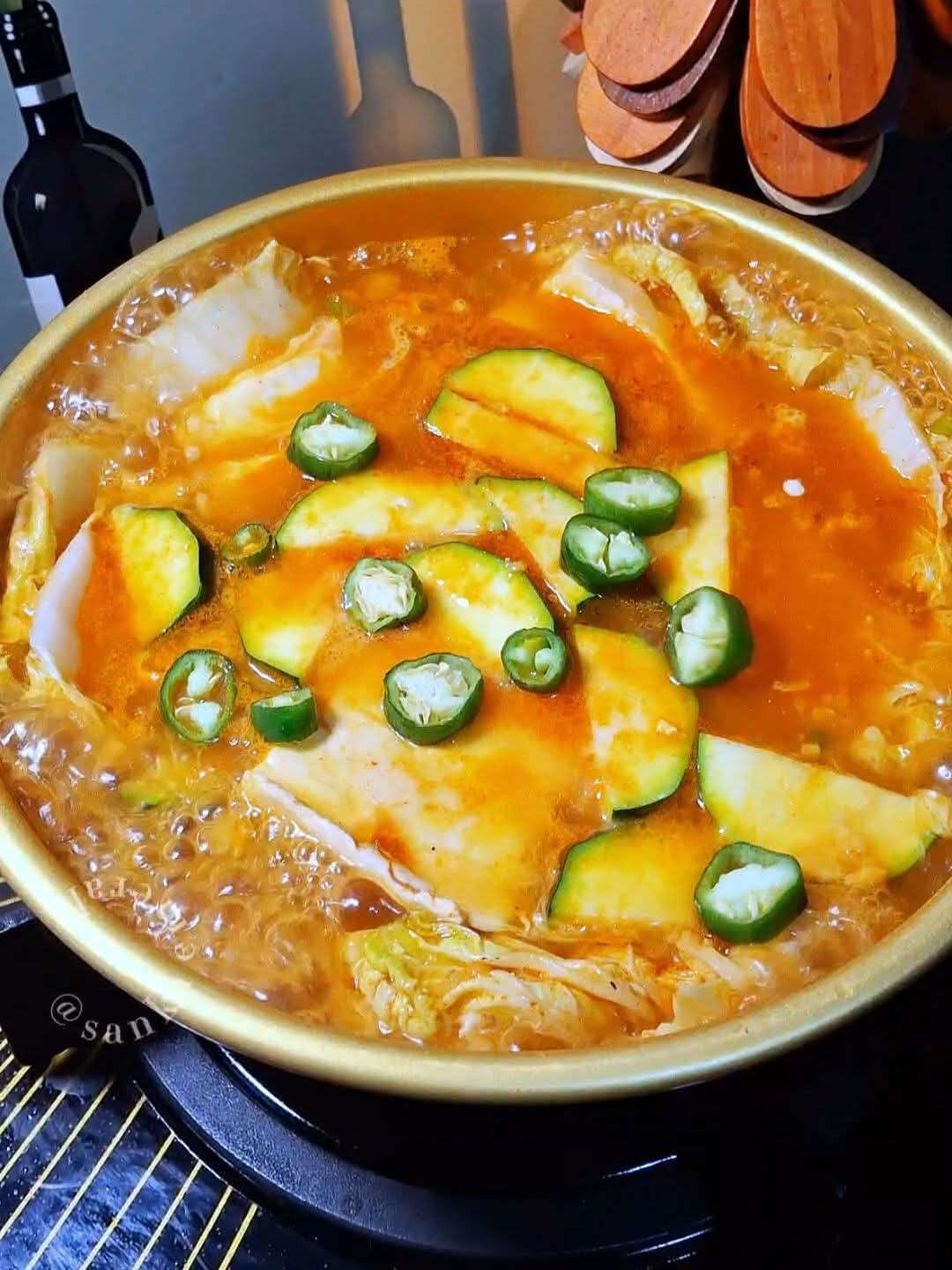
Kimchi Jjigae is a classic Korean stew known for its bold, tangy flavors and comforting warmth. This dish combines ripe napa cabbage kimchi with tender pork belly, silky tofu, and vegetables in a rich, spicy broth that’s perfect for chilly days or anytime you crave something savory and satisfying.
Ideal for home cooks looking to explore Korean cuisine, this recipe is straightforward and quick, taking just about 35 minutes from prep to table. The balance of spicy, sour, and umami flavors makes Kimchi Jjigae a beloved staple that’s both nourishing and delicious.
Why you’ll love this Kimchi Jjigae
- This stew delivers a perfect harmony of spicy, sour, and savory flavors that awaken the palate.
- It’s a one-pot meal that’s both hearty and comforting, ideal for family dinners or casual gatherings.
- The recipe is quick to prepare, with just 15 minutes of prep and 20 minutes of cooking time.
- Using staple Korean ingredients like gochugaru and gochujang adds authentic depth and richness.
- It’s versatile and easy to customize with different proteins or vegetables according to your preference.
Ingredients
- 500 g ripe napa-cabbage kimchi, cut into bite-size pieces
- 200 g pork belly or pork shoulder, sliced
- 200 g firm tofu, sliced
- 1 small zucchini, sliced into half-moons
- 2 cups anchovy or chicken stock
- 1 cup water
- 1 small onion, sliced
- 2 cloves garlic, minced
- 1 tablespoon gochugaru
- 1 tablespoon gochujang
- 1 tablespoon soy sauce
- 1 teaspoon sugar
- 1 tablespoon kimchi juice
- 2 green chilies, sliced
- 1 teaspoon sesame oil
This recipe serves 3 to 4 people and requires about 15 minutes of preparation plus 20 minutes of cooking. The key ingredients include ripe napa cabbage kimchi, which provides a tangy spice base, and pork belly, which adds rich flavor and texture. Firm tofu balances the heat with its creamy softness. Choose kimchi that is well-fermented but not overly sour to ensure a deep flavor, and fresh pork belly or shoulder for tenderness. Anchovy or chicken stock creates a savory broth, while gochugaru and gochujang add essential Korean spice and depth.
Instructions
- Brown the pork: Heat a pot over medium heat and add the sliced pork belly or shoulder. Cook until the pork is lightly browned and some fat has rendered, about 3 to 5 minutes.
- Stir-fry kimchi and spices: Add the cut kimchi, minced garlic, gochugaru, and gochujang to the pot. Stir-fry the mixture for 2 to 3 minutes to deepen the flavors and allow the spices to bloom.
- Add aromatics and liquids: Mix in the sliced onion, anchovy or chicken stock, water, soy sauce, sugar, and kimchi juice. Increase the heat to bring the stew to a boil.
- Simmer with vegetables: Once boiling, add the zucchini slices and tofu. Lower the heat to maintain a lively simmer and cook for 10 to 15 minutes, until the broth is rich and the vegetables are tender.
- Finish and serve: Drizzle the stew with sesame oil and top with sliced green chilies. Serve the Kimchi Jjigae bubbling hot for the best experience.
Tips for the best results
- Use well-fermented kimchi for a richer, more complex flavor, but avoid overly sour kimchi that can overpower the stew.
- Slice the pork thinly to ensure it cooks quickly and becomes tender within the simmering time.
- Add tofu gently to prevent breaking it apart; firm tofu works best to hold its shape.
- Keep the stew at a lively simmer rather than a rolling boil to develop flavors without toughening the meat.
- Adjust the level of gochugaru and gochujang depending on your preferred spice tolerance.
- Let the stew rest for a few minutes off the heat to allow flavors to meld before serving.
Variations and substitutions
- Protein: Substitute pork with beef, chicken, or use a seafood mix like clams and shrimp for a different taste.
- Vegetables: Add mushrooms, potatoes, or carrots for extra texture and nutrition.
- Broth: Use vegetable broth for a vegetarian version, and omit pork, adding more tofu or mushrooms.
- Spice level: Increase or reduce gochugaru and gochujang, or add fresh chili peppers to suit your heat preference.
- Fermentation: Use homemade kimchi or store-bought; homemade often has a fresher, more vibrant taste.
Serving suggestions
Kimchi Jjigae is best enjoyed hot and bubbling, served alongside steamed white rice to balance the spicy broth. It pairs beautifully with simple Korean side dishes such as pickled vegetables, seasoned spinach, or crispy seaweed sheets. A mild, cold drink like barley tea or a light lager complements the stew’s bold flavors and helps cool the palate. This stew also makes a great centerpiece for a Korean-inspired meal shared with family or friends.
Storage and reheating
Store leftover Kimchi Jjigae in an airtight container in the refrigerator for up to 3 days. When reheating, warm it gently on the stove over medium heat to prevent the tofu from breaking down and to preserve the stew’s texture. The flavors often deepen after resting, making leftovers even more delicious. Avoid reheating multiple times to maintain the best taste and safety.
Frequently asked questions
Can I use other types of kimchi for Kimchi Jjigae?
While napa cabbage kimchi is traditional and offers the best texture and flavor, you can experiment with radish or cucumber kimchi. However, these may alter the stew’s consistency and taste. Napa cabbage kimchi’s firm leaves hold up well during cooking and provide the classic tangy flavor essential to Kimchi Jjigae.
What can I substitute for pork in this stew?
If you prefer a different protein, chicken thigh, beef brisket, or even seafood like clams or shrimp work well in Kimchi Jjigae. For a vegetarian option, omit meat entirely and increase tofu and vegetables, using vegetable broth instead of stock. Adjust cooking times accordingly to ensure everything is tender and flavorful.
Is it necessary to use gochugaru and gochujang?
Gochugaru (Korean chili flakes) and gochujang (fermented chili paste) are key ingredients that provide the stew’s signature spicy depth and umami complexity. While you can substitute with other chili powders or pastes, the authentic Korean flavors might be diminished. For the best results, try to find these ingredients at an Asian grocery store or online.
How spicy is Kimchi Jjigae?
The stew has a moderate to high spice level depending on the amount of gochugaru, gochujang, and fresh chilies used. You can easily adjust the heat by reducing or increasing these ingredients. The fermented kimchi also adds a mild tangy heat that balances the overall flavor.
Can I prepare Kimchi Jjigae in advance?
Yes, Kimchi Jjigae actually tastes better the next day as the flavors meld together. Prepare it ahead, refrigerate, and gently reheat before serving. Just be cautious not to overcook the tofu during reheating to maintain its texture.
Final thoughts
Kimchi Jjigae is a wonderfully comforting and flavorful Korean stew that’s surprisingly easy to make at home. With its perfect balance of spicy, tangy, and savory notes, it’s sure to become a favorite in your recipe collection. Give this recipe a try for your next meal and enjoy a delicious taste of Korean tradition in your own kitchen.